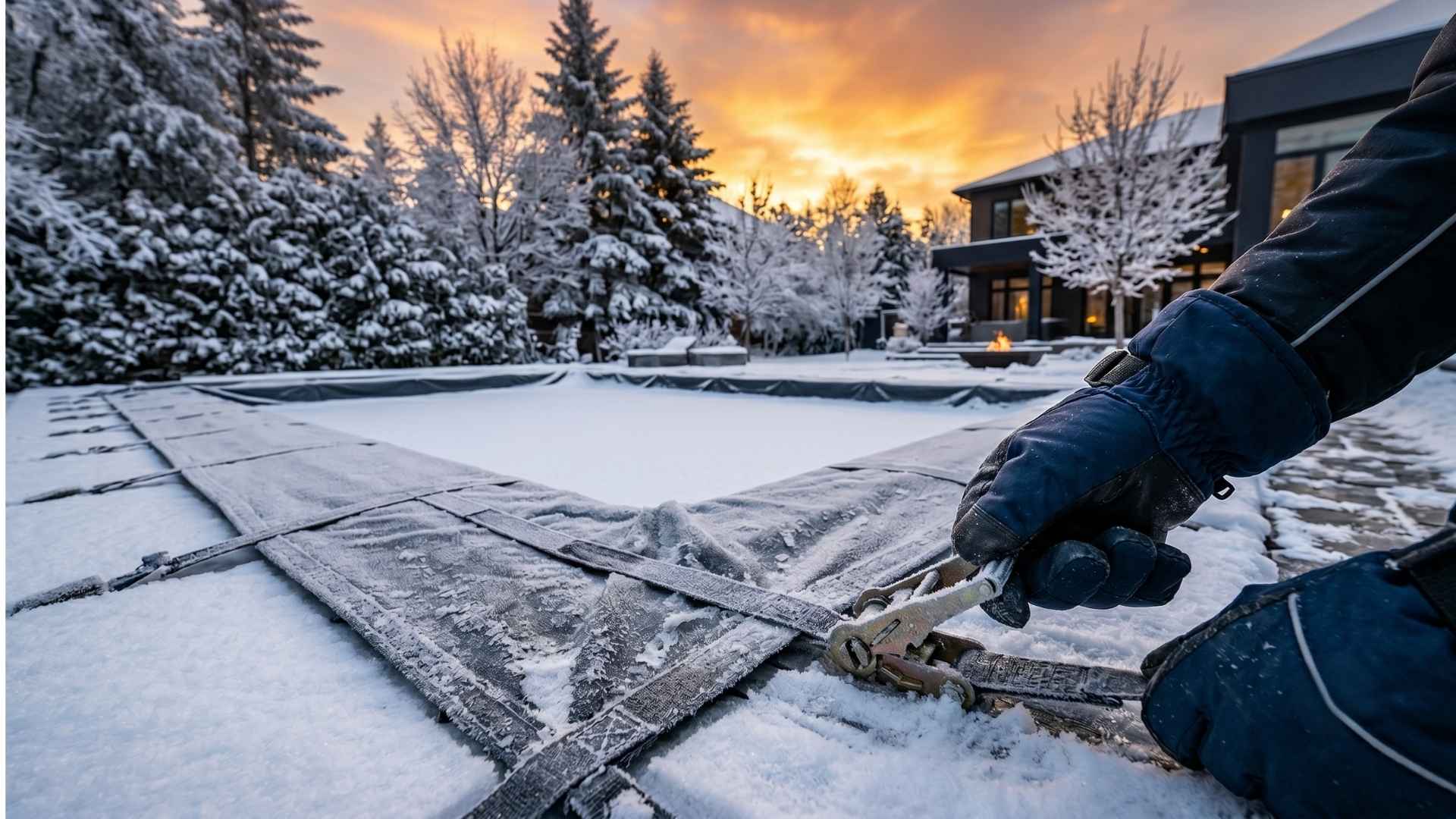
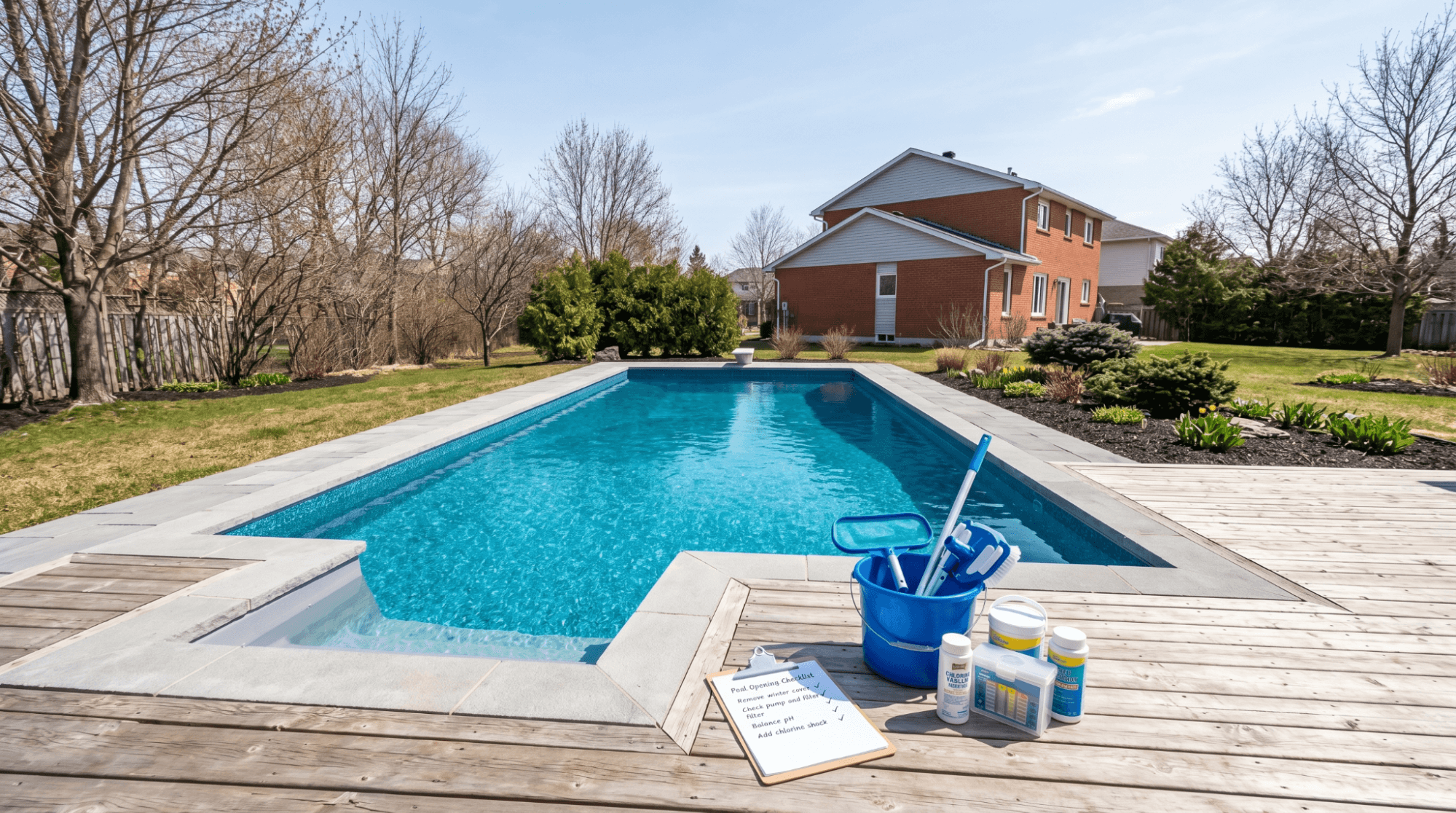
An Ottawa pool opening checklist should include removing and cleaning the pool cover, inspecting the pool structure, reinstalling equipment, checking the pump and filter system, filling the water to the proper level, and balancing pool chemicals after winter. Following this order ensures your pool is safe and swim-ready as quickly as possible.
Each spring, thousands of Ottawa homeowners face the same challenge: getting a pool that has been frozen and dormant for five months back into pristine condition. Opening a pool in Ottawa is a process that demands attention to detail. The harsh freeze-thaw cycle the city experiences puts enormous stress on every component of your pool system. Skipping even one step in your Ottawa pool opening checklist can result in equipment damage, cloudy water, or unsafe swimming conditions for your family. This guide walks you through every step of the process with real, actionable advice.
Why an Ottawa Pool Opening Checklist Matters
A proper checklist is not just about convenience. It is about protecting a significant investment and ensuring your family’s safety. According to the CDC, improperly maintained pool water is one of the leading causes of recreational water illness outbreaks. In Ottawa’s climate, the risk is compounded because pools sit closed for months, allowing bacteria, algae, and scale to develop unchecked under the cover. Using a structured Ottawa pool opening checklist means nothing gets overlooked, from the smallest O-ring seal to your total alkalinity reading. It turns a potentially overwhelming task into a manageable, confident routine.
QUICK TIP:
Aim to open your Ottawa pool in late April or early May. Once daytime temperatures hold consistently above 10 degrees Celsius, algae begins to grow. Opening early beats the bloom before it starts.
Your Ottawa Pool Opening Checklist: Step by Step
Step 1 – Remove and Clean Pool Cover
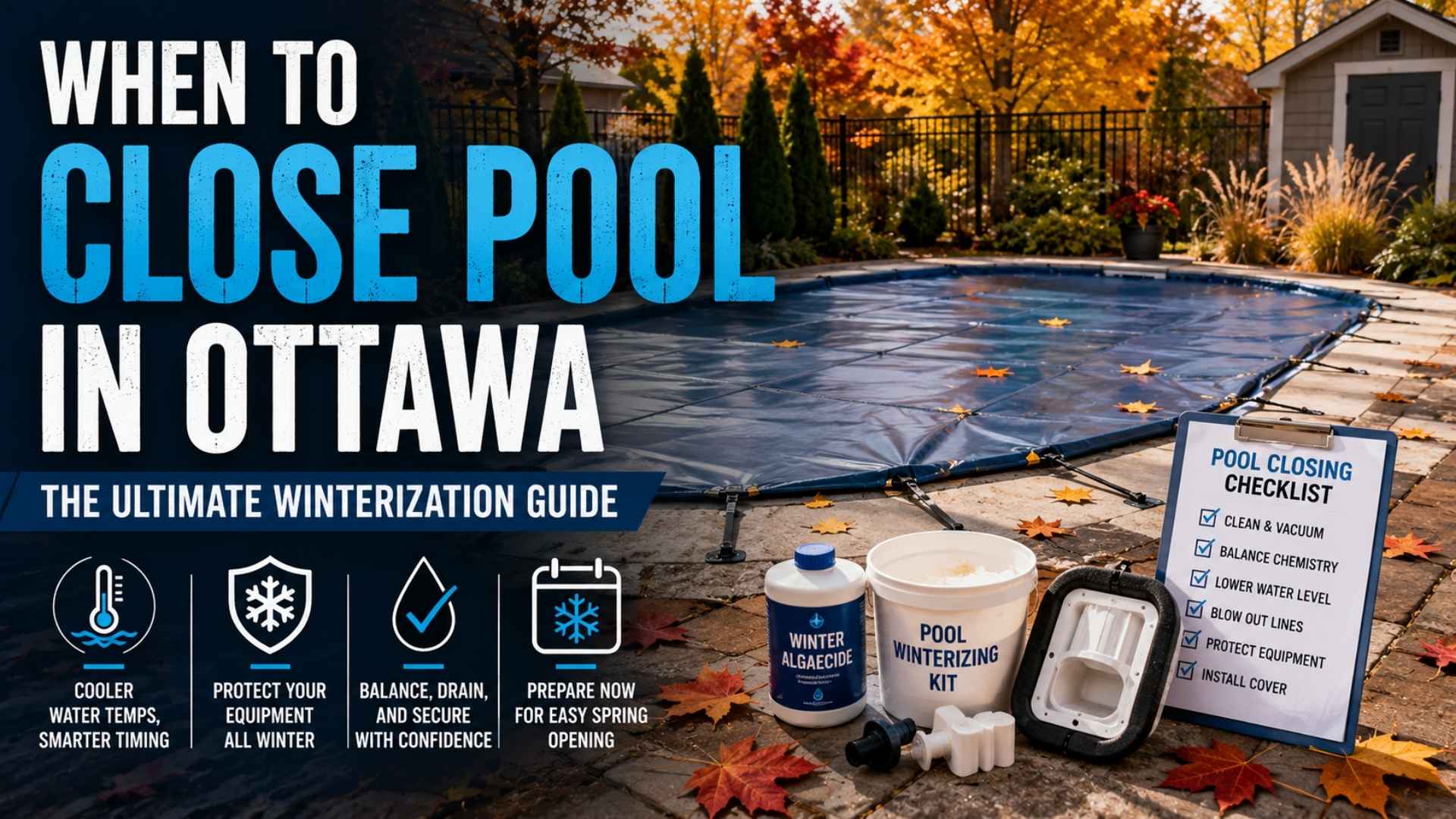
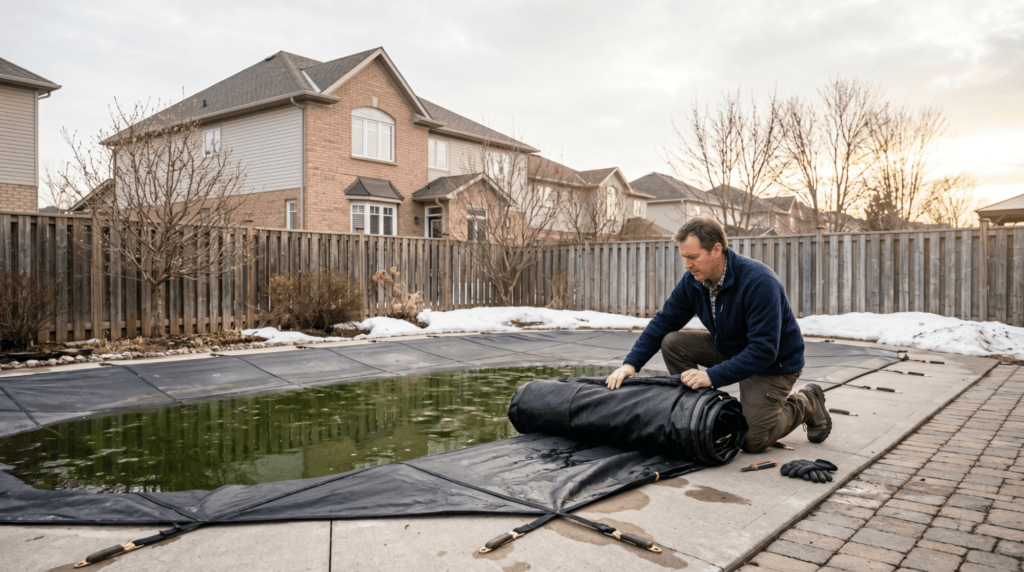
Removing and cleaning the pool cover is the first task on every homeowner’s list. Use a submersible pump to remove standing water from the top of the cover first. Never drag the cover across the pool edge, as the debris on top will fall directly into the water. Fold the cover carefully, hose it down, and allow it to dry fully before storing it. A clean, dry cover stored in a bag will last years longer than one folded away wet.
WARNING:
Any dirty water sitting on top of your cover is full of bacteria and algae spores. Pump it away completely before touching the cover. Letting it spill into your pool will dramatically worsen your chemical load.
Step 2 – Inspect the Pool Structure for Damage
Walk the entire perimeter of your pool and inspect the shell, tile line, coping, and decking for cracks. Ottawa’s freeze-thaw cycles are relentless, and even hairline cracks in concrete or fibreglass expand over a full winter. Check the skimmer body, return fittings, and any steps or ledges. Small cracks caught early are inexpensive to repair. Ignored, they become structural problems that cost thousands. This pool equipment inspection and setup step is one of the most important and most frequently skipped.
Step 3 – Reinstall Pool Equipment
Reconnect your pump, filter, heater, and any salt chlorinator or automation equipment that was disconnected during winterization. Replace all drain plugs and check that every union fitting is hand-tight. Inspect all valves and ensure they are set to the correct position for spring operation. Apply food-grade silicone lubricant to all O-rings before seating them. This takes five minutes and prevents the most common source of spring leaks.
PRO TIP:
Keep a dedicated box for your winter plugs, fittings, and pressure gauge. Label it “Pool Winter Kit” and you will never spend an hour searching the garage in April again.
Step 4 – Check Pump and Filter System
Your pump and filter system is the circulatory system of your pool. Inspect the pump basket and housing for cracks. For sand filters, check that the sand bed is not channelled or clumped. For cartridge filters, rinse the cartridge thoroughly or replace it if it is more than two seasons old. For DE filters, add fresh diatomaceous earth after backwashing. Once everything is reconnected and the water level is halfway up the skimmer, turn on the pump and watch it run for five minutes. Listen for unusual sounds and watch for leaks at every connection.
Step 5 – Fill Water and Start Circulation
Top up the water to the mid-skimmer level if needed and start the full circulation system. Let it run continuously for 24 hours before taking your first water test. This ensures the water is fully mixed and gives you an accurate baseline reading for balancing pool chemicals after winter.
Balancing Pool Chemicals After Winter
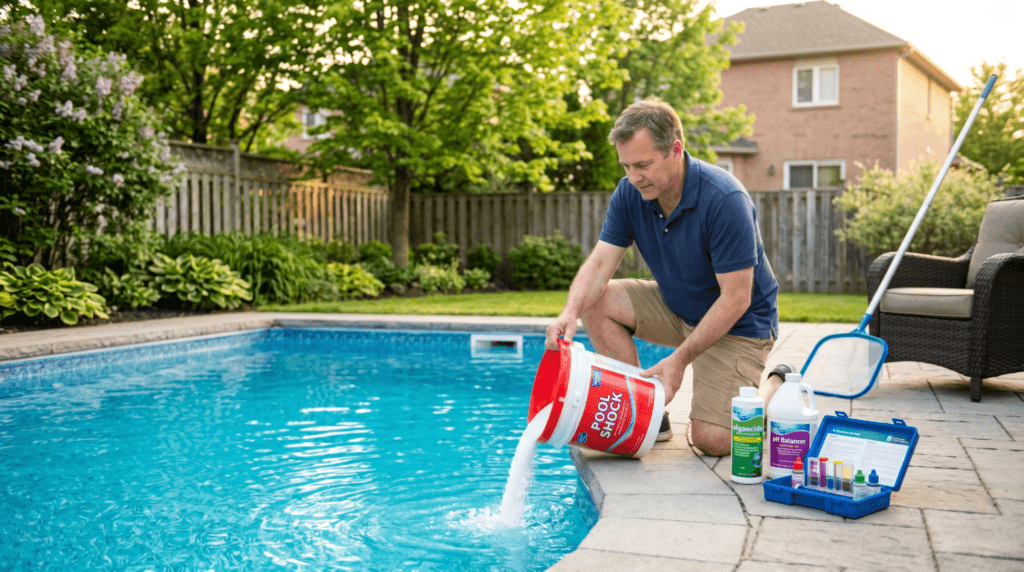
Balancing pool chemicals after winter is non-negotiable before anyone enters the water. Start by testing alkalinity, which should sit between 80 and 120 ppm. Adjust alkalinity first, as it buffers your pH and makes future adjustments more stable. Then test and adjust pH to the 7.4 to 7.6 range. Finally, shock the pool with a heavy chlorine treatment to destroy any bacteria or algae that has established itself over the winter months. Let the shock dissipate until free chlorine reads between 1 and 3 ppm before swimming.
DID YOU KNOW?
Always add chemicals to the water, never water to the chemicals. And always wait at least 15 minutes between adding different products. Mixing chemicals can cause dangerous reactions and will neutralize both products.
Ottawa Pool Opening Checklist Table
| Checklist Step | Description | Tools Needed | Time Required |
| Cover Removal | Pump off water, fold and store cover | Submersible pump | 45 to 60 min |
| Structure Inspection | Check for cracks and surface damage | Flashlight | 20 to 30 min |
| Equipment Reinstall | Reconnect pump, filter, and heater | Silicone lube, wrench | 30 to 60 min |
| System Startup | Prime pump, check for leaks | Garden hose | 20 to 30 min |
| Chemical Balancing | Test and adjust all chemistry levels | Test kit, pool shock | 30 min + 24 hrs |
Common Mistakes to Avoid When Opening a Pool in Ottawa
Even experienced homeowners make mistakes during spring startup. Starting the pump without inspection is the most costly error, as running a dry pump for even a few seconds can destroy the motor seal. Skipping chemical balancing creates a breeding ground for bacteria and causes rapid algae growth. Not cleaning the pool cover properly before storing it leads to mold, making it unusable the following season. Ignoring small leaks or cracks discovered during inspection allows them to become major structural failures by midsummer. Each of these mistakes is easy to avoid with a methodical checklist approach.
Should You Hire Pool Startup Services Ottawa?
Not every homeowner has the time, tools, or confidence to complete every step of an Ottawa pool opening checklist safely. Hiring professional pool opening services Ottawa brings significant advantages. Certified technicians perform a thorough pool equipment inspection and setup that includes pressure testing your lines, verifying equipment warranties, and identifying hidden damage. They complete the entire process in two to three hours and leave you with a professionally balanced, swim-ready pool. For homeowners with complex systems, automation, or saltwater setups, professional pool startup services Ottawa simply eliminate the risk of costly errors.
Seasonal Maintenance After Opening a Pool in Ottawa
Once your pool is open and balanced, the work shifts to a consistent weekly routine. Skim the surface and empty the skimmer baskets every two to three days. Test your water chemistry twice a week for the first month, then weekly through the summer. Backwash your filter whenever the pressure rises 8 to 10 psi above your clean starting reading. Brush the walls and floor weekly to prevent biofilm from forming. A solid spring pool maintenance Ottawa routine in May sets the tone for a clear, problem-free pool through August.
FAQs About Opening a Pool in Ottawa
What is included in an Ottawa pool opening checklist?
It includes removing and cleaning the pool cover, inspecting the structure, reinstalling all equipment, starting the pump and filter, and balancing pool chemicals after winter. Each step must be completed in order for the best result.
When should I open my pool in Ottawa?
Open your pool when daytime temperatures consistently stay above 10 degrees Celsius, typically late April to early May in Ottawa.
Can I open my pool myself or hire a service?
Both options work. DIY is manageable with this guide. However, for complex systems or if you are unsure about any step, hiring professional pool startup services Ottawa is the safer and faster choice.
How long does pool opening take?
The physical process takes four to six hours. Add another 24 to 48 hours for the water to circulate fully and chemical levels to stabilize before swimming.
Why is chemical balancing important after winter?
Pool chemicals dissipate completely over winter. Unbalanced water causes skin and eye irritation, corrodes your equipment, and allows bacteria and algae to thrive. Balancing pool chemicals after winter is essential for safety.
Final Thoughts on Opening a Pool in Ottawa
Opening a pool in Ottawa correctly each spring is the single most important thing you can do to protect your investment and your family. A complete Ottawa pool opening checklist keeps the process organized and ensures nothing is overlooked. Whether you do it yourself or trust the process to local experts, the goal is always the same: a clean, balanced, and safe pool ready for a full Ottawa summer. Start with a checklist, finish with confidence.