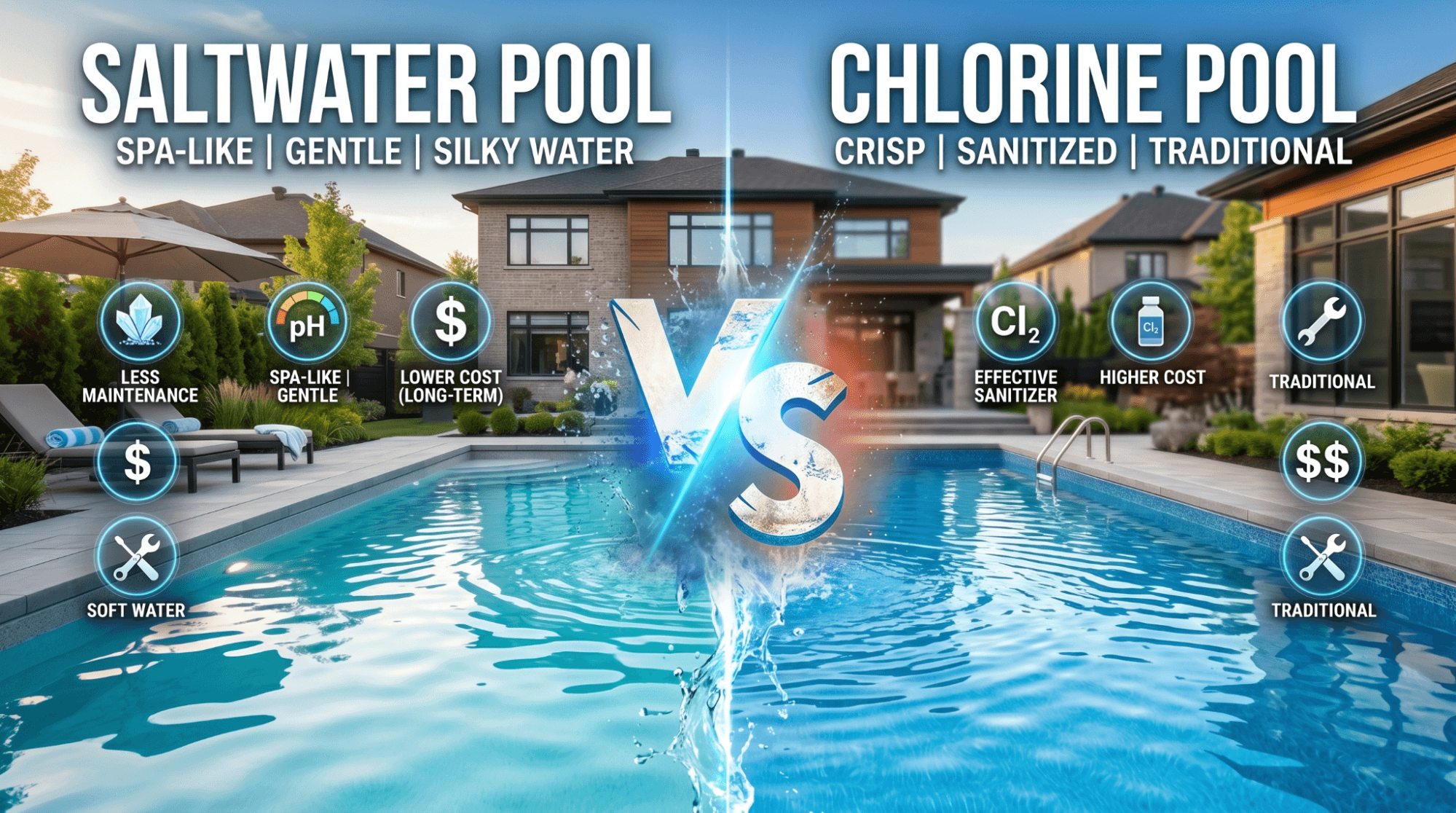
When comparing a saltwater vs chlorine pool for your Ottawa property, the choice depends on budget and maintenance. Chlorine pools have lower upfront costs, while saltwater pools offer comfort, lower chemical expenses, and gentler water. Both systems require professional winterization to protect them from harsh winters.
Owning a pool in eastern Ontario is rewarding, but choosing a sanitizer can be challenging. Ottawa homeowners frequently compare a saltwater vs chlorine pool when planning installations. Each offers benefits regarding water quality, upkeep, and expenses. These differences help you choose the best system for Ottawa’s climate.

Understanding Saltwater and Chlorine Pools
What Is a Chlorine Pool?
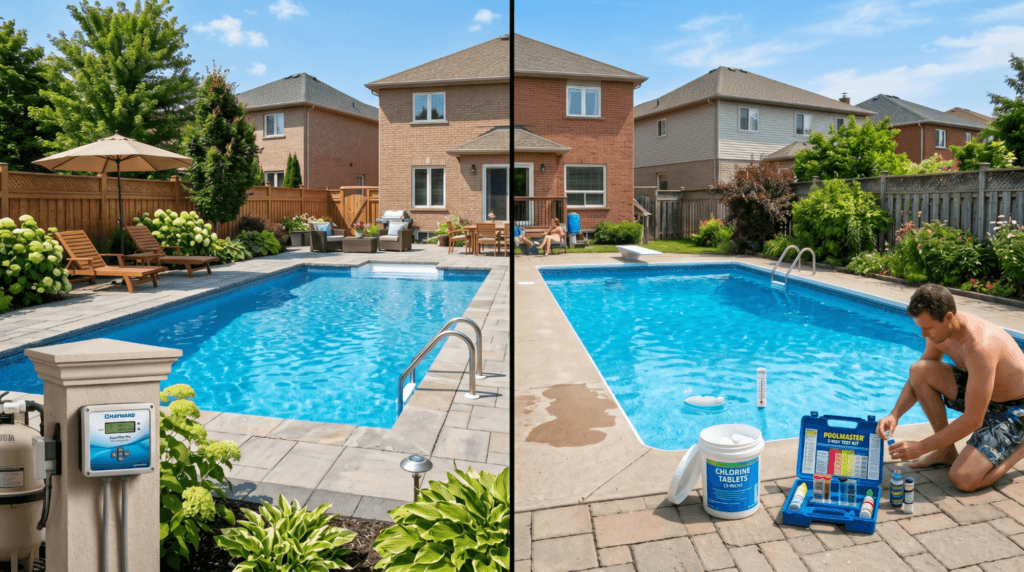
A chlorine pool relies on chlorine tablets to sanitize water, requiring frequent balancing and testing. Homeowners must handle chemicals, making chlorine pool maintenance Ottawa pools require a hands-on responsibility. Upkeep prevents algae and water quality degradation.
⚠ Watch Out
That classic “pool smell” is not actually chlorine. It is chloramines, a byproduct that forms when chlorine reacts with sweat, sunscreen, and body oils. Strong pool odour is often a sign the water is under-treated, not over-treated. If your pool smells like a public rec centre, it likely needs a shock treatment.
What Is a Saltwater Pool?
A saltwater pool does not require packaged chlorine. An electrolytic cell converts dissolved salt into chlorine gas. When comparing saltwater vs traditional pool systems, owners appreciate the soft water feel and lack of chemical odors. The water has a low saline concentration, making it gentle on eyes and skin.
💡 Good to Know
Saltwater pools still contain chlorine. The difference is how it is produced. Rather than adding chlorine directly, the salt cell continuously generates small, consistent amounts. This means fewer chemical spikes and a more stable swimming environment day to day.
Cost of Saltwater vs Chlorine Pool Systems
Initial Setup and Long-Term Expenses
The cost of a saltwater vs chlorine pool involves balancing setup against chemical savings. Chlorine pools have lower setup costs. Saltwater systems offer lower chemical expenses using simple sodium chloride, but the cell must be replaced every five to seven years. Weigh these factors to understand ownership costs.
| Cost Factor | Saltwater Pool | Chlorine Pool |
| Initial Setup | High ($1,500–$2,500) | Low (no extra equipment) |
| Annual Upkeep | Low (cheap salt) | Higher (fluctuating chlorine prices) |
| Chemical Costs | Under $100/year | $300–$600/year |
| Parts Replacement | Salt cell every 5–7 years | Pump and filter upkeep |
💡 Pro Tip
Run the numbers over a 10-year period, not just year one. When you factor in salt cell replacements, the total cost of both systems often ends up comparable. The real advantage of saltwater is convenience and comfort, not necessarily a dramatic long-term saving.
Pool Maintenance Comparison and Water Quality
Weekly Upkeep and Testing
A pool maintenance comparison shows saltwater pools require less daily handling but need weekly testing. You must monitor pH, free chlorine, and cyanuric acid stabilizer levels to protect the cell from scaling. Chlorine pools require manual dosing, making chemical consistency essential to keep water balanced.
💡 Maintenance Tip
For saltwater pools, clean the salt cell at least once a season by soaking it in a diluted muriatic acid solution. Scale buildup is the number one reason cells fail early. Most manufacturers recommend inspecting it every three months during the swim season.
Water Quality Differences in Pool Systems
Homeowners choose saltwater systems for the water quality differences in pool systems. Saltwater has low salinity, matching tears. This makes water soft, preventing dry skin and red eyes. It also eliminates chemical odors, creating a pleasant swimming environment.
Best Pool System for Ottawa Climate
Managing Freeze-Thaw Cycles and Summers
Selecting the best pool system for Ottawa climate conditions requires understanding how weather affects equipment. Ottawa experiences harsh winters and summers. Both systems must be winterized annually. Saltwater generators do not produce chlorine below 15 degrees Celsius, requiring manual chlorine shock during spring openings and fall closings.
⚠ Ottawa-Specific Warning
Salt chlorine generators stop producing chlorine once water temperatures drop below 15°C. This affects both your spring opening and fall closing. You will need to manually shock the pool with traditional chlorine during these transition periods. If you skip this step, you risk algae growth before the cell kicks back in. Mark it on your calendar for late May and late September.

Saltwater Pool Pros and Cons
Advantages and Disadvantages
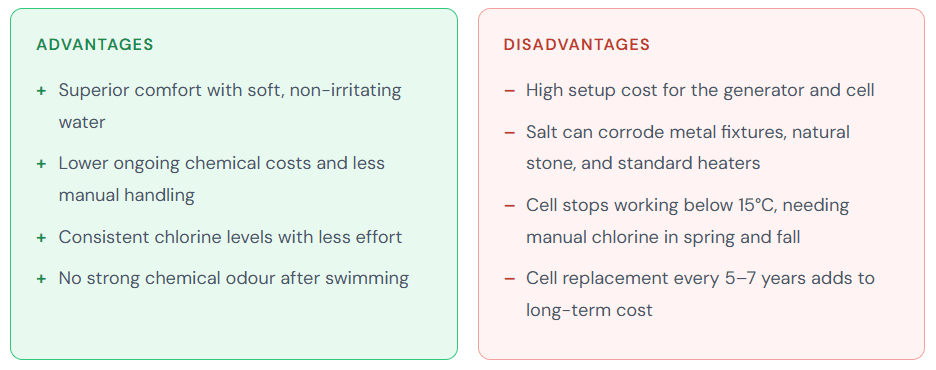
Evaluating saltwater pool pros and cons is essential before investing. While soft water is attractive, upfront costs and corrosion are critical factors. Here is a breakdown of the advantages and disadvantages of saltwater systems:
⚠ Corrosion Warning
If your pool has natural stone coping, decorative metal fixtures, or a heater not rated for saltwater, switching to a salt system can cause gradual corrosion damage. Always confirm your existing equipment is salt-compatible before installation. This is one of the most commonly overlooked costs when converting.
Saltwater vs Chlorine Pool: Side-by-Side Comparison
| Feature | Saltwater Pool | Chlorine Pool |
| Water Feel | Soft and gentle | Standard, can feel dry |
| Upfront Cost | High ($1,500+) | Low investment |
| Maintenance | Automated sanitation | Manual additions |
| Chemical Handling | Low (handles salt only) | High (handles chlorine regularly) |
| Long-Term Costs | Moderate (cell replacement) | Moderate (ongoing chemical costs) |
| Ottawa Suitability | Great, needs cold-weather care | Great, straightforward startup |
How to Choose the Right Pool System
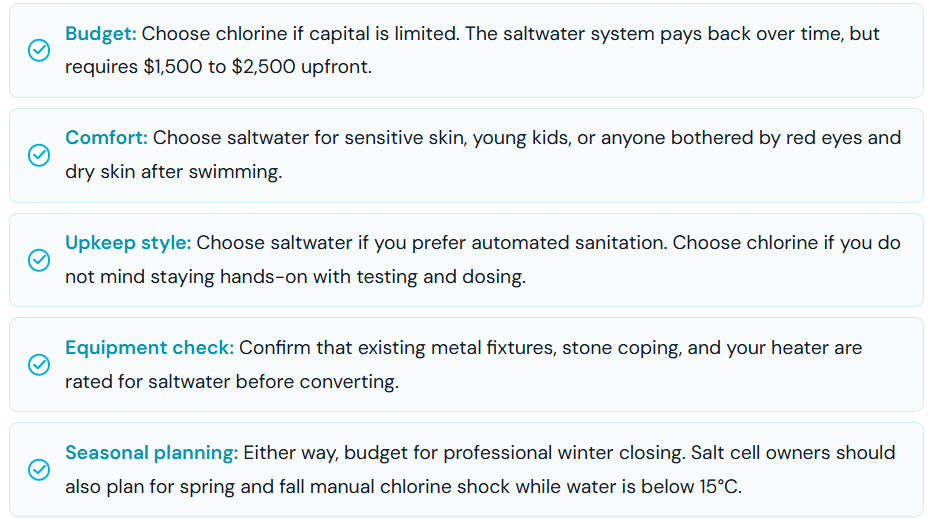
Decision Checklist for Homeowners
Professional Pool Maintenance Support
Extending Equipment Lifespan in Ottawa
Professional maintenance ensures equipment operates efficiently. According to statistics, over 40,890 pool permits were registered between 2019 and 2021. Schedule Ottawa Valley Pools Cleaning and Maintenance Service for openings and closings. Technicians inspect heaters, pumps, and salt cells to prevent damage.
💡 Seasonal Tip
Book your pool opening and closing appointments in February or March. Ottawa-area pool services fill up fast in spring. Waiting until May often means delayed openings and the risk of starting the season with water chemistry issues that are harder to fix mid-summer.
Frequently Asked Questions
Is a saltwater vs chlorine pool cheaper to run in Ottawa?
Saltwater chemical costs are lower, but setup and cell replacements make total costs comparable over ten years.
Which pool system requires less maintenance?
Saltwater requires less daily maintenance because the generator automates chlorine production, reducing chemical handling.
Are saltwater pools better for sensitive skin?
Yes, saltwater is gentler on skin and eyes because it maintains consistent levels.
Do saltwater pools still use chlorine?
Yes, saltwater systems produce chlorine naturally from salt, rather than requiring manual chemical additions.
Which pool option works best in Ottawa winters?
Both perform well in winter, provided they are closed, lines blown, and equipment winterized.
How often should pool water be tested?
Test pool water twice weekly during summer to monitor pH and sanitizer levels.
Final Thoughts on Ottawa Pool Systems
Choosing between a saltwater or chlorine pool depends on budget, comfort, and upkeep. Saltwater pool benefits Ottawa homeowners by offering soft water, while traditional chlorine offers simplicity and lower setup costs. Consult professionals before converting your system.