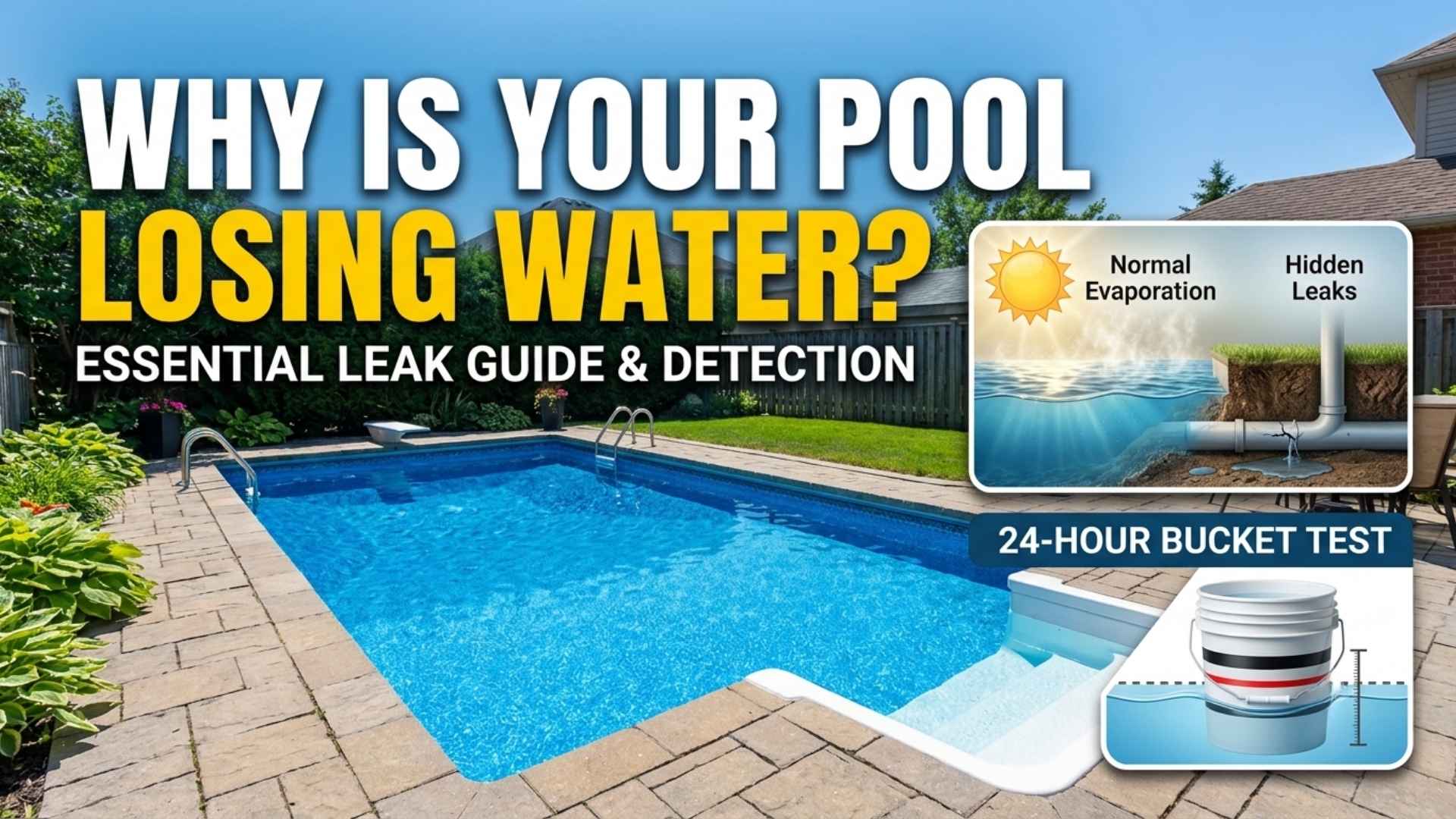
Swimming pools naturally experience fluctuating water levels throughout the summer operating season. If you notice a steady drop in your surface level, it is usually caused by normal evaporation, active splash-out, or an undetected structural leak. Identifying the underlying cause early helps prevent structural deck shifting and expensive utility bills. Maintaining proper water levels is essential for safe pump filtration and mechanical operation. When surface levels drop below the skimmer intake, air gets sucked into the suction line, risking pump motor burnout. Understanding whether your pool losing water stems from atmospheric evaporation or plumbing failure keeps your backyard oasis running smoothly all summer long.
Understanding Daily Pool Water Loss
Normal Evaporation Rates in Ottawa
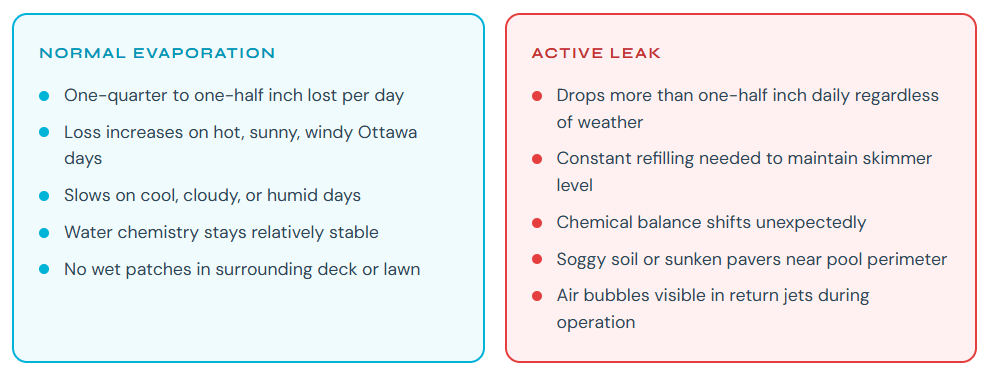
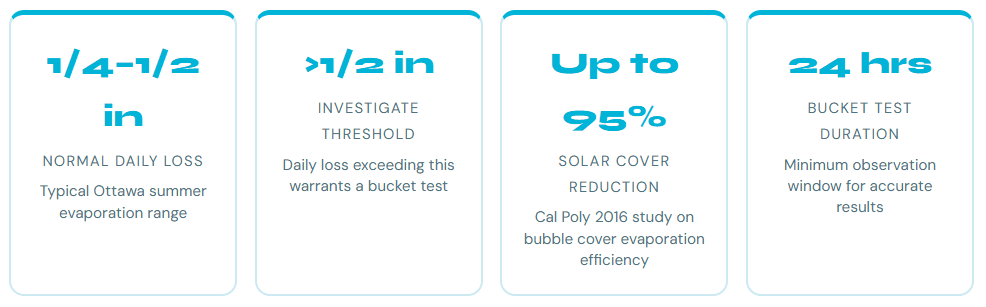
Environmental conditions heavily influence how much liquid dissipates into the surrounding atmosphere. During hot Ottawa summer days, a typical residential swimming pool naturally loses between one-quarter to one-half inch of water daily. Intense direct sunlight, low humidity, and constant wind acceleration across the open surface increase these baseline loss rates. Atmospheric conditions show that summer temperature spikes and low relative humidity significantly increase open water surface evaporation. Following a comprehensive guide to pool maintenance in Ottawa helps pool owners monitor these environmental changes effectively.
When Water Loss Indicates a Leak
If your surface drops more than a quarter-inch per day under mild weather conditions, you are likely dealing with a structural leak. Continuous water loss causes severe soil saturation beneath concrete pool decks, potentially compromising ground stability. Distinguishing between environmental factors and structural vulnerabilities requires systematic testing before minor plumbing tears expand into major repair bills.
⚠ Low Water Level Risks More Than You Think
When the water level drops below the skimmer opening, the pump begins drawing air instead of water. Running a pump dry even briefly can damage the mechanical seal and cause the motor to overheat. If you notice the water level sitting at or below the bottom of the skimmer, top up the pool immediately and investigate the cause before running the pump again.
Primary Causes of Pool Water Loss
Environmental Factors and Evaporation
Atmospheric elements interact continuously with exposed water surfaces. Thermal absorption from solar radiation heats the top layer of your pool, turning surface water into vapor. High thermal differentials between warm water and cooler night air accelerate nocturnal evaporation. Additionally, heavy pool usage, aggressive splashing, and frequent filter backwashing account for supplemental volume drops during peak summer months.
Structural and Plumbing Leaks
Physical defects in pool infrastructure rank among the most common causes of pool water loss. Identifying structural vulnerabilities early protects your investment against long-term ground shifting and subterranean erosion.
Vinyl Liner Tears and Skimmer Cracks
In-ground vinyl liner pools often develop microscopic tears near steps, corners, or return jets due to age or sharp debris. Recognizing key pool liner replacement signs helps determine if liner degradation is causing your water loss. Skimmer boxes, embedded in concrete walls, frequently crack due to seasonal freeze-thaw cycles. Water escaping through liner seams or plastic skimmer throats erodes supporting backfill, leading to soft spots around the pool perimeter.
Pump Seal and Return Line Failures
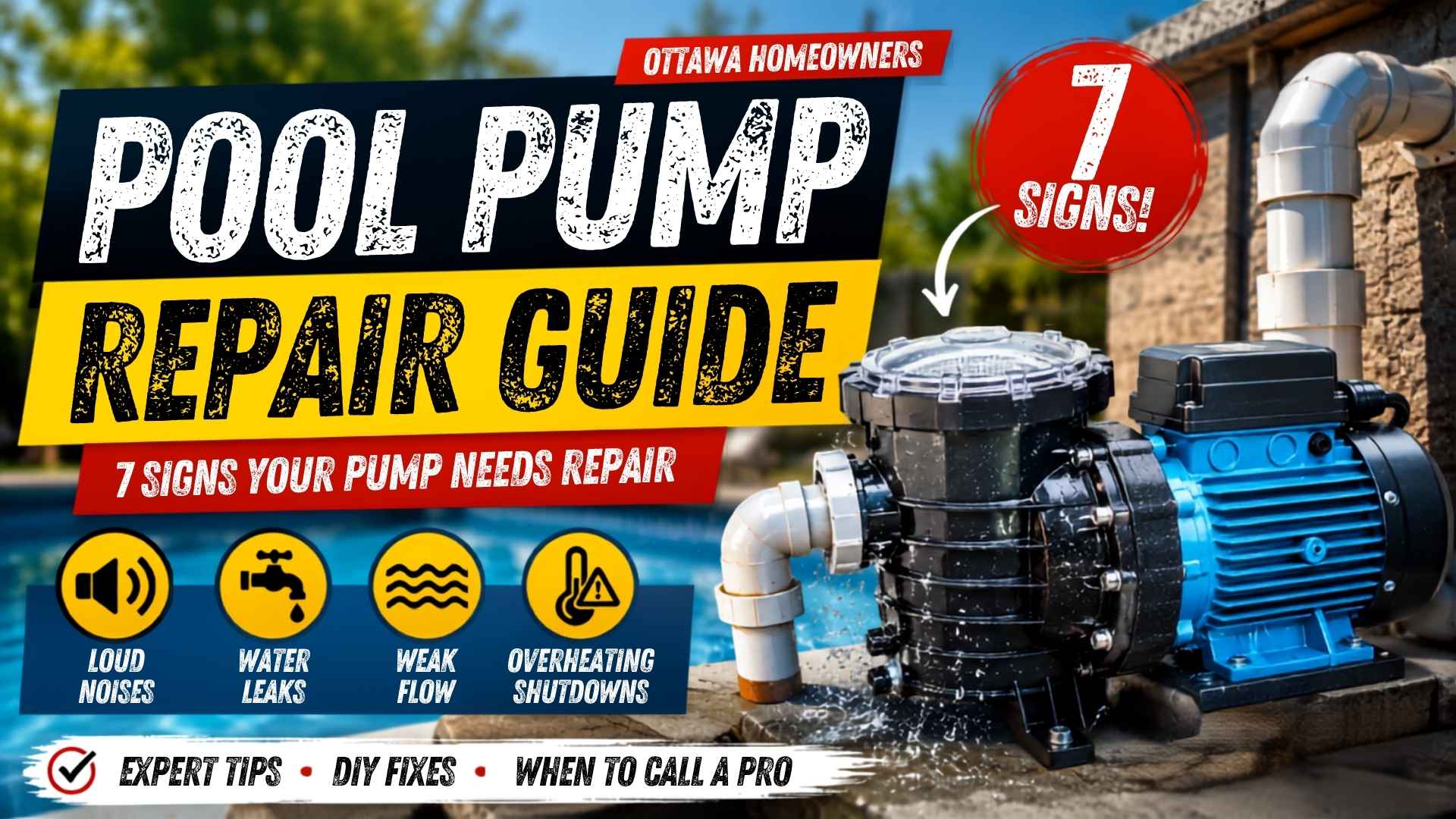
Underground suction lines and return pipes experience shifting ground pressure over time. A worn pump mechanical seal, leaking multiport valve gasket, or cracked underground pipe fitting allows continuous water loss whenever the filtration pump runs. Inspecting equipment pads regularly helps uncover hidden mechanical leaks before water damages nearby electrical components.
How to Tell If Your Pool Has a Leak
Performing the 24-Hour Bucket Test
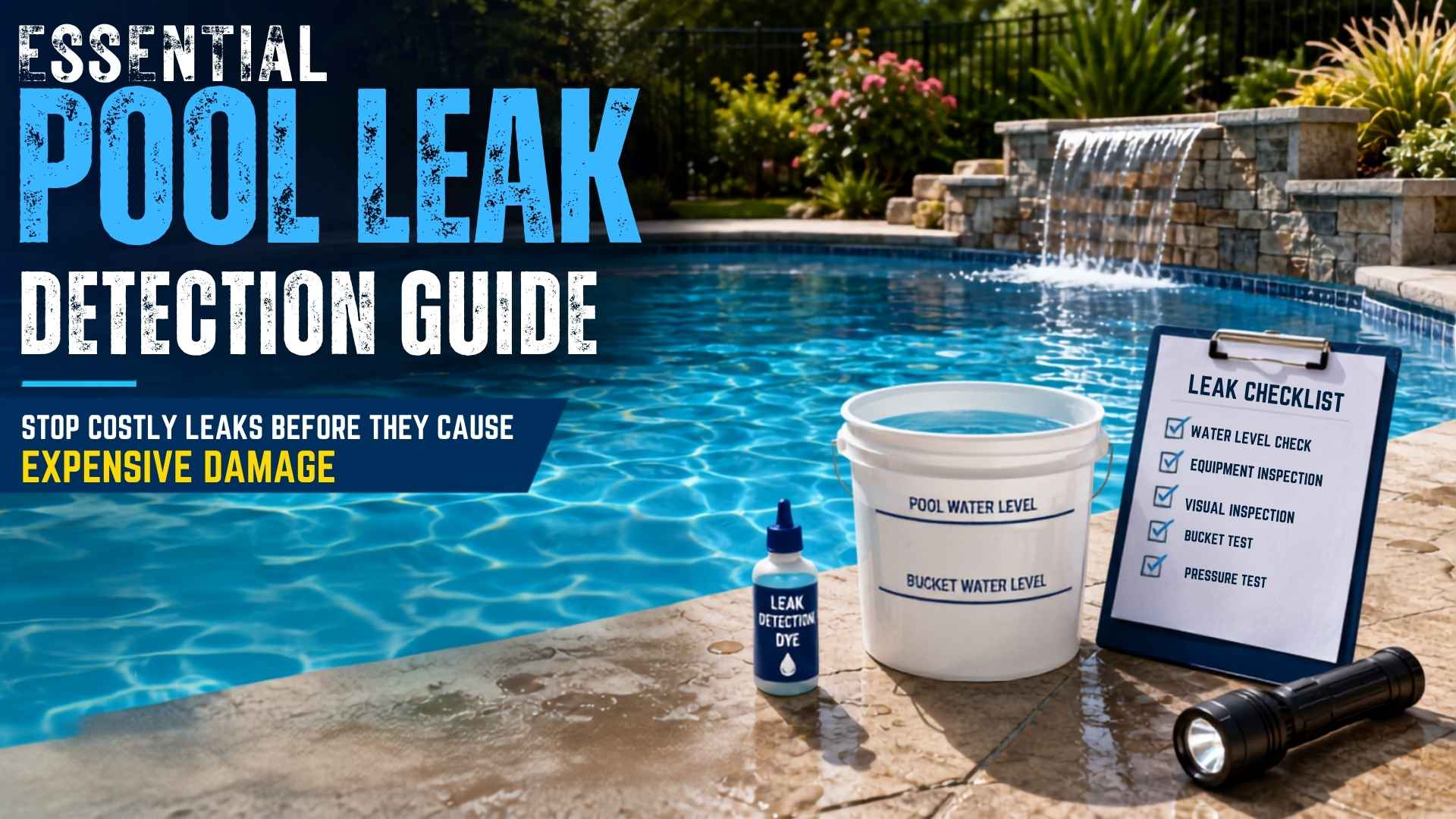
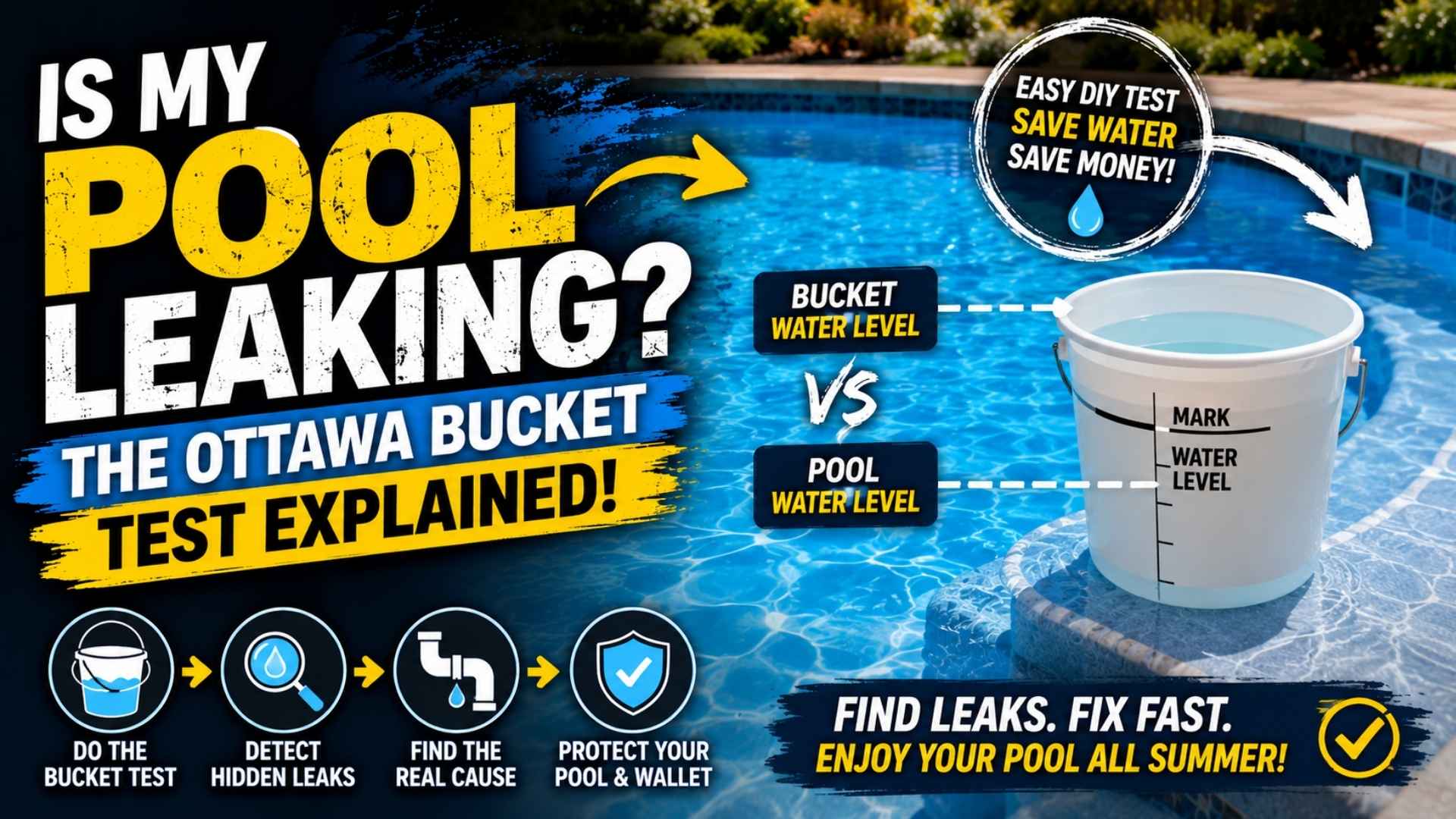
The bucket test for pool leaks is a simple, highly accurate method to distinguish atmospheric evaporation from structural leakage. It costs nothing and takes five minutes to set up.
1. Fill a 5-Gallon Bucket with Pool Water
Using pool water keeps the starting temperature identical to the pool itself, which is essential for an accurate evaporation comparison.
2. Place the Bucket on the Second Pool Step
The bucket must be partially submerged to match pool water temperature throughout the test. If it floats, weigh it down with a rock placed inside.
3. Mark Both Water Levels with Waterproof Tape
Mark the pool water level on the outside of the bucket and the bucket water level on the inside. Both marks are your reference starting points.
4. Wait 24 Hours with the Pump Running Normally
Do not run the test during rain, as rainfall will distort the results and you will need to start over. Run the pump at normal operating hours.
5. Compare the Two Drops
Measure how far each level fell from its mark. Equal drops mean evaporation. A significantly larger drop in the pool confirms an active leak.
⚠ Pool Dropped More: Leak Confirmed
A significantly larger drop in the pool than the bucket confirms structural water loss. Time to inspect equipment, liner, and skimmer before the damage escalates.
Inspecting Equipment Pads and Surroundings
Perform a physical inspection around your filter pad, heater, and plumbing fittings. Look for pooling water around pump housings, damp soil along underground pipe runs, or air bubbles inside the pump strainer basket. Persistent soggy grass near the pool shell strongly suggests subsurface plumbing failure.
Pool Water Loss Comparison Table
| Cause | Status | Normal Rate | Warning Signs | Recommended Action |
| Normal Evaporation | Expected | 1/4 to 1/2 inch daily | Level drops evenly during hot sunny weather | Use a solar cover at night to reduce loss |
| Splash-out and Backwash | Expected | 1/2 to 1 inch weekly | High usage or frequent filter cleaning | Monitor refills after heavy swimming sessions |
| Vinyl Liner Tear | Action Required | Exceeds 1/2 inch daily | Water drops below skimmer; soft spots under liner | Patch liner or request professional dye testing |
| Plumbing Line Leak | Action Required | Exceeds 1/2 inch daily | Air bubbles in returns; wet ground near equipment pad | Inspect pressure lines and replace faulty seals |
| Skimmer Throat Crack | Monitor | Drops to bottom of skimmer then stops | Water loss stops once level falls below skimmer line | Apply epoxy sealant or replace skimmer housing |
How to Reduce Water Loss and Prevent Costly Damage
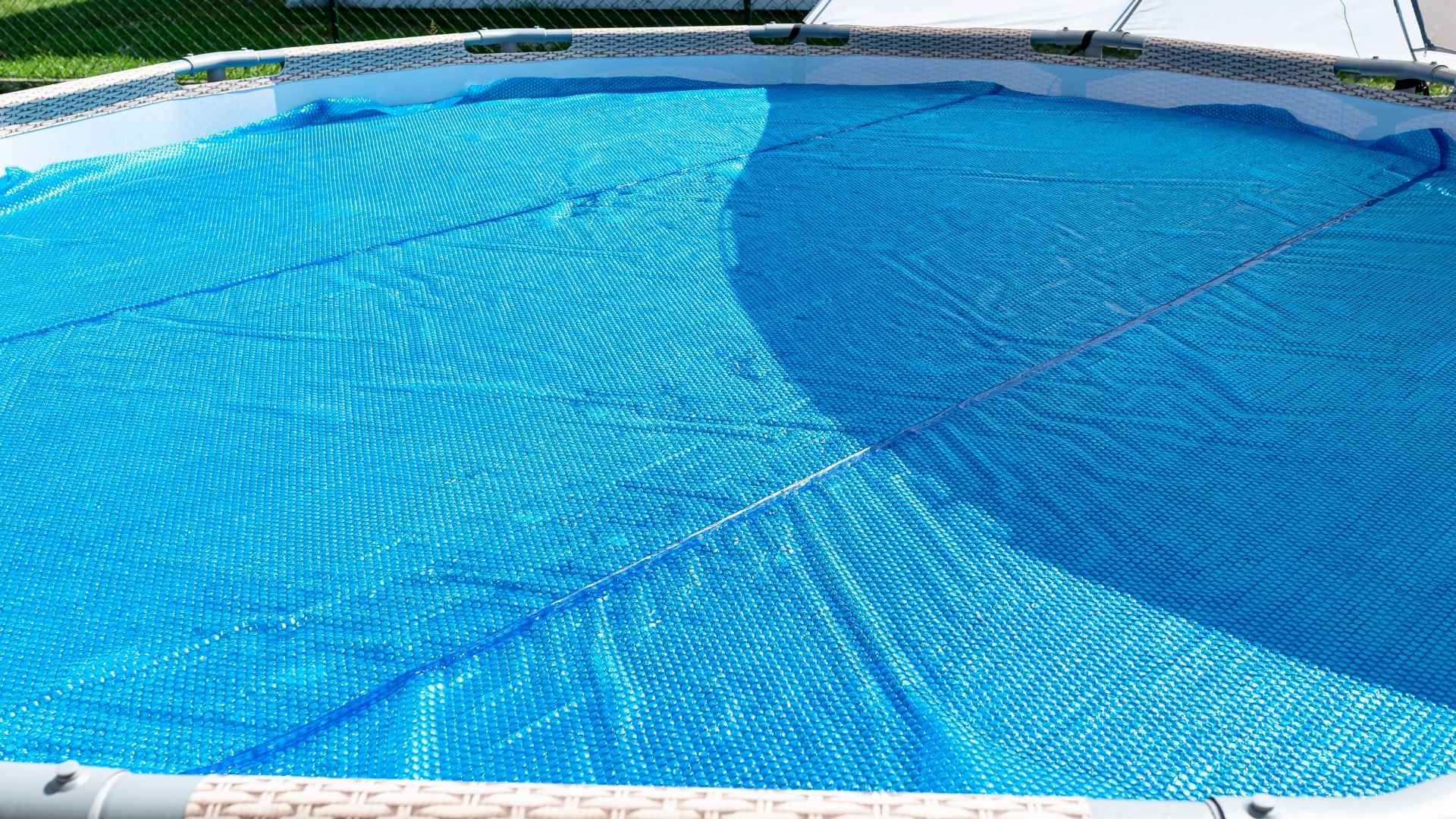
Minimizing evaporative loss requires straightforward preventive maintenance habits. Installing a solar blanket when the pool is idle retains thermal energy and cuts surface evaporation by up to 70 percent. Maintaining balanced pH and sanitizer levels protects vinyl materials from premature degradation, reducing the risk of liner tears. Furthermore, repairing small plumbing drips around equipment valves promptly preserves water and keeps operating costs low.
💡 A Solar Cover Pays for Itself Quickly
A properly fitted bubble solar cover can reduce evaporation by up to 95 percent according to the Cal Poly study, and cuts chemical consumption by reducing the water volume that needs to be replaced and re-treated. For an Ottawa pool that operates 3 to 4 months a year, the water and chemical savings typically recover the cost of the cover within a single season.
When to Call a Professional Leak Detection Specialist
When your bucket test confirms a leak or water loss continues despite minor surface repairs, professional swimming pool leak detection is essential. Specialized technicians utilize ultrasonic acoustic listening devices and pressure testing equipment to pinpoint underground pipe cracks without disturbing surrounding landscaping. If you suspect complex subsurface leaks, trusting experienced Ottawa Valley pool maintenance services in Ottawa ensures precise diagnostics and long-term protection for your pool shell.
Frequently Asked Questions
Why is my pool losing water every day?
Daily water loss occurs naturally through evaporation, splashing, and filter backwashing. However, if your surface level drops more than a quarter-inch daily, an undetected liner tear or plumbing leak is likely present.
How much daily pool evaporation is normal?
Average normal pool evaporation rates range between 1/4 inch and 1/2 inch per day, depending on air temperature, direct sunlight exposure, wind speed, and humidity levels.
What is the bucket test for pool leaks?
The bucket test compares water loss in an isolated bucket against the main pool over 24 hours. Equal loss indicates evaporation, while greater loss in the pool confirms a leak.
Can wind increase pool evaporation?
Yes, steady wind breaks surface tension and sweeps away the humid boundary layer directly above the pool water, rapidly accelerating evaporation rates.
How do I know if my pool leak is underground?
Persistent water loss accompanied by soggy soil around the pool perimeter, sinking patio pavers, or constant air bubbles in your return jets typically indicates an underground pipe leak.
When to call a pool leak detection expert?
You should contact an expert when water loss exceeds 1/2 inch per day, the bucket test confirms leakage, or water pools continuously around equipment pads without an obvious source.
Final Thoughts on Managing Pool Water Levels
Keeping a close eye on your surface water level ensures efficient filter operation and protects your backyard infrastructure. While atmospheric evaporation is normal during warm weather, addressing excessive loss immediately prevents expensive structural damage. Regular monitoring, simple bucket testing, and timely professional care will keep your swimming pool safe and inviting all season long.