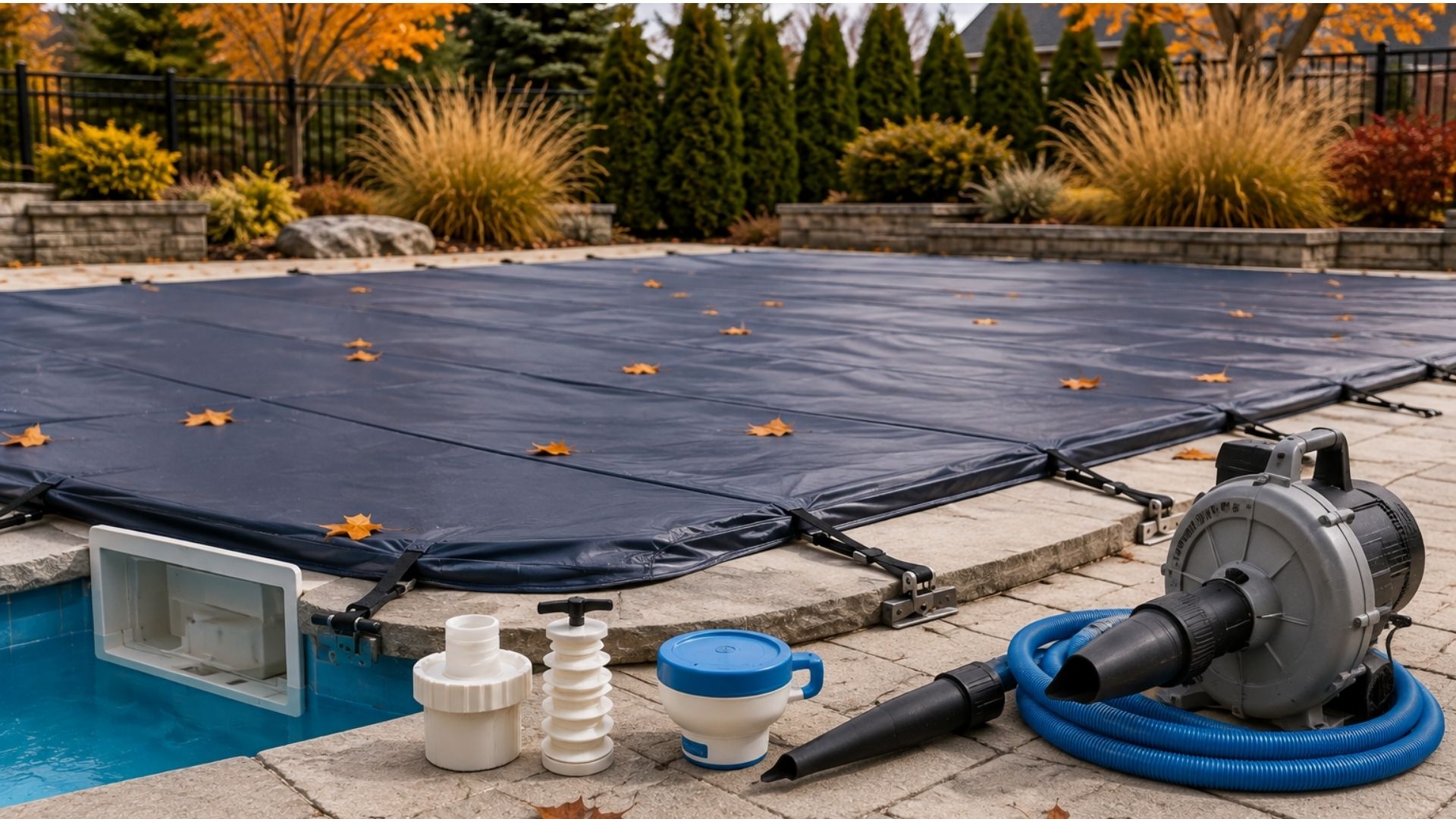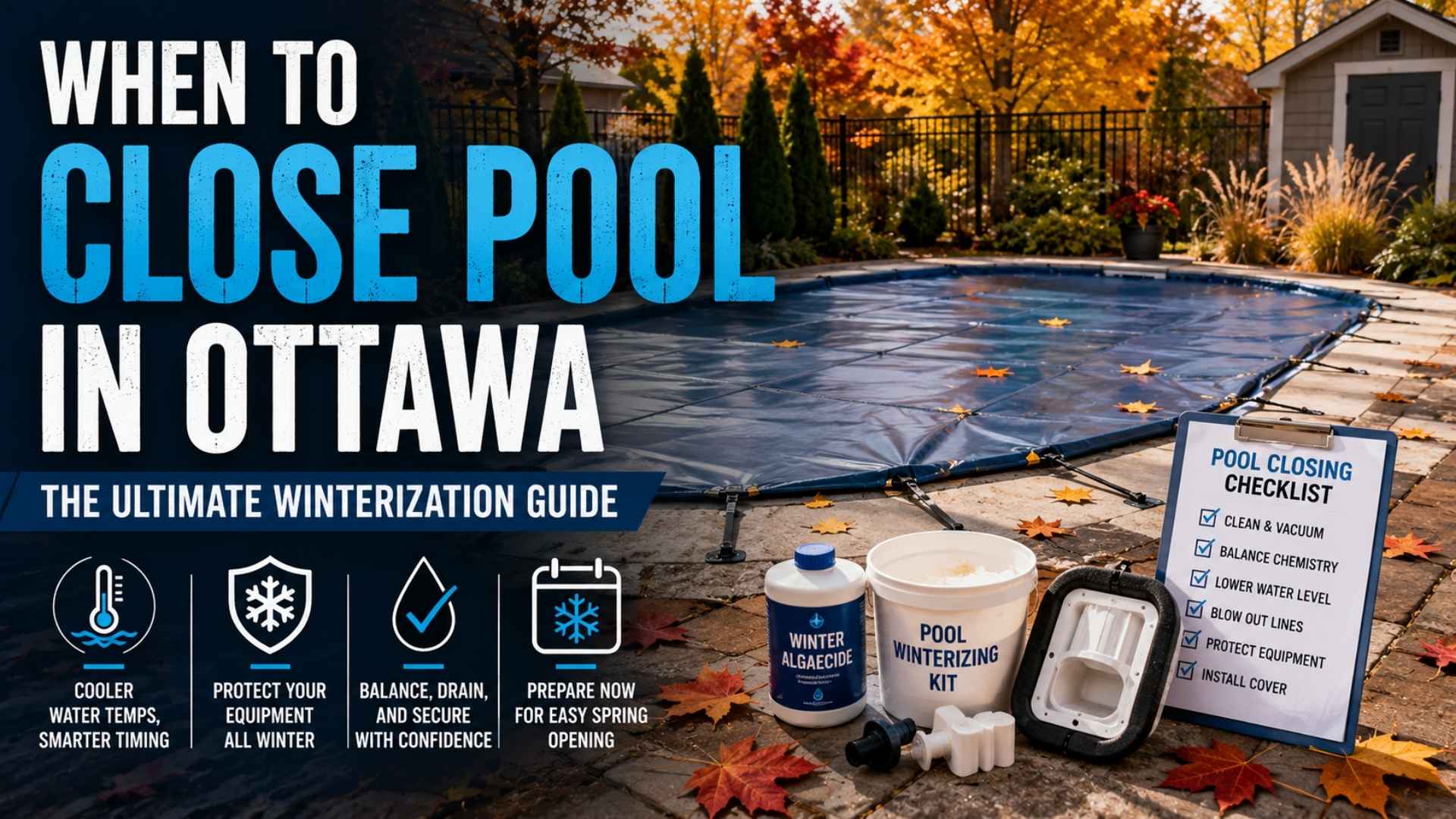
Preparing a swimming pool for a six-month Ontario winter requires more than just draining pipes and pulling a cover across the surface. Adding the right pool closing chemicals safeguards interior liner surfaces, protects plaster from scaling, and prevents aggressive off-season algae growth. As cold autumn temperatures arrive across Kanata, Nepean, and Orléans, establishing proper water balance ensures your pool water remains clear until spring reopening.

What Chemicals Do You Need to Close a Pool?
Standard pool closing chemicals include pH and alkalinity adjusters, a concentrated pool shock treatment, non-copper algaecide, and calcium hardness balancers. Before adding chemicals, homeowners must perform comprehensive pool water testing to adjust alkalinity to 80-120 ppm and pH to 7.2-7.6. Proper chemical dosing prevents liner staining, protects metal equipment, and inhibits algae growth during freezing Canadian winters.
Why Pool Water Testing Comes Before Adding Chemicals
Testing and Balancing Water Parameters
Adding chemicals for closing a pool without testing the water first leads to improper dosing and wasted products. Testing reveals exact chemical needs, ensuring balanced water before winter shocks or algaecides are applied across Stittsville and Barrhaven. Understanding pool water chemistry in Ottawa helps homeowners prevent corrosive etching or scale deposits under winter covers.
Tip
Liquid test kits are generally more accurate than test strips for the numbers that matter most at closing, pH, chlorine, and alkalinity. If your last reading of the season is borderline, a liquid kit is worth the extra two minutes.
Balancing Pool pH and Alkalinity
Total alkalinity acts as a buffer for pH. Adjusting total alkalinity to 80-120 ppm stabilizes pool pH and alkalinity within the ideal 7.2-7.6 range, protecting pool surfaces against acidic corrosion during long freeze periods.
Checking Pool Chlorine Levels Before Closing
Evaluating pool chlorine levels before closing ensures sufficient sanitizer is present to neutralize bacteria. Proper sanitizer levels prevent organic contaminants from lingering in the water over the off-season.
Essential Pool Closing Chemicals and Treatment Types
Sanitizers, Shock Treatments, and Algaecides
Combining sanitizers, shock, and algaecides provides multi-layer protection against algae spores and organic debris accumulated during autumn.
Applying Pool Shock Treatment
Performing a pool shock treatment before closing destroys combined chloramines and lingering bacteria. Adding pool shock before closing oxidizes organic waste, ensuring winterizing pool water remains sanitized throughout early freezing cycles.
Adding Algaecide for Pool Closing
Applying non-copper algaecide for pool closing creates a protective barrier that suppresses microscopic spores. Effective algaecide application is key to preventing algae during winter when circulation pumps remain turned off.
Calcium Hardness and Off-Season Surface Protection
Testing calcium hardness before pool closing prevents plaster leaching and vinyl staining. Maintaining calcium levels between 200-400 ppm protects equipment pads and interior finishes against harsh Canadian winters. Learning the importance of a balanced pool ensures long-term protection for your backyard investment.
Pool Closing Chemical Checklist & Kit Considerations
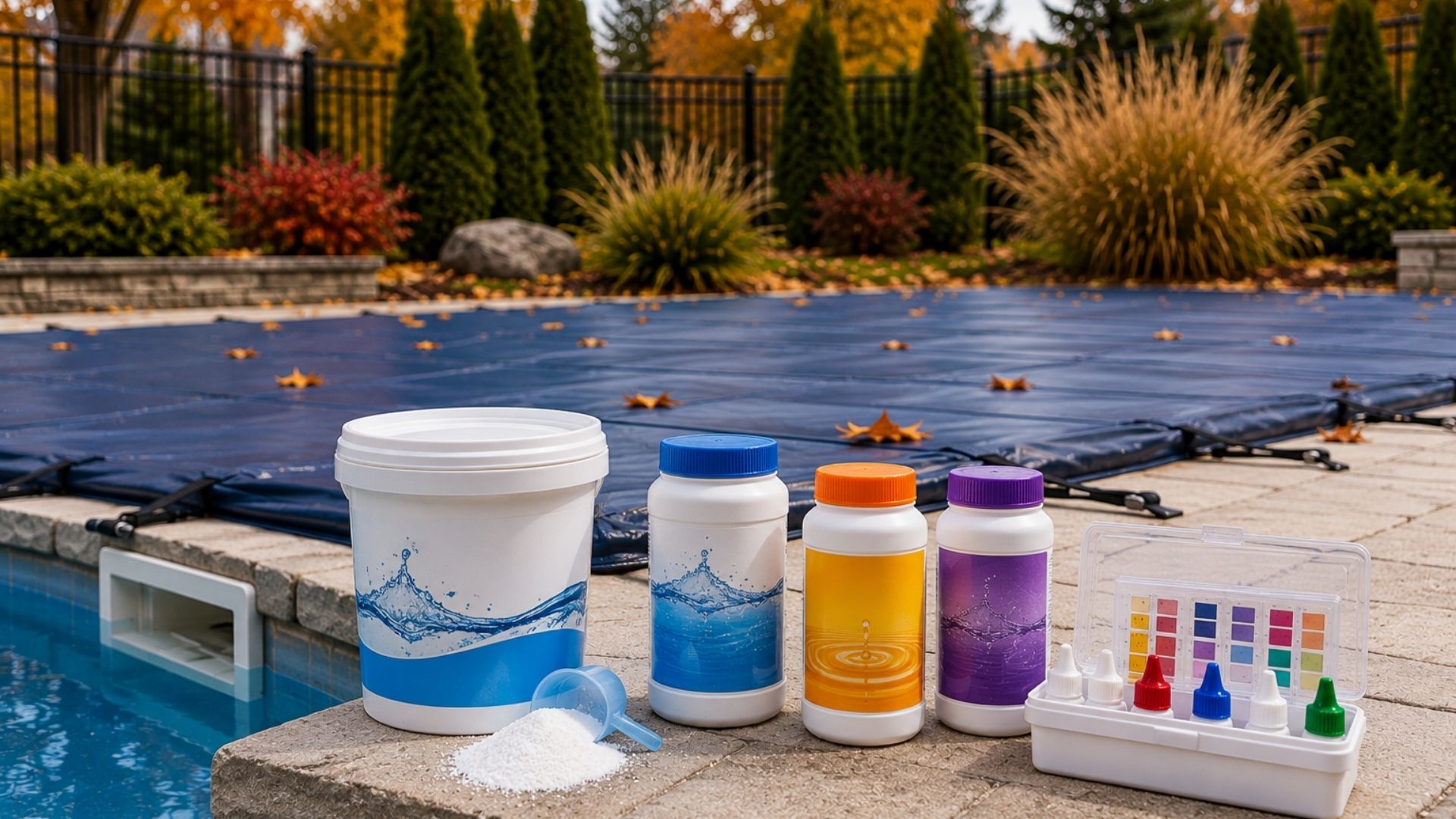
Homeowners often evaluate a pre-packaged winter pool chemical kit. The following pool closing chemical checklist outlines essential products and their main functions:
| Chemical Product | Main Function | Target Range |
| pH Increaser / Decreaser | Balances water acidity | 7.2 to 7.6 |
| Alkalinity Booster | Buffers pH fluctuations | 80 to 120 ppm |
| Pool Shock Treatment | Oxidizes organic contaminants | 3.0 to 5.0 ppm |
| Non-Copper Algaecide | Prevents off-season algae growth | Label instructions |
| Calcium Hardness Increaser | Protects surfaces and equipment | 200 to 400 ppm |
Chemical Handling Safety and Avoidable Mistakes
Critical Pool Chemical Handling Safety Rules
Never mix different chemicals together in concentrated form. Always add chemicals directly to water rather than adding water to chemicals, wear protective eyewear, and store winter pool chemicals Ottawa products in cool, dry locations away from direct sunlight.
⚠ Warning
Never combine chlorine-based shock with algaecide in the same container or pour them into the pool back to back. Mixing concentrated pool chemicals can trigger a dangerous reaction, off-gassing, or splash-back. Add one product at a time, let it circulate, and store leftover containers separately, upright, and out of reach of children and pets.
Common Mistakes Homeowners Should Avoid
Common mistakes include adding shock directly onto vinyl liners without pre-dissolving, ignoring pH balance, over-dosing algaecide, and assuming chemicals eliminate the need to drain equipment or blow out plumbing lines.
When to Call Professional Closing Services
Homeowners with complex salt chlorination systems or commercial equipment pads often prefer professional assistance. Scheduling a certified pool closing service Ottawa team like Ottawa Valley Pool Closing Services in Ottawa ensures precise water testing, chemical dosing, line blowouts, and equipment winterization.
Frequently Asked Questions About Pool Closing Chemicals
What pool closing chemicals are required before winter?
Essential chemicals include pH and alkalinity balancers, pool shock treatment, non-copper algaecide, and calcium hardness adjusters.
Should I shock my pool right before closing?
Yes, shocking the pool oxidizes organic contaminants and eliminates bacteria before the winter cover is secured over the basin.
Are winter pool chemicals enough to protect a pool without physical winterization?
No, chemicals only treat water chemistry. Equipment must still be drained and plumbing lines blown out to prevent severe freeze damage.
Final Thoughts on Pool Closing Chemicals
Using proper pool closing chemicals is vital for protecting your swimming pool during cold Ottawa winters. Testing water before treatment, balancing pH and alkalinity, and applying shock and algaecide ensures clear water and easy spring reopening. Following safety guidelines and proper chemical dosing preserves pool surfaces and equipment throughout the off-season.