A covered pool is not automatically a safe pool. Many homeowners in Ottawa, Kanata, Nepean, Barrhaven, and Orleans treat a winter cover as the final step in pool safety, when it is really just one part of a broader set of responsibilities. Understanding what pool covers actually do, what your local enclosure rules require, and which common assumptions are incorrect helps protect your family and your investment through the off-season.
Is a Covered Pool Safe?
A pool cover reduces access to the water and protects the pool from debris and weather, but it does not make the pool automatically safe. The cover must be appropriate for the intended purpose, installed correctly, and supported by other safety measures such as secured fencing and functioning gate locks. No pool cover should be walked on or used as a surface for play or standing.
35%
of drownings in Canada happen between October and April
Under 20 C
water temperature in most drownings, according to the Lifesaving Society
10 seconds
the least time a drowning can take, per Lifesaving Society tips
Common Winter Pool Safety Myths
Myth 1: A Cover Means the Pool Is Safe
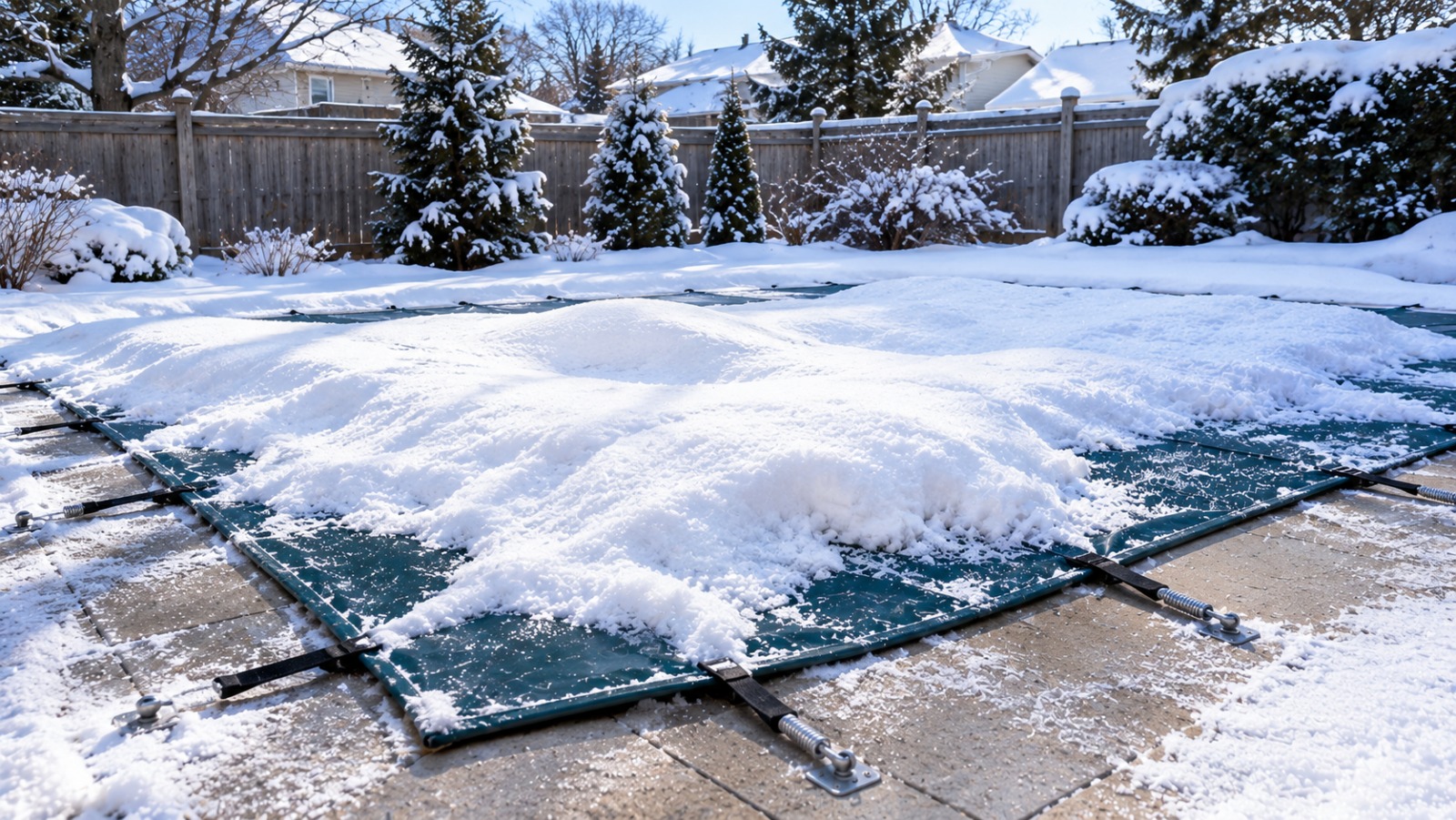
A winter cover or safety cover reduces some risks, but it is only effective when correctly installed, properly maintained, and used alongside the required access barriers. A cover that is sagging, poorly anchored, or accumulating heavy snow or meltwater is not providing the level of protection the product was designed to deliver.
Myth 2: You Can Walk Across a Pool Cover
Walking or standing on a pool cover is not safe unless the specific product documentation explicitly describes a supported intended use and the cover is installed and functioning exactly as designed. In general, a pool cover is not a walking surface, and treating it as one risks serious injury.
Myth 3: A Closed Pool Needs No Attention During Winter
A winterised pool still requires periodic checks. The cover condition, visible anchor points or springs, water accumulation on top of the cover, and the state of access barriers all merit attention when it is safe to inspect them. Ignoring the pool entirely until spring can mean discovering a damaged cover, dislodged fittings, or compromised access controls after the worst weather has already passed.
Pro tip
Do a quick walk-around from the deck edge after each major storm or thaw. Look for
sagging, standing water, a visible tear, a loose strap or spring, and a gate that no longer latches. Spotting one of these early is usually a small fix. Left alone until spring, it can become a large one.
Myth 4: A Winter Cover and a Safety Cover Are the Same Thing
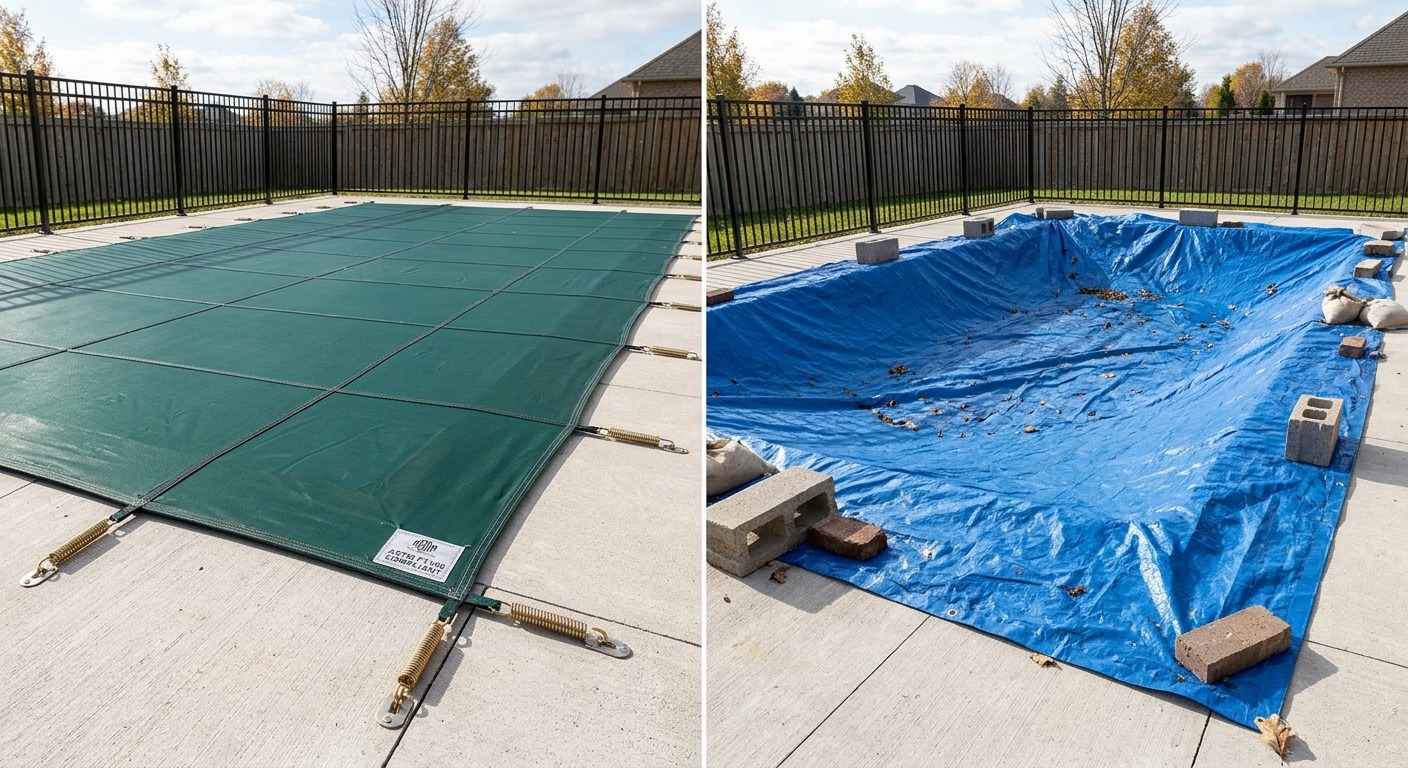
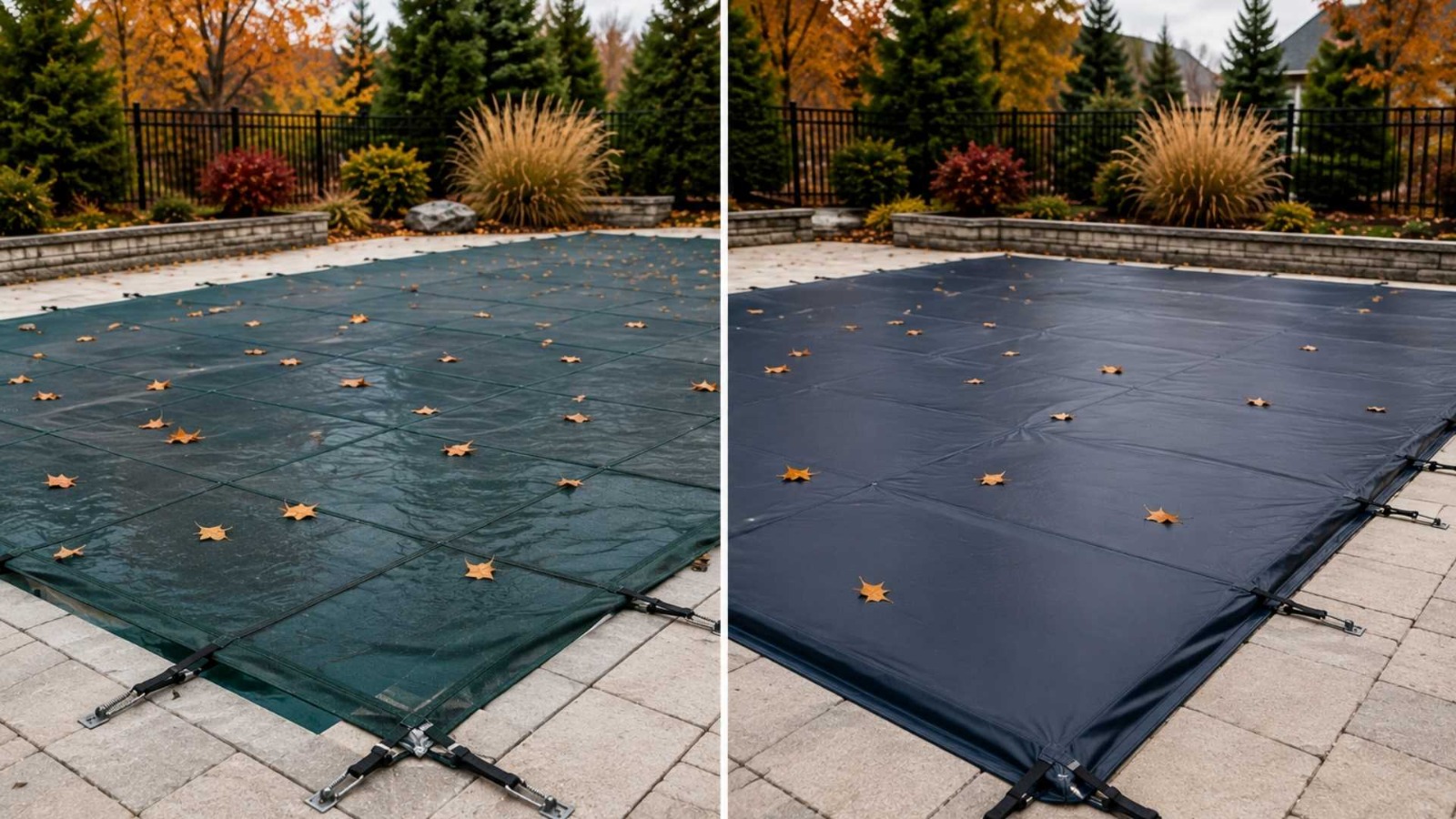
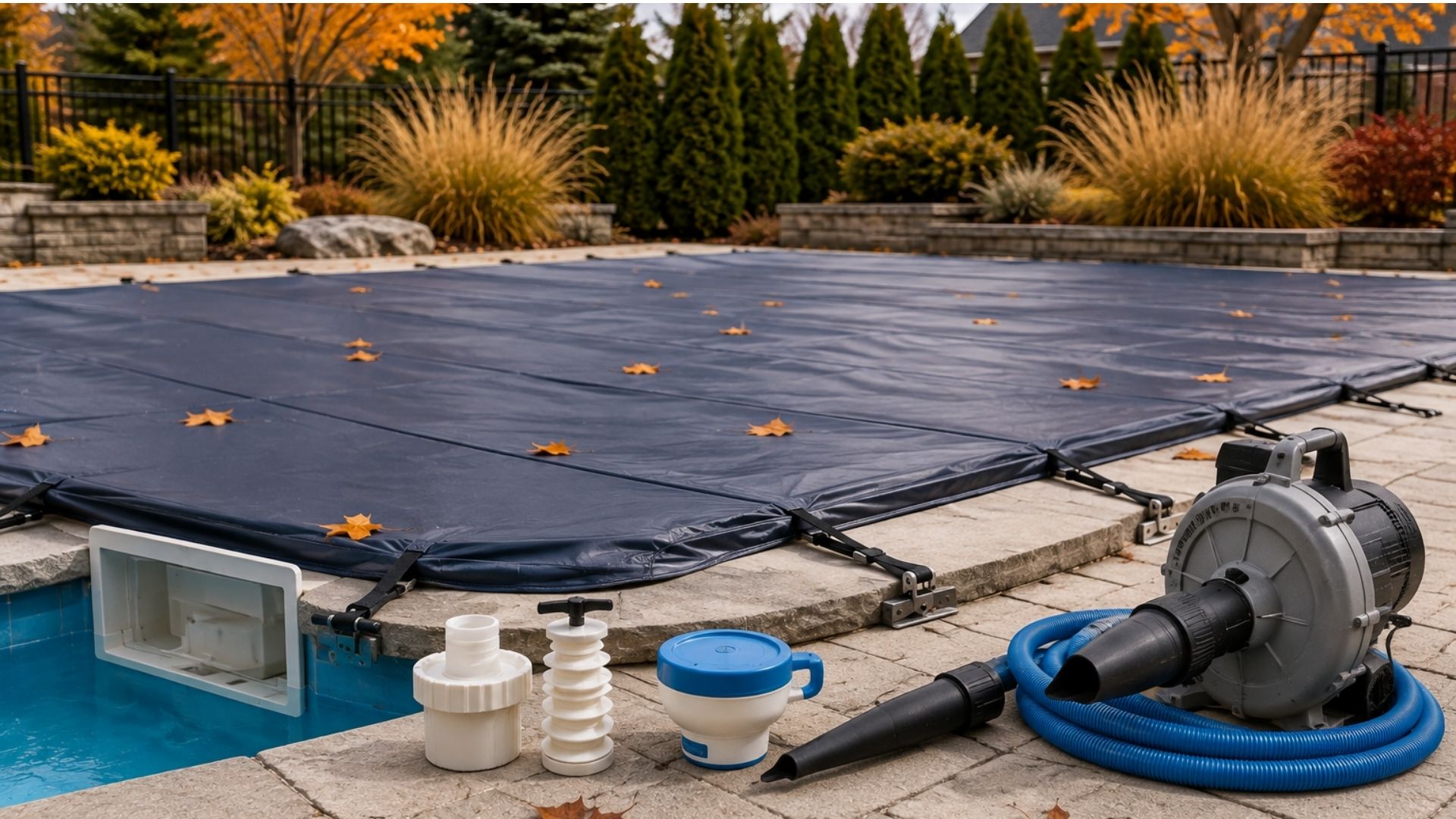
These are different products designed for different purposes. A winter cover is primarily intended to protect the pool from debris, weather, and evaporation during the off-season. A safety cover is engineered to help limit accidental access and is anchored to the pool deck with a fastening system designed for that function. Understanding pool safety cover vs winter cover differences helps homeowners choose the right product for each purpose.
Myth 5: Ontario Law Requires a Certified Safety Cover on Every Residential Pool
This is not accurate as a universal statement. Pool enclosure requirements in Ontario are typically established through municipal bylaws rather than a single provincial law, and the rules vary by location and pool type. In Ottawa, the Pool Enclosure By-law requires qualifying privately owned outdoor pools to have a compliant enclosure, with specific requirements for fencing, gates, and access control. A compliant safety cover may qualify as the enclosure for certain hot tubs under specific conditions in that bylaw, but this exception does not apply broadly to inground swimming pools. Homeowners should verify the rules that apply to their specific property and pool type with the City of Ottawa or their local municipality.
Pool Safety Covers vs. Winter Covers: Key Differences at a Glance
| Feature | Safety Cover | Winter Cover |
| Primary purpose | Limit accidental access | Weather and debris protection |
| Anchoring system | Deck anchors and springs | Weights, water bags, or straps |
| Designed to resist access | Yes, when correctly installed | Not typically |
| Replaces required enclosure | Only where bylaw permits | Generally not |
| Winter pool protection | Secondary function | Primary function |
What Ottawa’s Pool Enclosure Rules Actually Require
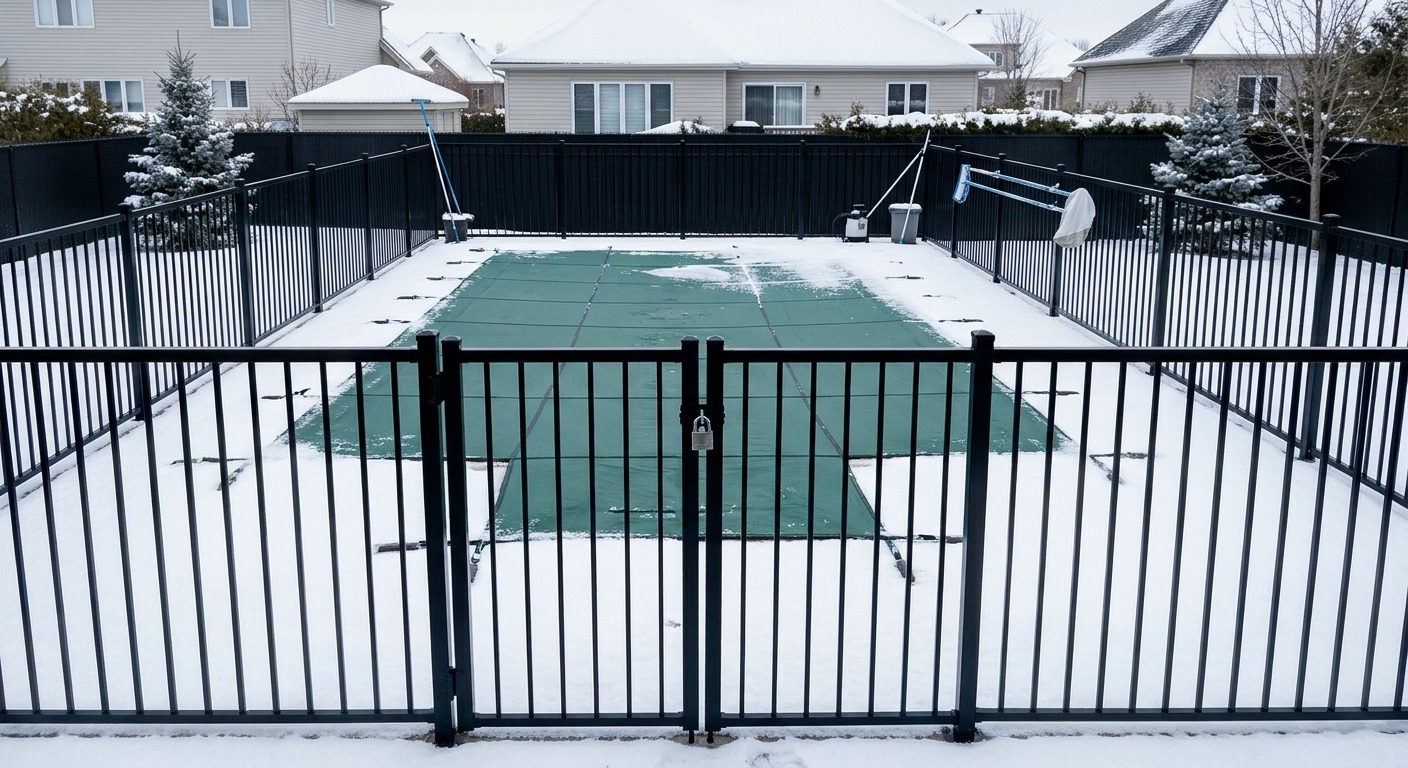
Qualifying privately owned outdoor pools in Ottawa must have a compliant enclosure under the city’s Pool Enclosure By-law. The bylaw sets out requirements for enclosure construction, gate hardware, locks, and access control. An ordinary winter cover does not meet these requirements. The bylaw includes a limited exception allowing a qualifying hot tub with a compliant, securely locked safety cover to satisfy the enclosure requirement under specific conditions. This exception does not apply to inground swimming pools without explicit bylaw confirmation.
Checking Whether Your Cover Meets Local Rules
Before assuming any pool cover satisfies an enclosure requirement, homeowners should confirm the applicable rules with the City of Ottawa’s building or bylaw department. Requirements differ by pool type, installation, and the specific conditions that the cover and property must meet. Do not rely on general summaries or assume that what applies to a neighbour’s hot tub applies to your inground pool.
Risks of Swimming in or Around a Winterised Pool
A pool that has been closed and winterised for the season is not ready for swimming until it has been properly recommissioned. Circulation equipment is shut down, water chemistry has not been tested for swimming conditions, and the surrounding area may be icy or slippery. Entry into the water beneath a closed cover can obstruct visibility and access, making a dangerous situation significantly worse. Swimming beneath a pool cover should never occur under any circumstances.
Warning
Winter pool water is very cold. The Lifesaving Society describes cold water shock, a sudden gasp and loss of breathing control on entering cold water, and notes that you can survive only a few minutes in it. Anyone who falls in cannot be assumed to be able to swim out, even if they are a strong swimmer.
Winter Pool Maintenance That Actually Matters
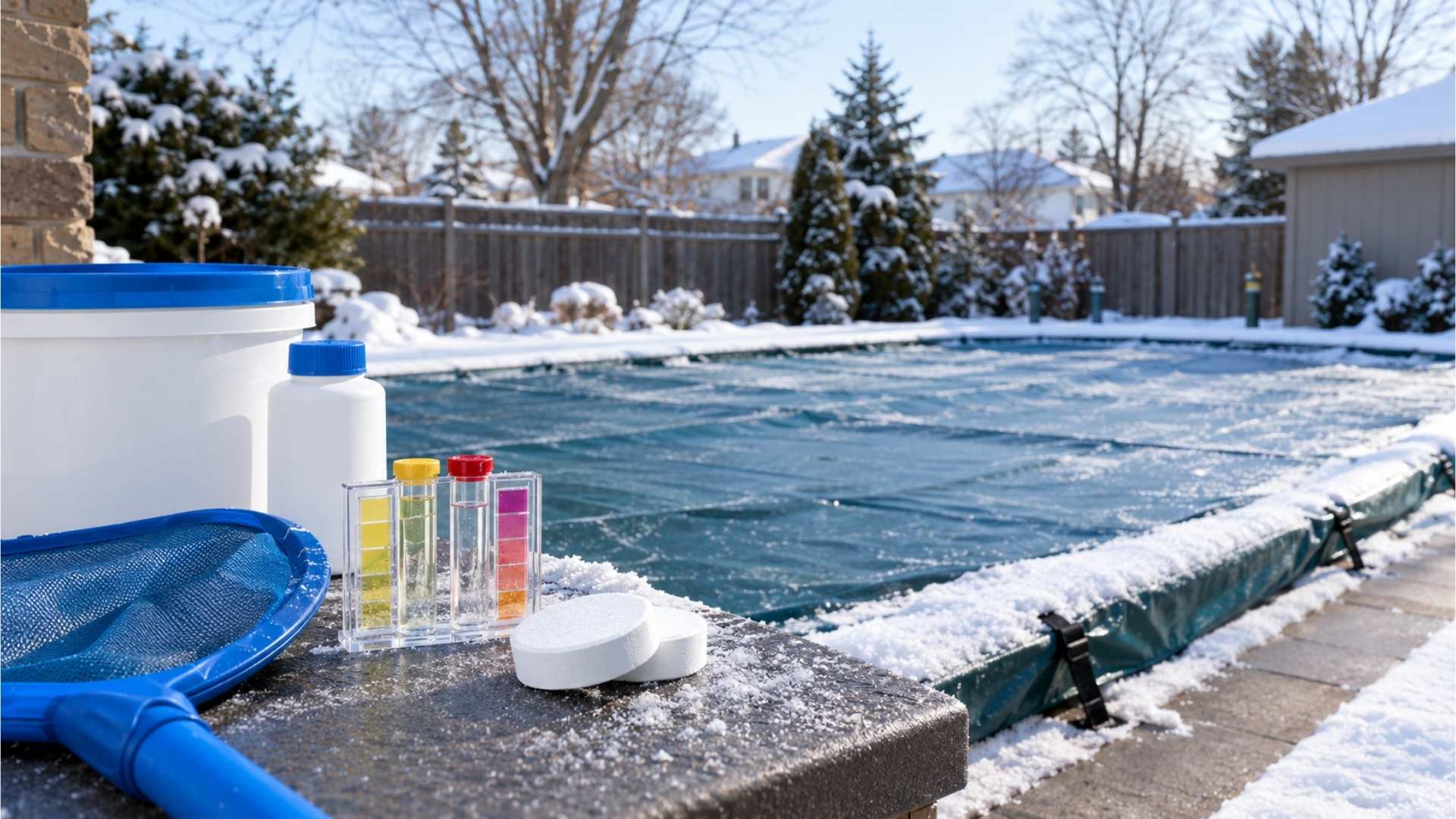
Effective winter pool care goes beyond placing a cover over the water. Inspecting the cover after significant snowfall, managing water accumulation where the manufacturer’s instructions permit, keeping gate locks functional, and ensuring access barriers remain secure are all practical measures that reduce risk throughout the colder months. Homeowners who are unsure about their cover’s condition, anchoring, or compliance with local rules can explore Winter Pool Services in Ottawa for guidance on seasonal pool care.
Choosing the right cover for your pool and Ottawa’s winter conditions is also an important step. Reviewing winter pool cover Ottawa options helps homeowners understand what products are suited to the local climate and what proper installation involves.
Frequently Asked Questions
Is it safe to swim in a covered pool?
No. Swimming beneath a closed pool cover is dangerous. The cover obstructs access and visibility. The pool must be fully opened and the cover safely removed or retracted according to the manufacturer’s instructions before anyone enters the water.
Does Ontario require a certified safety cover on every residential pool?
Not as a universal rule. Pool enclosure requirements are set by municipal bylaws that vary by location and pool type. Ottawa has its own Pool Enclosure By-law. Homeowners should confirm what applies to their property directly with the municipality.
Can a pool cover replace a fence in Ottawa?
Only under specific conditions. Ottawa’s bylaw includes a limited exception for qualifying hot tubs with a compliant, securely locked safety cover. This exception does not apply broadly to inground swimming pools. Confirm requirements with the City of Ottawa before relying on a cover in place of a required enclosure.
What should I do if snow accumulates on my pool cover?
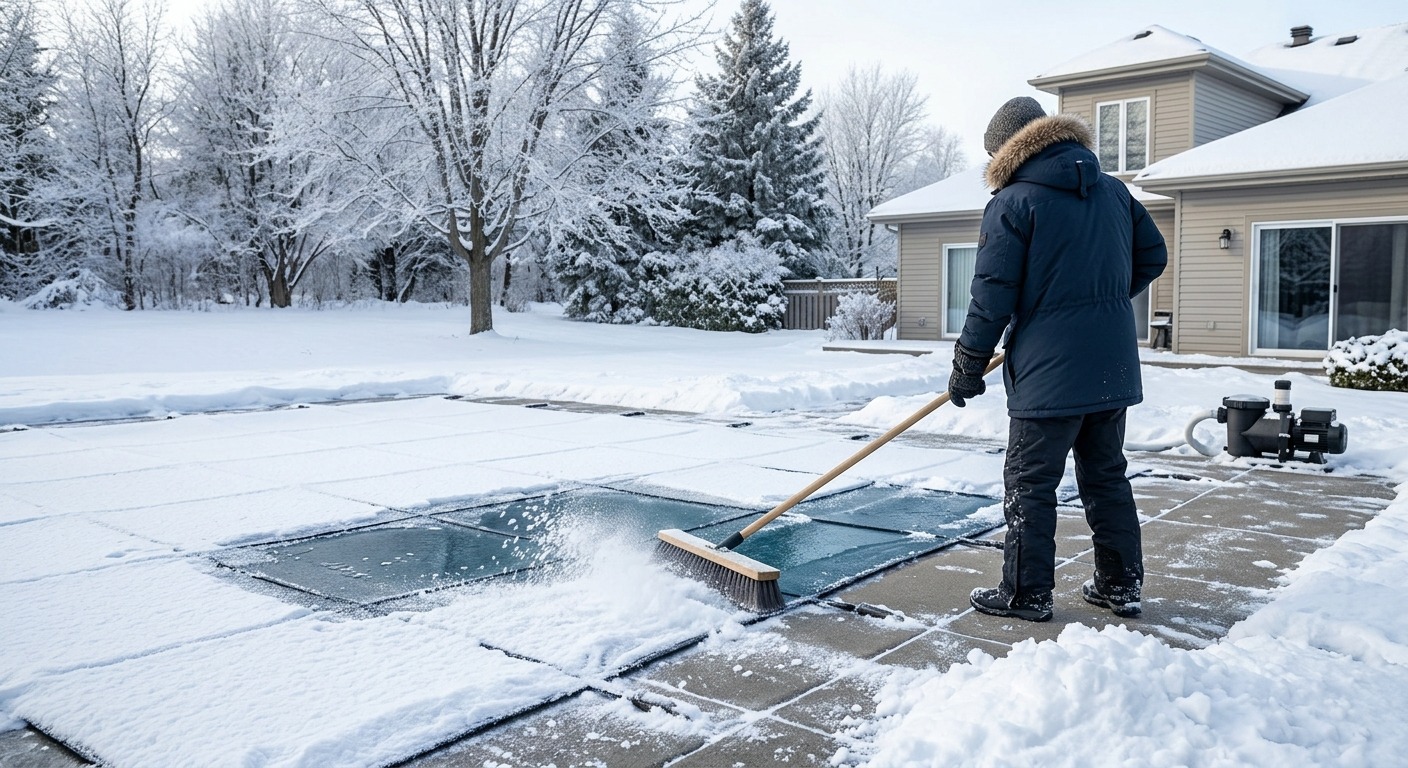
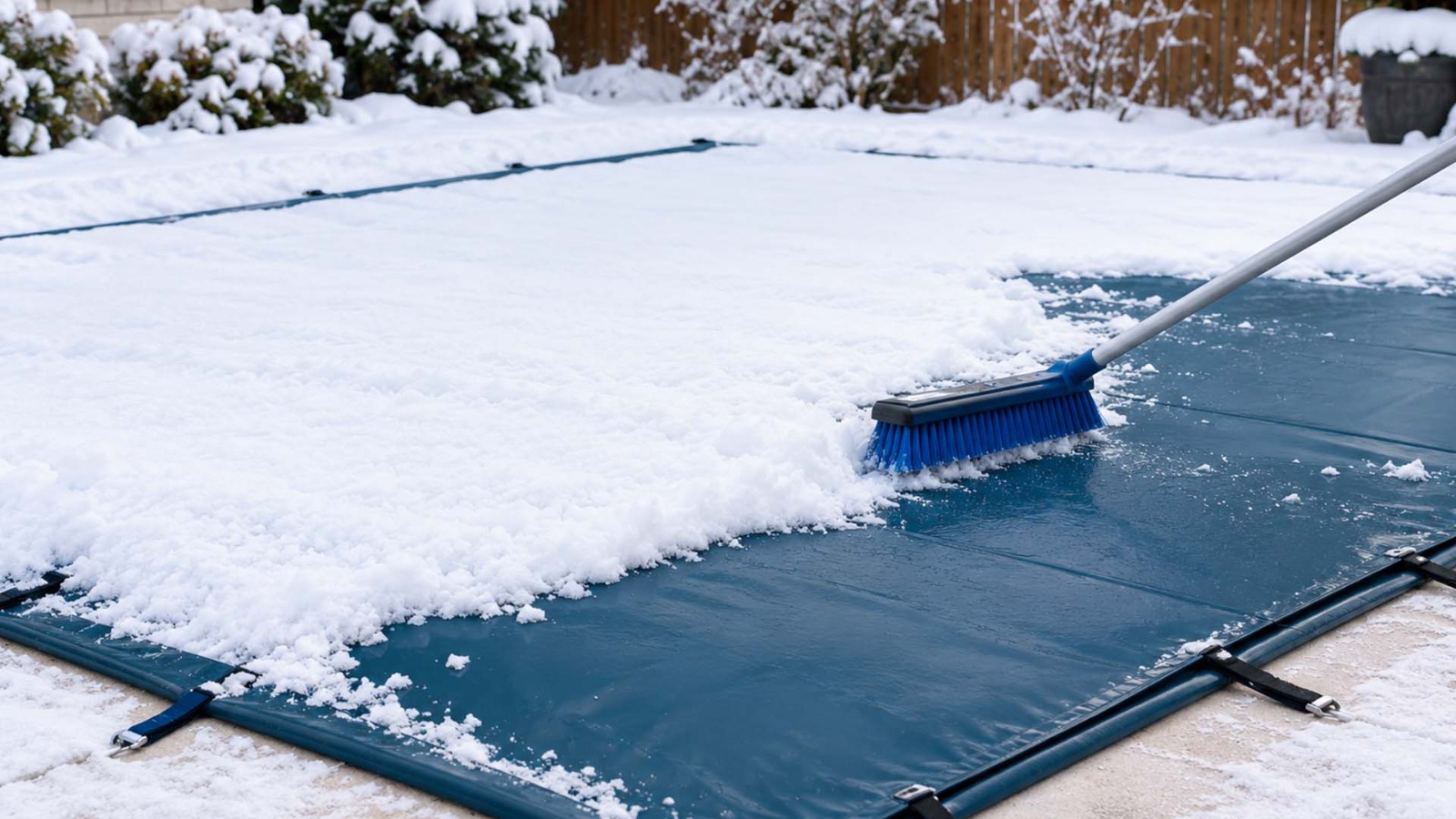
Check the manufacturer’s instructions for your specific cover before taking any action. Where approved, use a soft-bristled long-handled tool to gently move loose snow. Never walk on the cover, and do not use metal tools, ice picks, or heat to remove ice.
Conclusion: A Safe Winter Requires More Than a Cover
A pool cover is one part of a responsible winter pool setup, not the whole plan. Securing access barriers, understanding what your cover is designed to do, knowing what your local bylaws require, and checking in on the pool periodically are all part of keeping your pool area safe through Ottawa’s winter months. Homeowners who have questions about winter pool covers or seasonal preparation can contact Ottawa Valley Pools for local guidance.