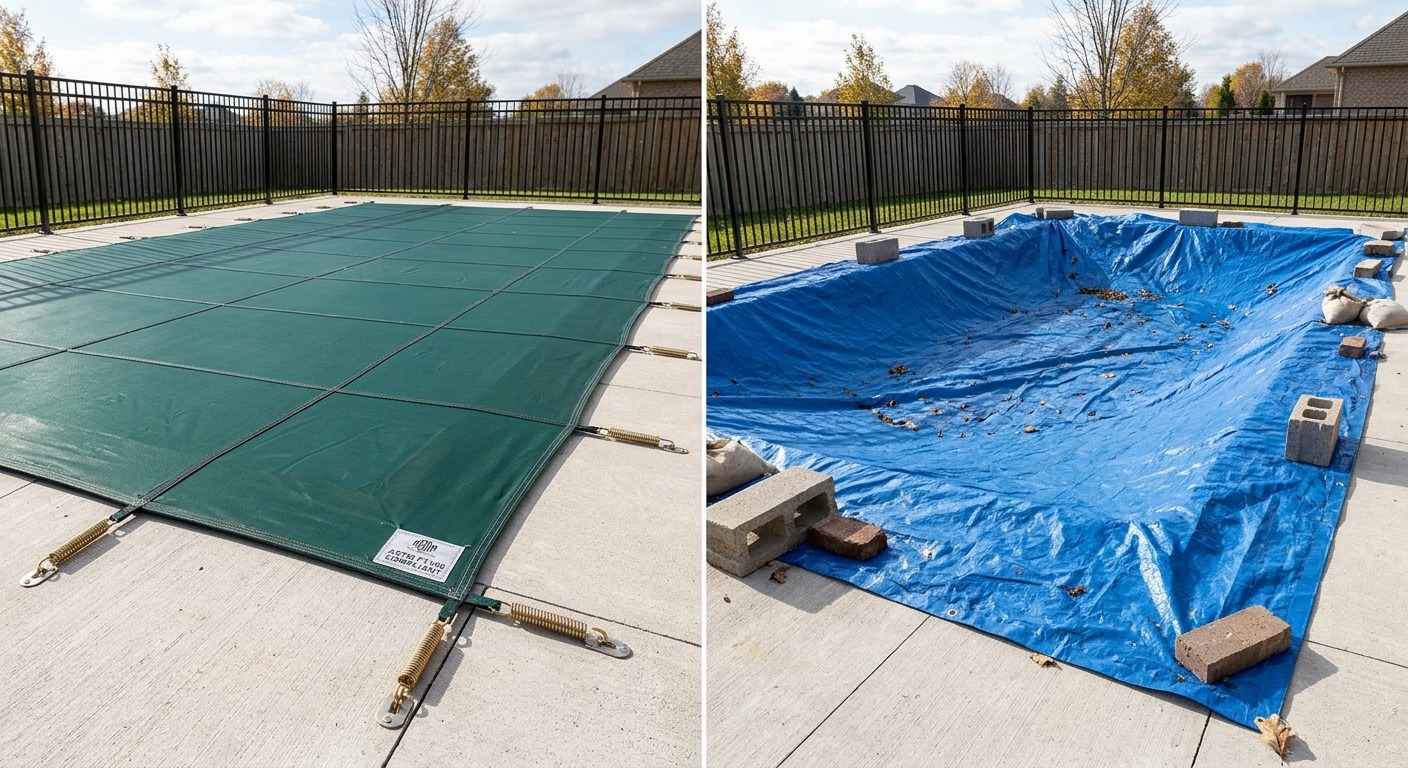
A pool safety cover and an ordinary tarp are not the same thing. Understanding Ontario pool safety cover laws starts with this distinction. A purpose-built safety cover is engineered and installed to serve a specific protective function, while a standard tarp is designed for general weatherproofing. Neither type of cover should be assumed to automatically satisfy a municipal pool enclosure requirement without checking the rules that apply to your property, pool type, and municipality.
Are Certified Safety Covers Required by Ontario Law?
Ontario does not have a single province-wide law requiring certified safety covers on every residential swimming pool. Pool enclosure requirements are typically established and enforced through municipal bylaws, which vary across Ontario. In Ottawa and surrounding areas, homeowners must comply with the local bylaw for their specific pool or spa type. Consulting the applicable municipal rules before selecting a cover is the appropriate first step.
600 mm
(24 in) water depth at which Ottawa’s bylaw treats a body of water as a pool
About 17
private-pool drowning deaths per year in Ontario, the highest of any province in one national report
9%
of unintentional water deaths in Canada happen in backyard pools
What Makes a Pool Safety Cover Different From a Tarp?
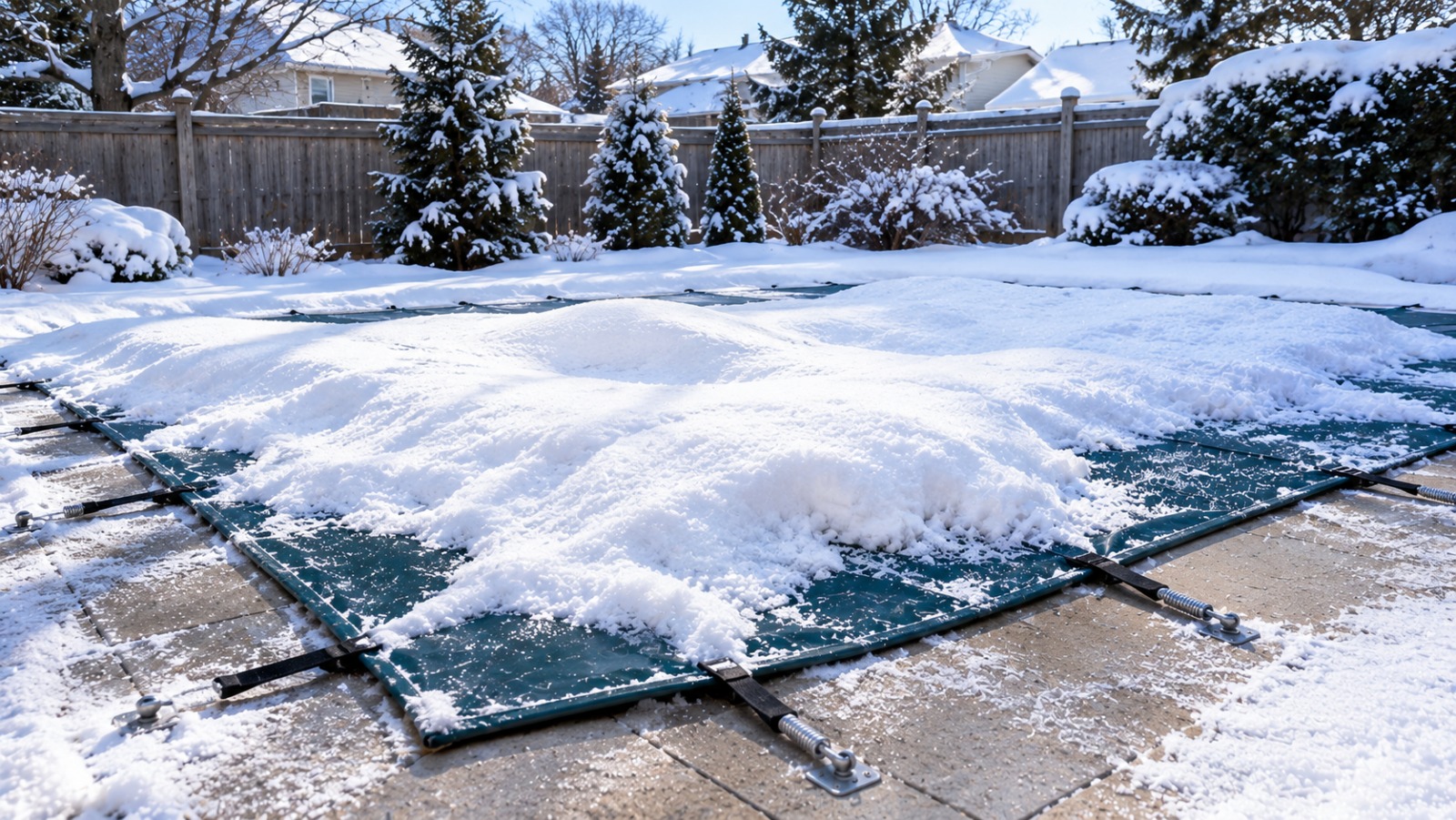
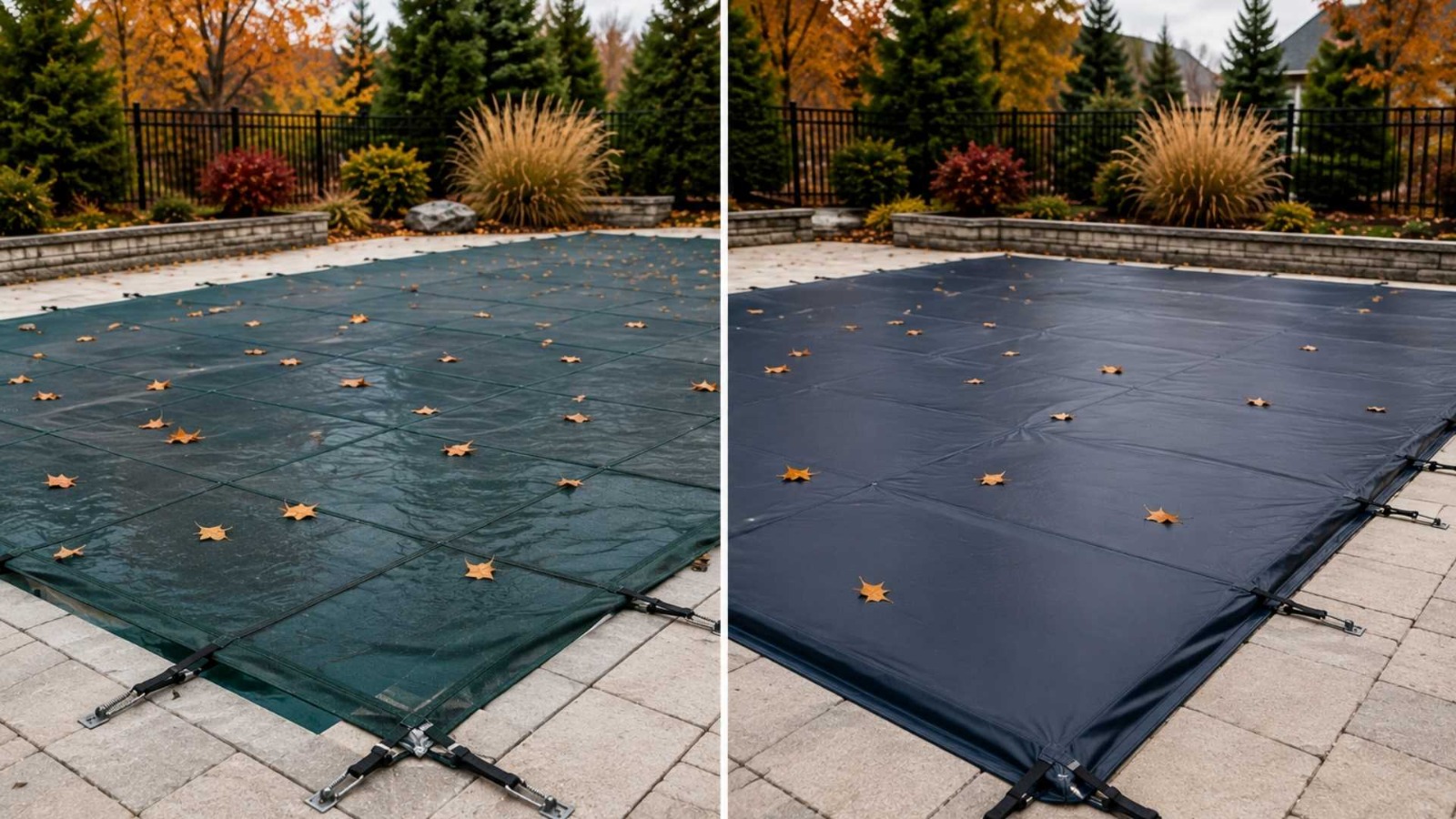
A purpose-built pool safety cover is designed for a specific pool or spa application. Its protective function depends on the cover’s construction, its fastening or anchoring system, its fit to the pool perimeter, and how it is installed and maintained. A general-purpose tarp lacks these design characteristics and has not been tested or documented to the performance standards that apply to dedicated safety covers.
ASTM F1346 and Pool Safety Cover Standards
ASTM F1346 is a recognised performance specification used for swimming pool, spa, and hot tub safety covers. It sets out requirements for load performance and labelling. A cover that meets this specification has been tested to defined performance levels, but homeowners should verify the specific product’s documentation and confirm whether the applicable local bylaw recognises the product for their intended purpose. ASTM F1346 compliance does not automatically make a cover a legal substitute for a fence in every Ontario municipality or for every pool type.
Pro tip
Ask the seller or installer for the cover’s written documentation and look for the
standard on the product label. If a product is called a “safety cover” but nothing in writing references a tested standard, treat that as a reason to ask more questions before you buy.
Pool Safety Cover vs. Ordinary Tarp: Key Differences
| Feature | Purpose-Built Safety Cover | Ordinary Tarp |
| Intended use | Specific pool or spa application | General weatherproofing |
| Attachment system | Anchors, springs, or locking fasteners | Weights, ropes, or clips |
| Tested performance standard | May reference ASTM F1346 | None for pool safety use |
| Resistance to accidental access | Engineered for this purpose | Not designed for this function |
| Municipal compliance potential | Depends on bylaw and installation | Generally not accepted |
Ontario Pool Enclosure Laws: How Requirements Work
In Ontario, the legal requirement to enclose a residential swimming pool is typically set by the municipality rather than a provincial statute. Requirements can differ depending on the city or township, the pool type (inground, above-ground, or hot tub), pool dimensions, and installation date. Homeowners in Kanata, Nepean, Barrhaven, Orleans, Stittsville, and Manotick should verify the specific rules that apply to their property rather than assuming that one municipality’s bylaw mirrors another’s.
Warning
Do not copy rules from a neighbouring city or from a forum post. Fence heights, gate
rules, and cover exceptions differ between Ontario municipalities, and the only version that matters is the bylaw for your address.
What Ottawa’s Pool Enclosure Bylaw Requires
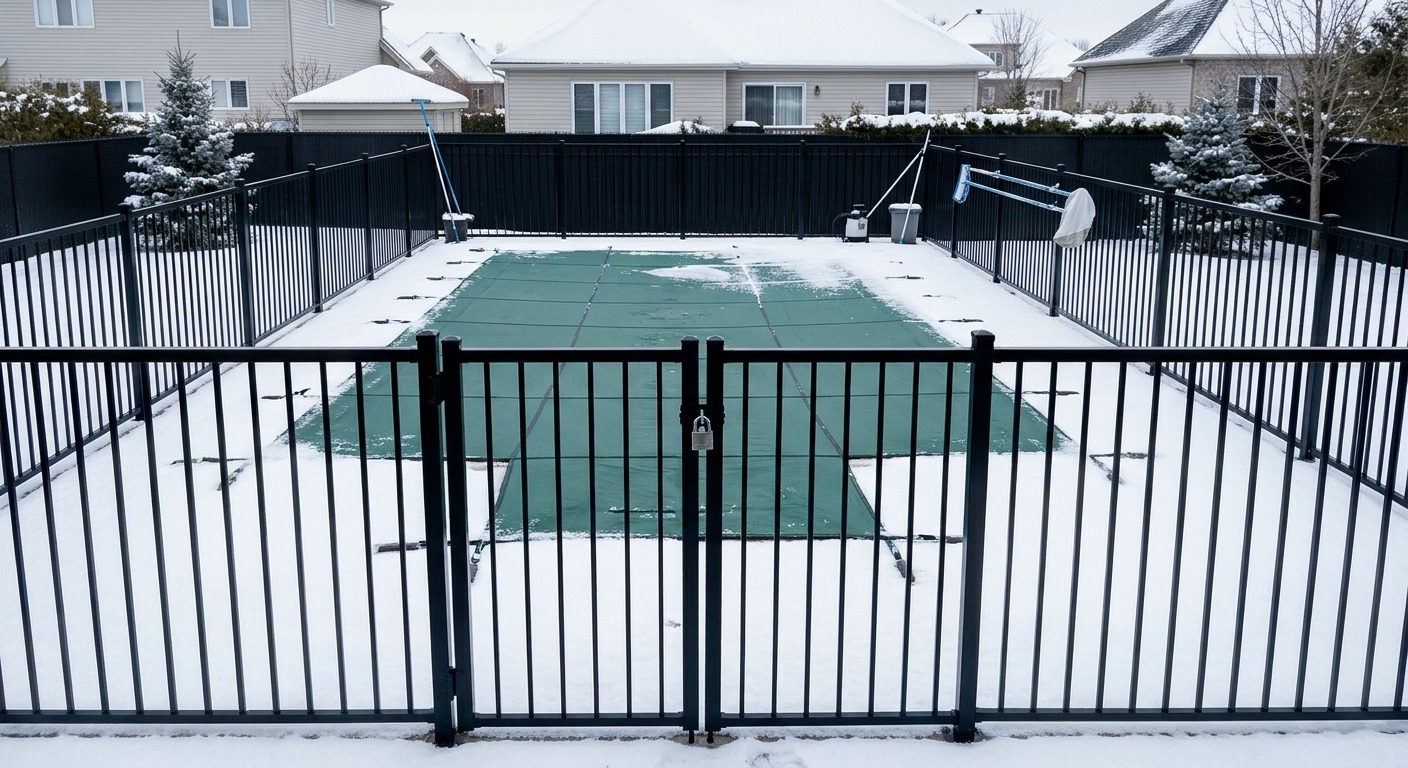
Ottawa’s Pool Enclosure By-law requires owners of qualifying privately owned outdoor pools to install and maintain a compliant enclosure. The bylaw specifies requirements for fence height, gate construction, and access control. A standard winter cover or ordinary tarp does not meet these enclosure requirements.
The Hot Tub Exception in Ottawa
Ottawa’s bylaw includes a specific and limited exception for certain hot tubs: a compliant safety cover that satisfies the bylaw’s applicable conditions and remains securely locked when the hot tub is not in use may qualify as the enclosure. This exception applies to specific hot tub situations and should not be extended to inground swimming pools without first confirming it with the City of Ottawa.
Can a Pool Safety Cover Replace a Fence in Ontario?
Not automatically. A certified safety cover may be accepted as an alternative enclosure only where the applicable local bylaw explicitly permits it, the cover and installation meet the bylaw’s specified conditions, and the pool type falls within the scope of the exception. Homeowners should contact their municipal building or bylaw department before relying on a cover in place of a required fence or other barrier.
Choosing a Pool Safety Cover: What to Confirm
Selecting the right safety cover involves more than reading a product label. Verify the pool’s dimensions and type before ordering, review the applicable municipal enclosure bylaw, check the manufacturer’s documentation for the specific cover model, confirm that the anchoring and locking system meets the bylaw’s conditions if an enclosure exception applies, and install the cover according to the manufacturer’s instructions. Homeowners researching cover options in the Ottawa area can explore Pool Safety Covers in Ottawa to understand what professional installation involves.
Winter Pool Covers and Safety Covers Are Not the Same
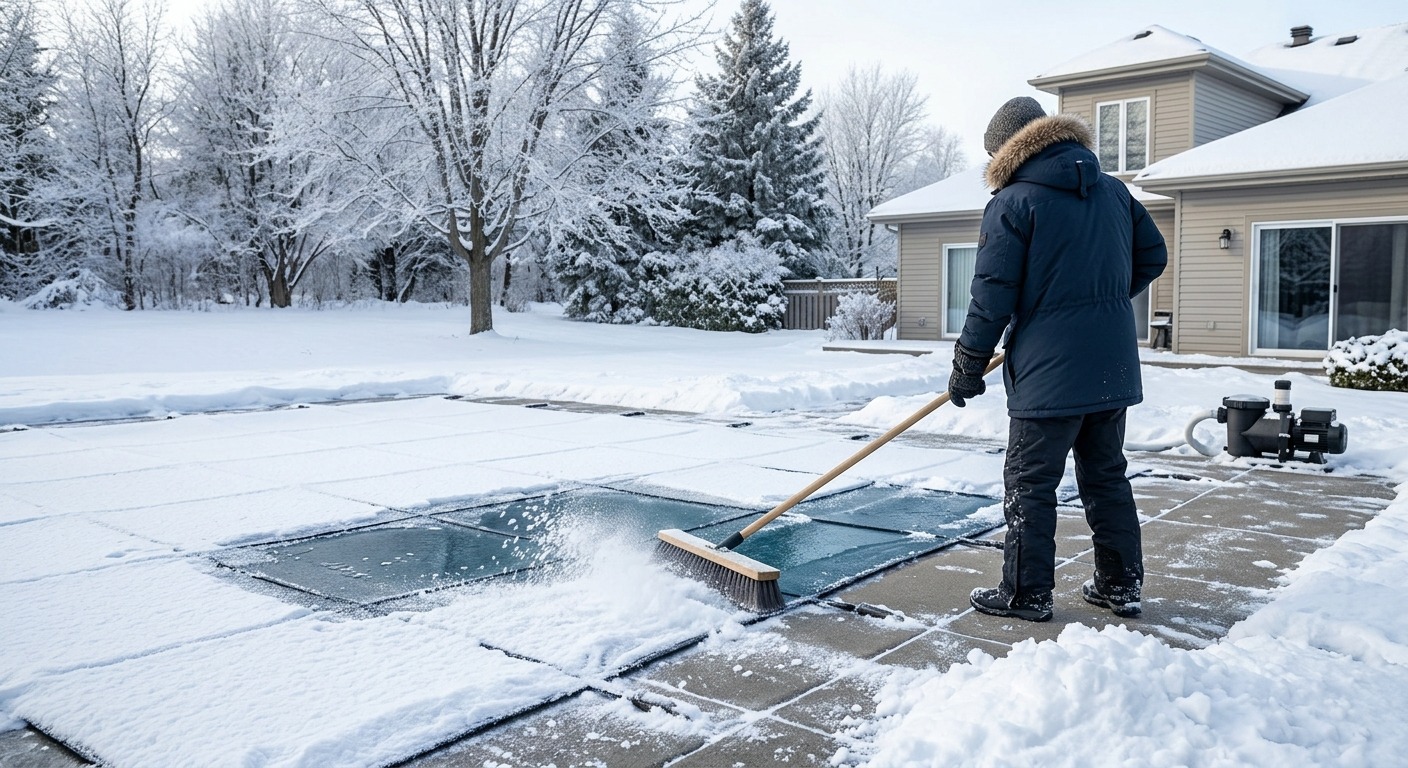
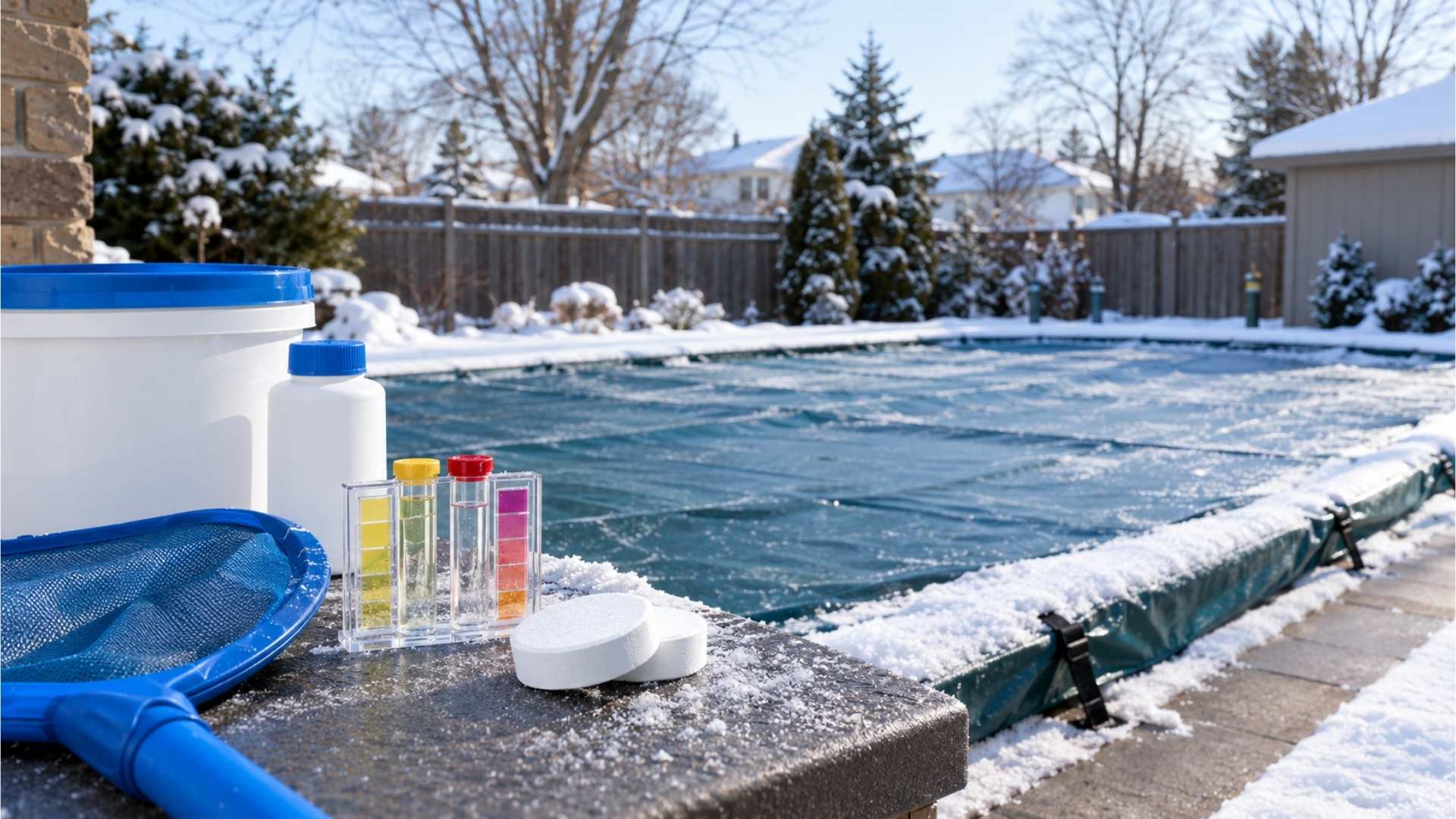
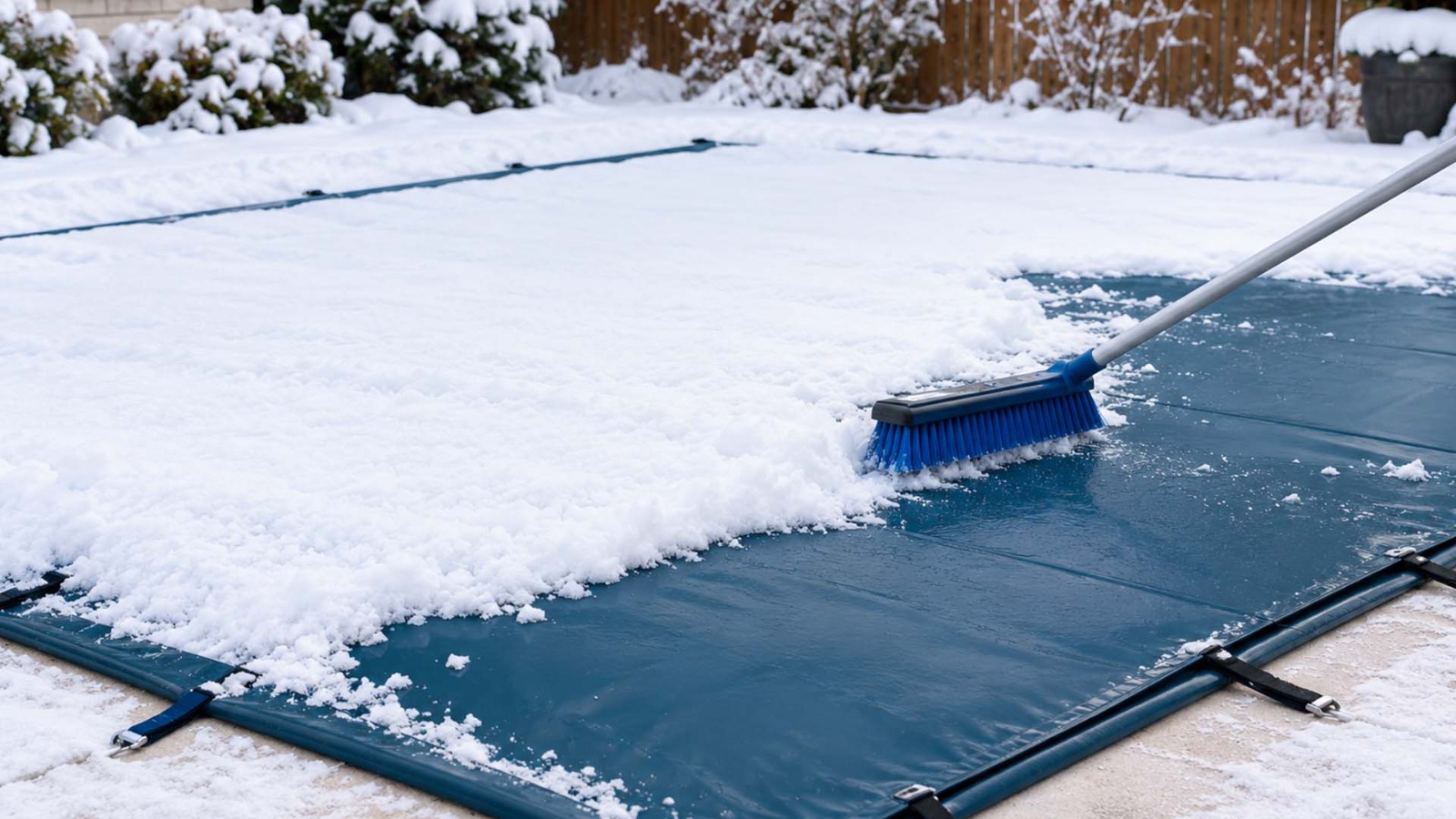
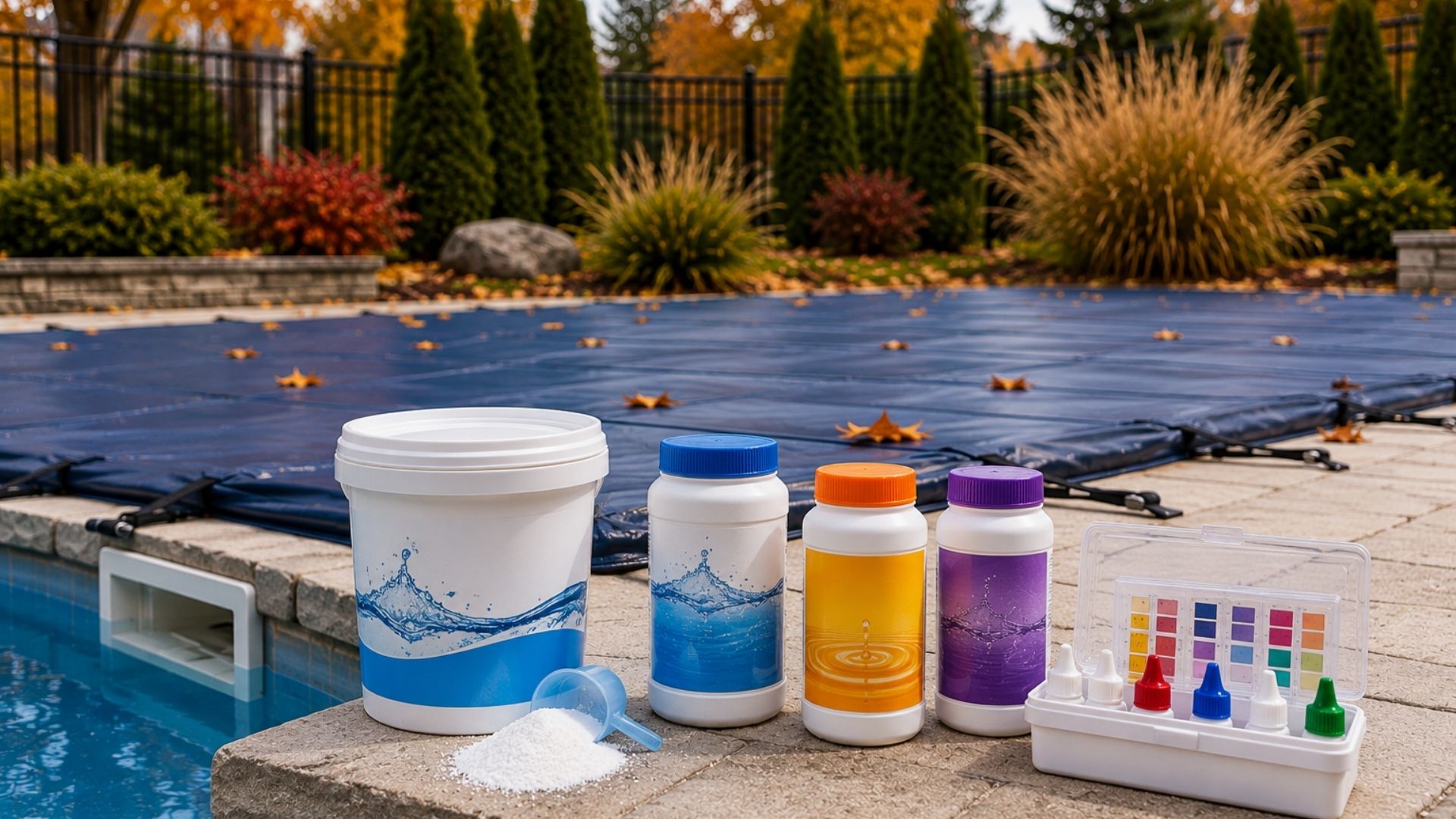
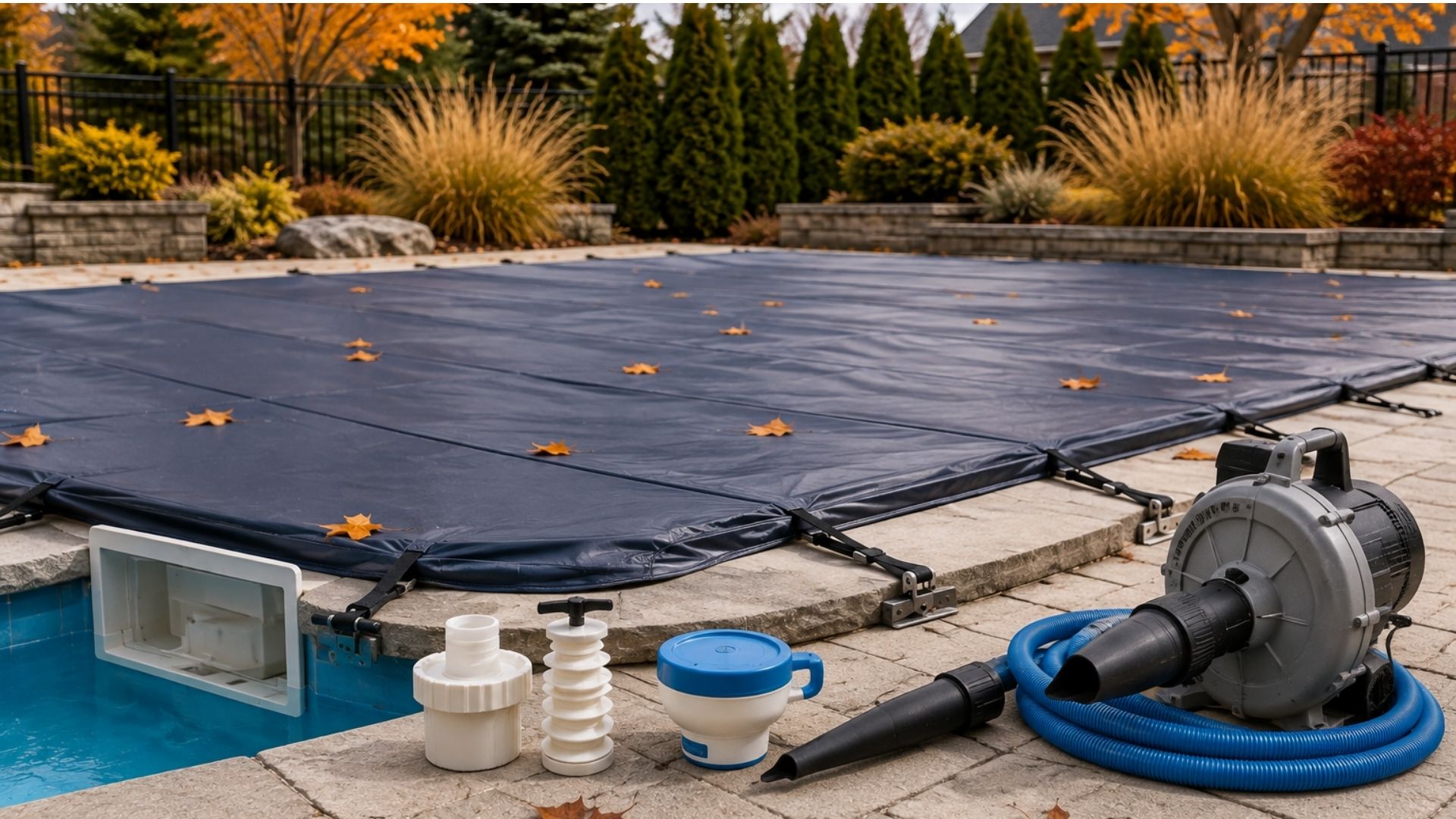
Many homeowners use a winter pool cover to protect their pool during the off-season. A winter cover helps manage debris, snow, and chemical balance while the pool is closed, but it serves a different purpose from a safety cover. A winter pool cover installation in Ottawa is part of proper seasonal pool preparation, while a safety cover is designed specifically to limit accidental access. Reviewing pool safety cover vs winter cover differences helps homeowners understand which product serves which function and avoid confusing the two when assessing legal compliance.
Common Mistakes to Avoid
- Treating an ordinary tarp as equivalent to a certified pool safety cover
- Assuming every product labelled “safety cover” meets ASTM F1346
- Applying Ottawa’s hot tub cover exception to an inground swimming pool
- Believing ASTM F1346 compliance alone replaces a required fence in every municipality
- Using an incorrectly sized or improperly anchored cover
- Skipping required municipal permits or enclosure inspections
- Assuming a safety cover makes it safe to walk or play on the pool surface
Frequently Asked Questions
Can I use a tarp instead of a pool safety cover in Ontario?
A regular tarp is not designed or tested to serve as a pool safety barrier. It does not meet the performance requirements of a purpose-built safety cover and is unlikely to satisfy a municipal pool enclosure bylaw.
Does ASTM F1346 certification mean a cover replaces a fence?
Not automatically. Whether a certified cover can substitute for a fence depends on what the applicable municipal bylaw permits for your specific pool type and installation. Confirm this with your municipality before assuming compliance.
Are hot tub cover rules different from swimming pool rules in Ottawa?
Yes. Ottawa’s Pool Enclosure By-law includes a limited safety cover exception for certain hot tubs. This exception does not apply to inground swimming pools. Check the bylaw directly for the conditions that apply to your property.
Do I need a pool enclosure permit in Ottawa?
A permit is generally required when installing or modifying a pool enclosure in Ottawa. Contact the City of Ottawa’s building department to confirm current permit and inspection requirements for your specific pool type.
Conclusion: Verify Before You Assume
A purpose-built pool safety cover and an ordinary tarp are fundamentally different products. Ontario pool enclosure requirements are set at the municipal level, meaning the rules that apply to your pool depend on your municipality, your pool type, and how the cover is installed. Homeowners should verify product documentation, confirm local bylaw requirements, and ensure proper installation before assuming that any cover satisfies a legal enclosure obligation.