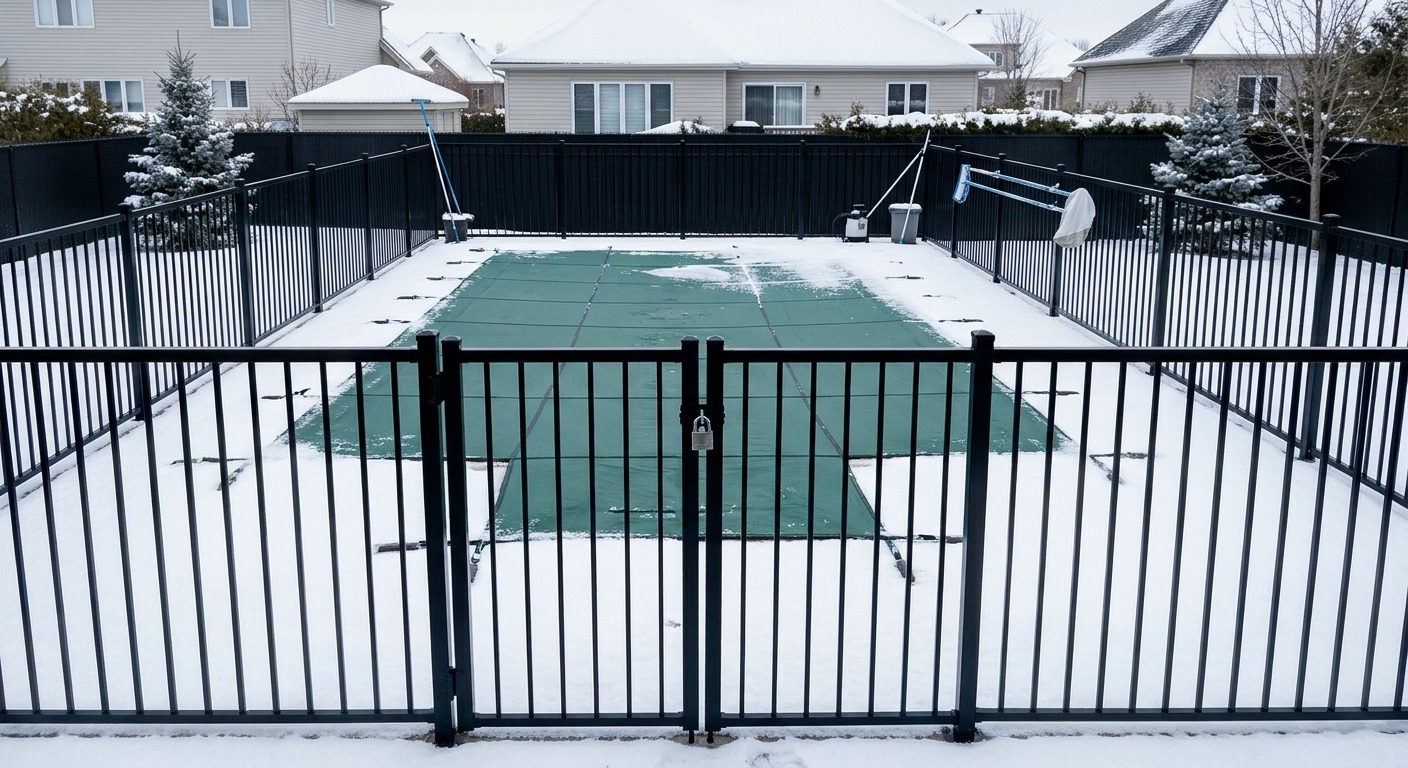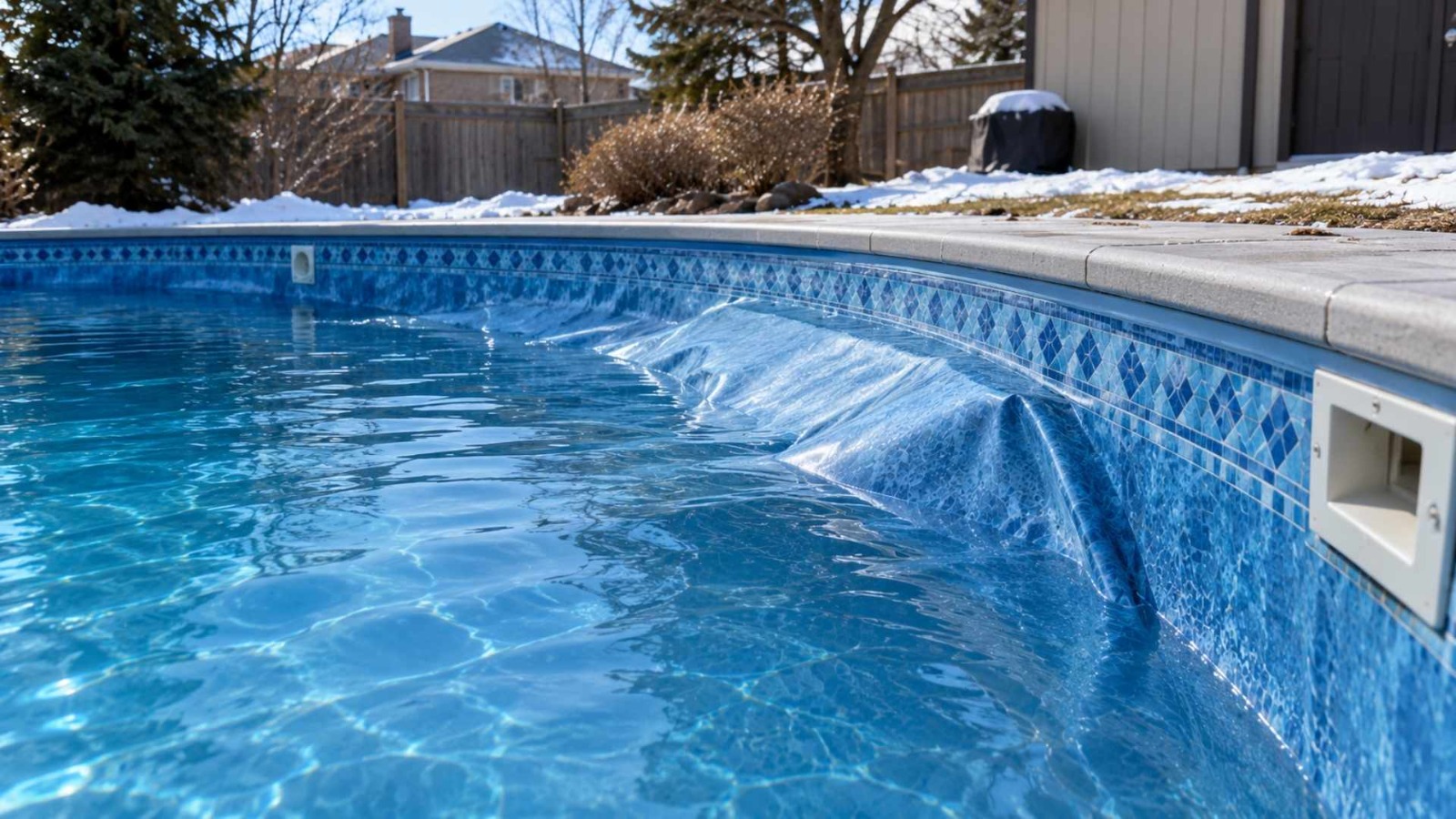
Knowing how to remove snow from a pool cover safely depends on the cover type, snow condition, and manufacturer instructions. For some covers, gently brushing loose snow with an approved long-handled tool is appropriate. For automatic covers or situations involving heavy ice buildup, attempting DIY removal may cause more harm than leaving the snow in place. Always check the owner’s manual before taking any action on your pool cover.
Can Snow Damage a Pool Cover?
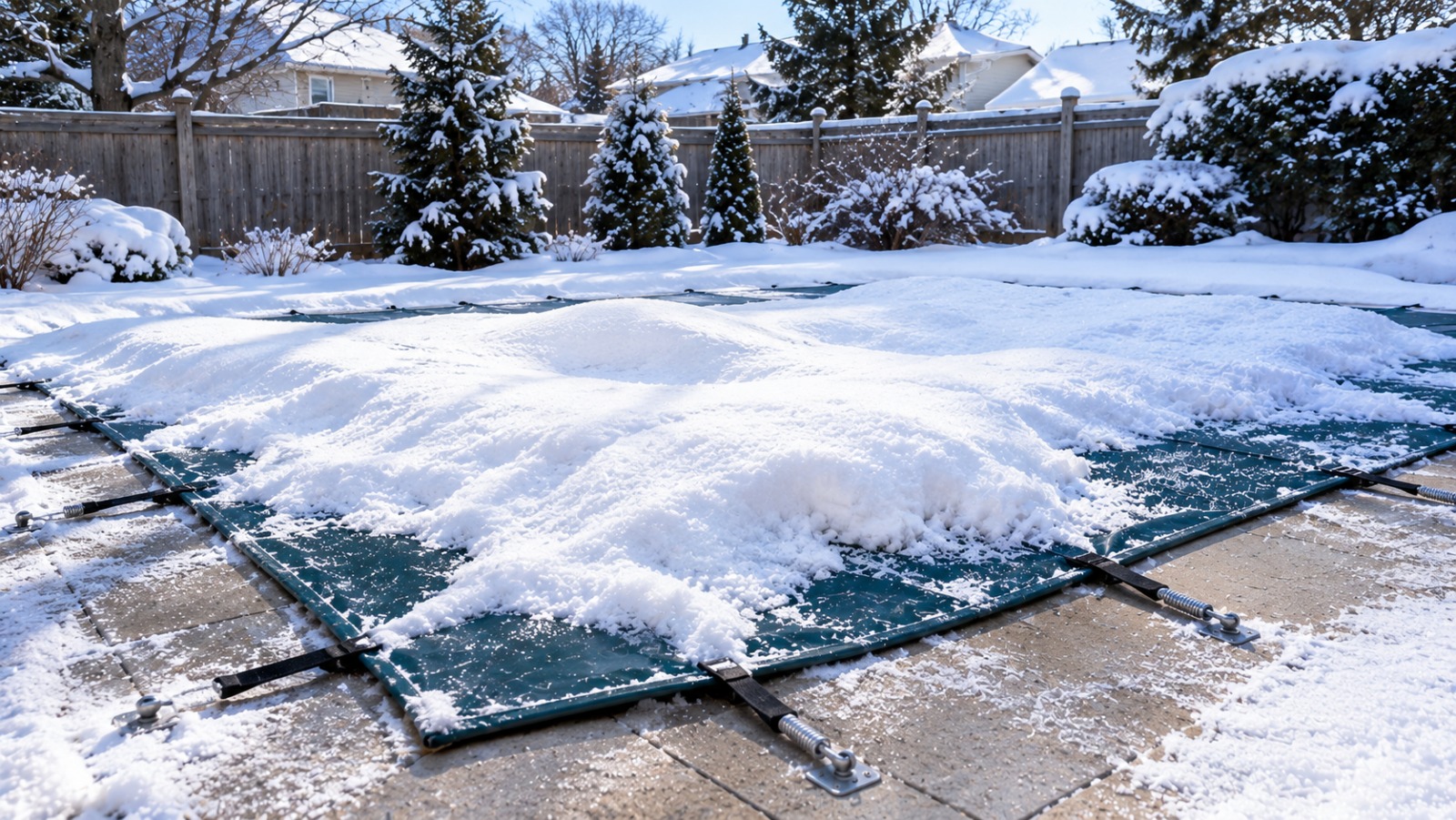
Snow accumulation on swimming pool covers creates additional weight and stress on the cover material, anchors, springs, and support system. Not every snowfall presents an immediate risk, but certain conditions deserve attention.
When Snow Becomes a Problem
Light, dry snow exerts relatively modest weight per unit of area. Wet, heavy snow after a thaw contains significantly more moisture and can place considerably greater load on the cover. When temperatures drop again overnight, that wet snow can refreeze into a dense ice layer. Accumulated meltwater on solid covers adds further weight, particularly if the cover pump is not keeping up. Existing wear, loose anchor points, or degraded straps increase the vulnerability of any cover under these conditions.
3 to 7 lb
per cubic foot of light, dry snow
20+ lb
per cubic foot of heavy, wet snow
About 10:1
typical snow to water ratio when snow melts
Quick maths
At roughly 20 lb per cubic foot, 6 inches of wet snow adds about 10 lb on every square foot of cover. Over a 16 by 32 ft area (512 sq ft), that is more than 5,000 lb. This is a rough estimate for illustration only, and it is why snow type matters more than snow depth alone.
Identify Your Pool Cover Type Before Removing Snow
Different cover designs require different approaches to winter snow management. Applying the wrong technique to the wrong cover can cause damage that far exceeds what the snow itself would have caused.
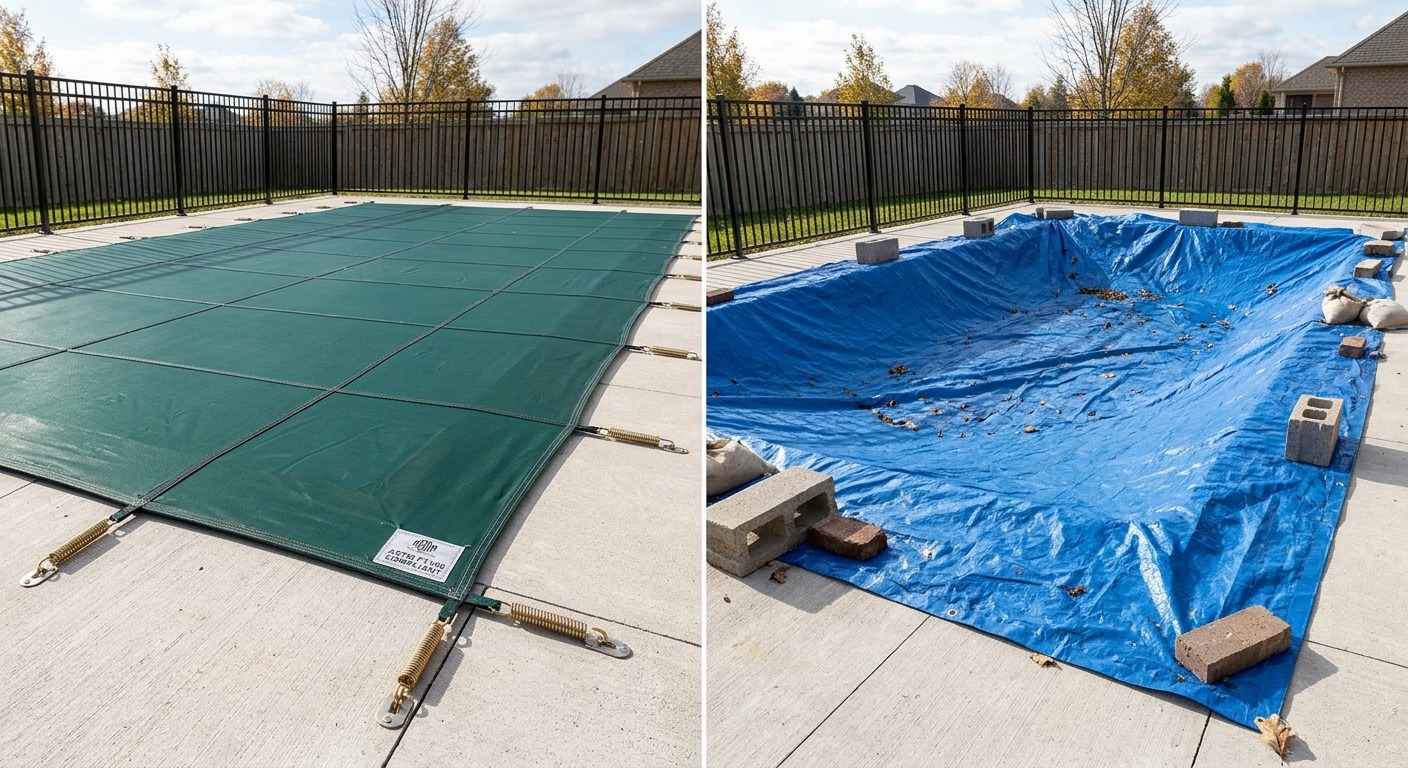
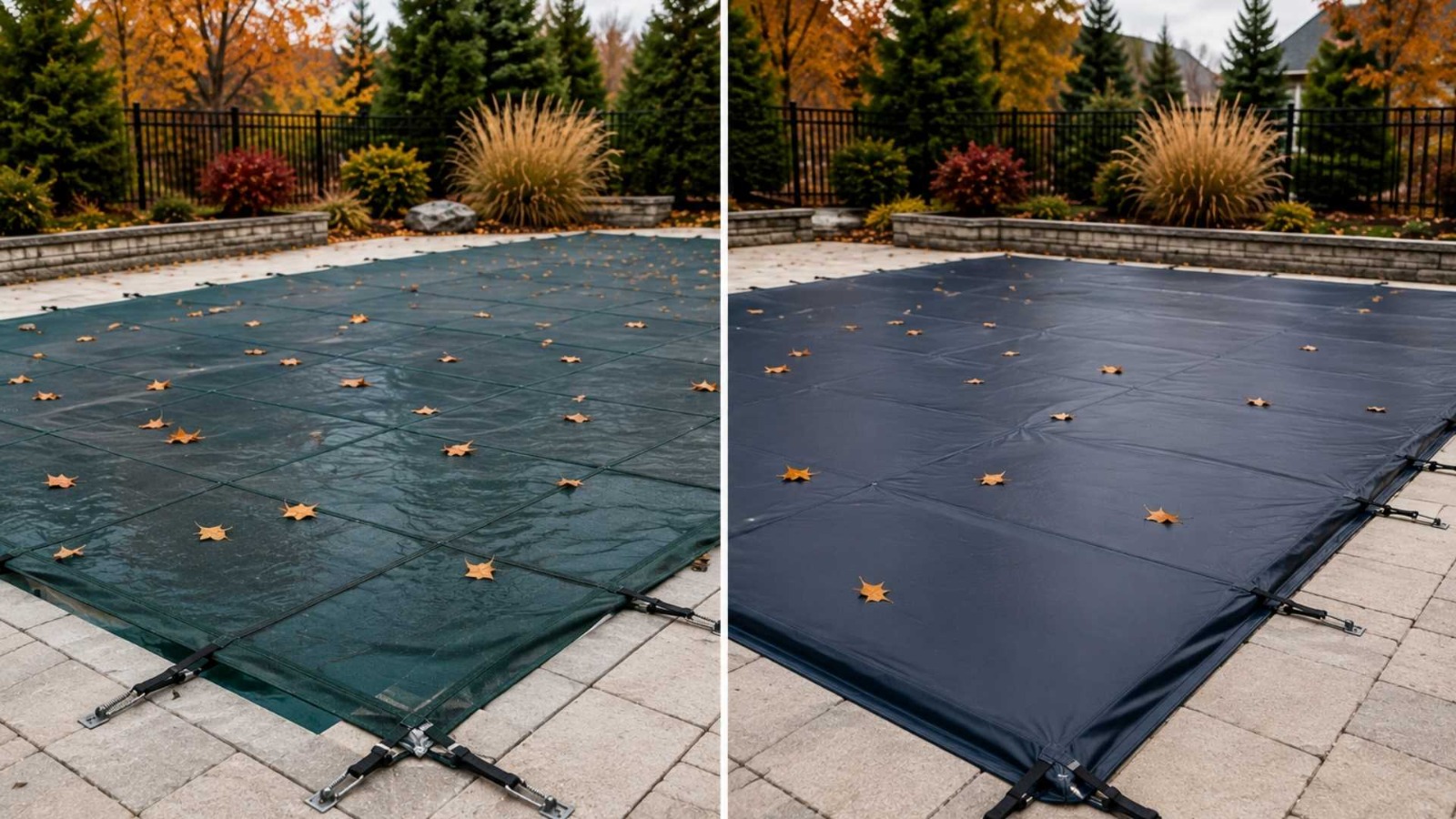
Mesh Safety Covers
Mesh covers are woven to allow meltwater to drain into the pool, which helps reduce standing water weight on top of the cover. Snow and ice still add load, however, and the safe removal method depends on the specific manufacturer’s specifications. Not all mesh covers have identical load ratings or material tolerances. Check the manual before clearing anything.
Solid Winter Covers
Solid covers block debris and sunlight but trap water on the surface. A functioning cover pump is usually required to remove meltwater before it freezes or adds excessive weight. Do not stand on or apply concentrated pressure to a solid winter cover. Follow the manufacturer’s guidance on supported weight limits.
Automatic Pool Covers
Automatic covers have motors, tracks, and tensioning systems that require careful winter management. Operating a retractable cover while snow or ice is obstructing the tracks can damage the mechanism. The owner’s manual must be consulted before any snow removal or cover operation during winter. Water level requirements specified by the manufacturer also apply.
Warning
Never force an automatic cover to open or close against packed snow or ice. A jammed
track or strained motor is often a repair bill, not a fix you can do yourself.
Pool Cover Types at a Glance
| Cover Type | Key Winter Concern | Recommended Approach |
| Mesh safety cover | Snow load on woven material | Check manufacturer limits, brush gently if permitted |
| Solid winter cover | Water and ice accumulation on top | Run cover pump, avoid standing on cover |
| Automatic pool cover | Obstructed tracks and mechanism | Follow owner’s manual strictly, seek professional help if needed |
How to Safely Remove Snow From a Pool Cover
The steps below apply where the manufacturer permits manual snow removal. Confirm this is the case for your specific cover before proceeding.
Step One: Check the Owner’s Manual
Identify your cover make and model and read the winter maintenance section. Look for any stated snow load limit, permitted removal tools, water level requirements, and restrictions regarding ice.
Step Two: Assess Conditions From a Safe Position
Before touching the cover, look for signs of excessive sagging, visible tears, loose anchors, or unusual ice formations. Never walk on the cover or climb into the pool area if conditions are unsafe. If your system uses a cover pump, confirm it is functioning correctly. A pump that has stopped working during a wet snow event may allow meltwater to pool and refreeze on the surface.
Step Three: Use an Appropriate Tool
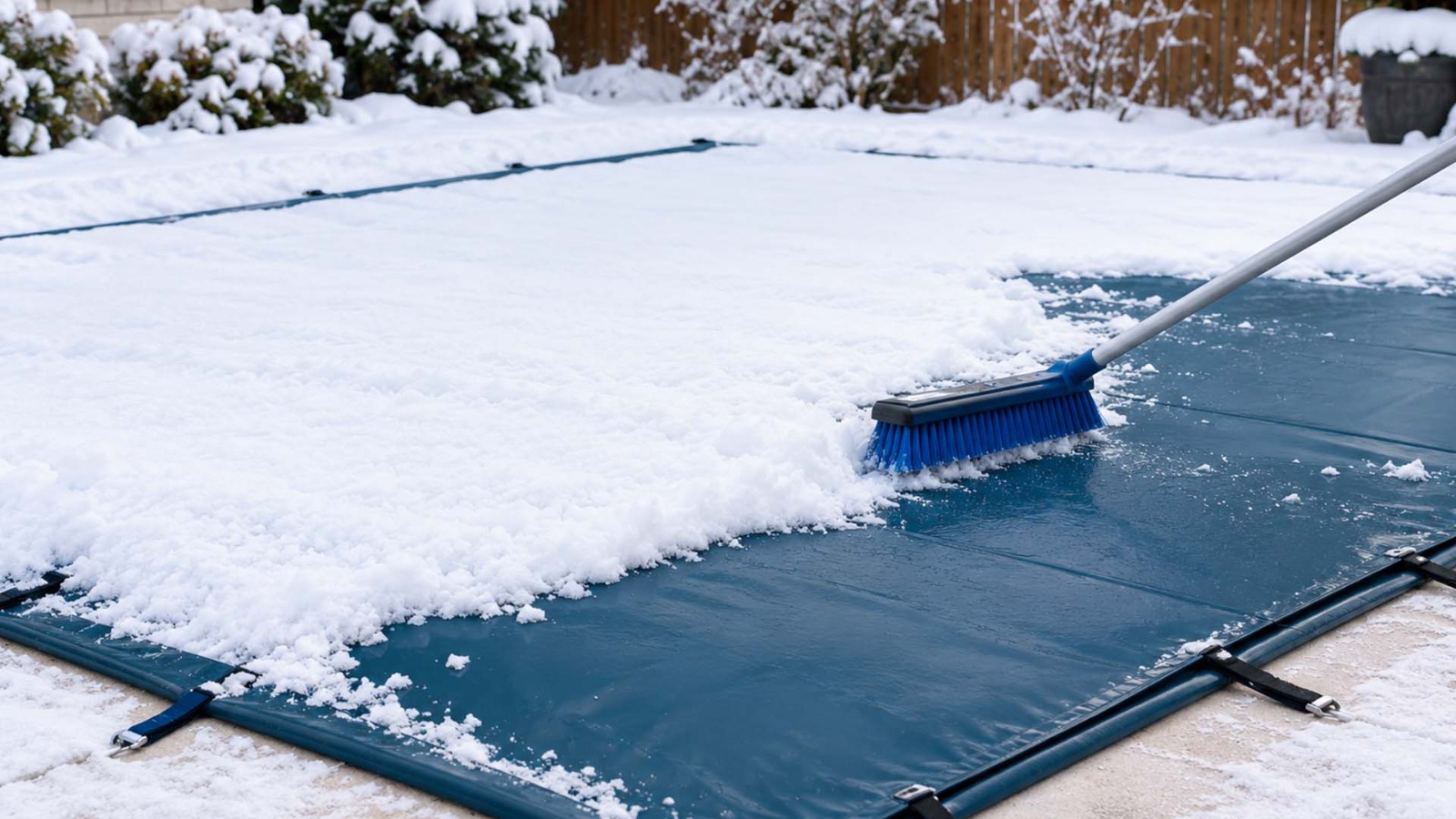
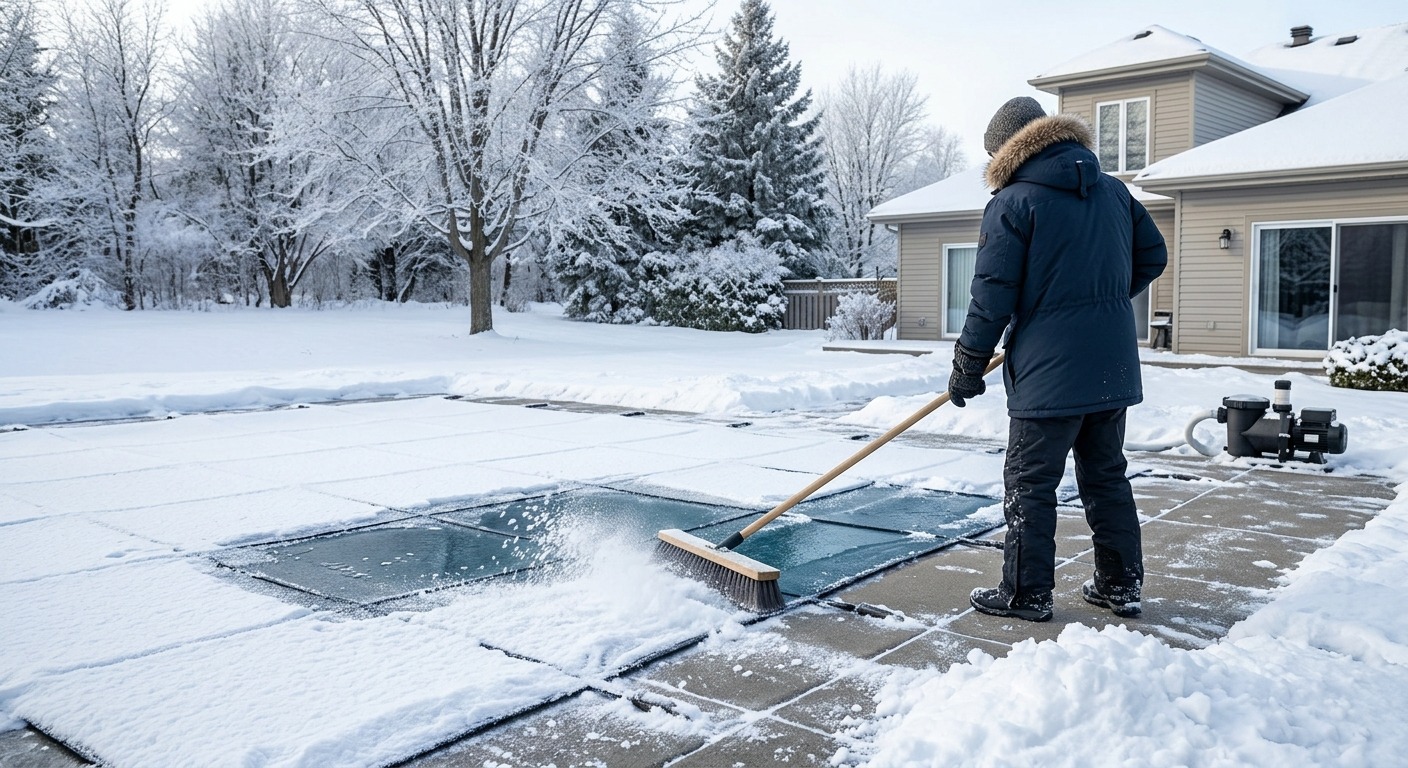
Where the manual permits, a long-handled, soft-bristled pool brush or a purpose-designed non-abrasive snow tool can help gently move loose snow. Metal shovels, sharp-edged scrapers, and ice picks risk puncturing or cutting the cover material and should not be used.
Step Four: Work Gradually Without Pressing Hard
Move loose snow away from the cover surface in sections, avoiding sudden heavy pressure in any single area. Work from a standing position on the pool deck rather than from on top of the cover.
Step Five: Stop If Ice Has Formed or the Cover Appears Stressed
Do not chip, hammer, or pry ice from any pool cover. If snow has frozen solid or the cover appears to be sagging or under stress, stop and follow the manufacturer’s instructions. Contacting a pool professional is the appropriate next step.
Pool Cover Snow Removal Mistakes to Avoid
- Walking or standing on the pool cover to reach snow
- Using metal shovels, scrapers, or ice picks on the cover surface
- Operating an automatic cover while snow or ice is obstructing the mechanism
- Ignoring sagging, torn material, or loose anchor points
- Assuming all covers have the same snow load capacity
- Using chemical de-icers, heated tools, or boiling water without manufacturer approval
- Pulling aggressively on straps or cover edges to dislodge snow
Understanding the pool cover snow load limit relevant to your specific cover type helps set realistic expectations for winter maintenance before the season begins.
Winter Pool Maintenance in Ottawa
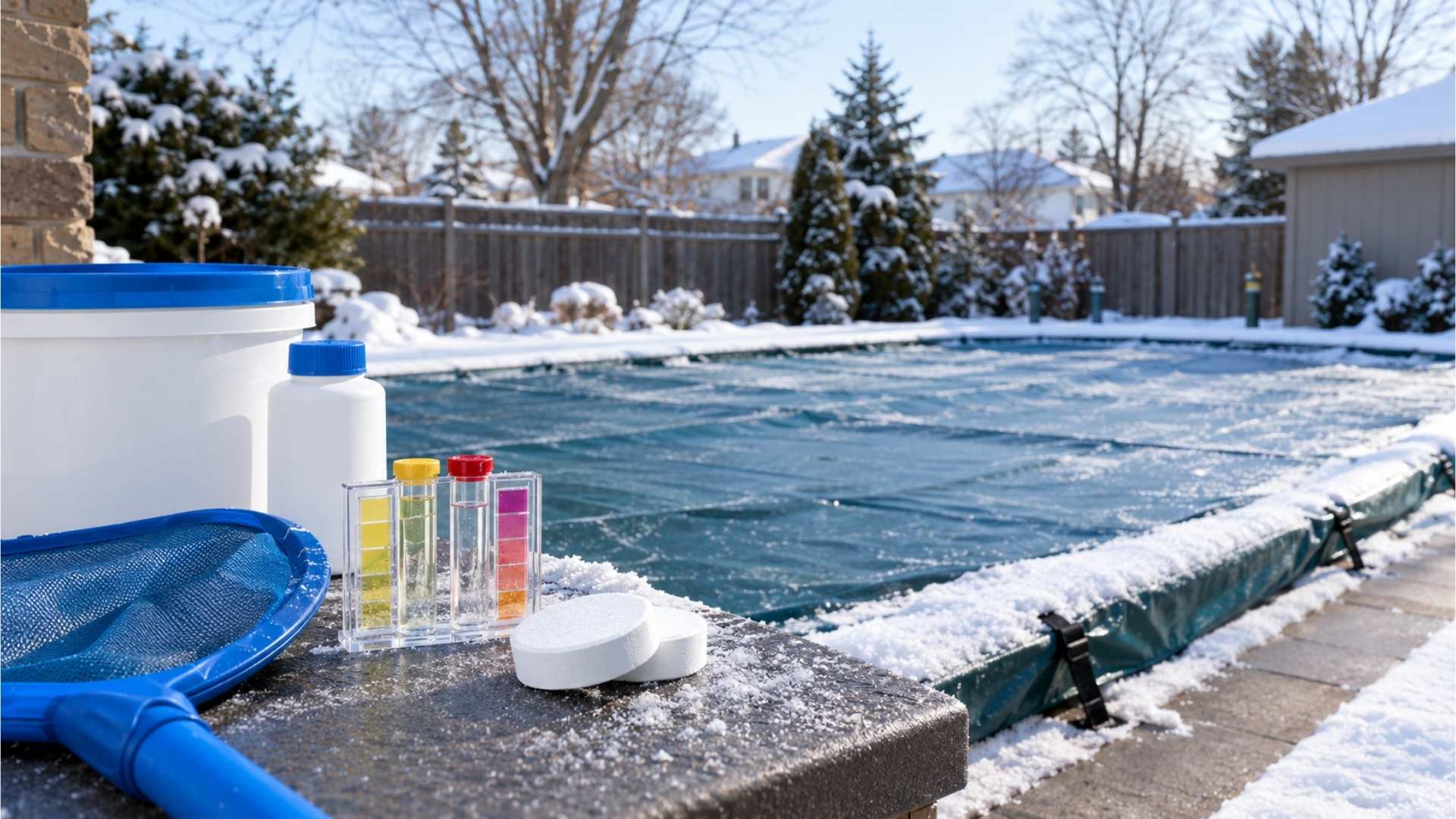
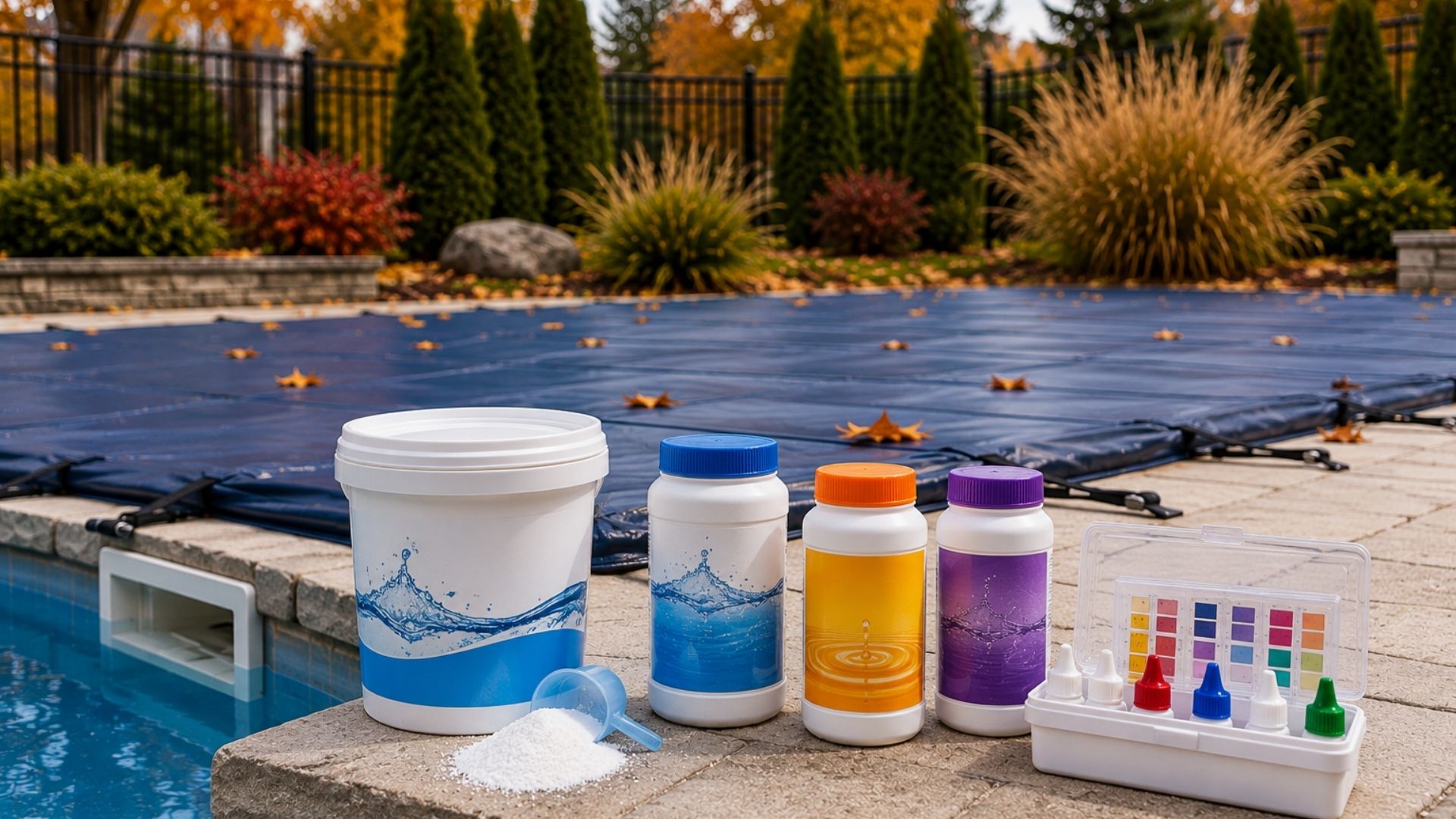
Ottawa winters bring variable conditions, with alternating periods of heavy snowfall, freezing rain, and mid-winter thaws followed by sharp temperature drops. Homeowners in Kanata, Nepean, Barrhaven, Orleans, and surrounding communities should review their cover manual before the first major snowfall and inspect the cover hardware before winter weather arrives. Keeping the cover pump in working order, maintaining the correct water level where specified, and removing leaves and debris before closing the pool are all practical measures that reduce winter cover stress.
For homeowners who want professionally installed winter protection, exploring Pool Safety Covers in Ottawa from an experienced local provider ensures the cover is suited to Ottawa climate conditions and installed correctly before the cold arrives.
When to Contact a Pool Professional
Some snow removal situations fall outside what a homeowner can safely manage. Seek professional assistance when there is heavy, frozen accumulation that the manual’s recommended methods cannot address, when the cover is visibly sagging or shows signs of torn material, when anchor points or springs appear loose or displaced, or when an automatic cover’s tracks or mechanism seem affected. Ottawa Valley Pools offers pool closing services in Ottawa and can advise on appropriate winter cover care for your specific system.
Frequently Asked Questions
Can I use a shovel to remove snow from my pool cover?
Metal or ridged shovels risk puncturing cover material. Where removal is permitted, use a soft-bristled long-handled brush or a non-abrasive tool approved for the specific cover. Always check the owner’s manual first.
Should I remove every snowfall from my pool cover?
Not always. Light snowfall may not require immediate action. Monitor accumulation after wet snow or temperature swings. The manufacturer’s instructions will indicate when removal is recommended for your cover type.
How do I remove ice from a pool cover safely?
Avoid chipping or hammering ice. Consult the manufacturer’s guidance, and contact a pool professional if buildup is significant or the cover appears stressed.
Does pool water level affect a winter pool cover?
For some systems, pool water level is part of the designed support structure. An incorrect level can stress the cover and anchors. Follow the manufacturer’s specified winter water level.
Conclusion: Safe Snow Management Starts With the Right Cover
Managing snow on a pool cover safely comes down to knowing your cover type, following manufacturer instructions, and using gentle, approved tools where removal is permitted. Never walk on a pool cover or use sharp tools under any snow conditions. Homeowners who need guidance on pool safety covers and seasonal care can contact Ottawa Valley Pools for local expertise.