You can detect a pool leak early by monitoring your water level daily for unusual drops and conducting a simple bucket test to rule out normal evaporation. Keeping watch for wet spots around your property or air bubbles in your filtration system helps identify hidden cracks before they cause expensive structural damage.
Owning a backyard pool in eastern Ontario is a wonderful luxury, but maintaining it requires keeping an eye out for potential issues. Leaks can occur at any time, especially after the winter freeze. Ignoring pool water loss problems leads to structural damage and high bills. Learning how to detect a pool leak is one of the most valuable skills you can acquire as a homeowner, helping you identify and resolve issues before they escalate into major repairs.
How to Detect a Pool Leak: Warning Signs
Early Symptoms of Pool Water Loss
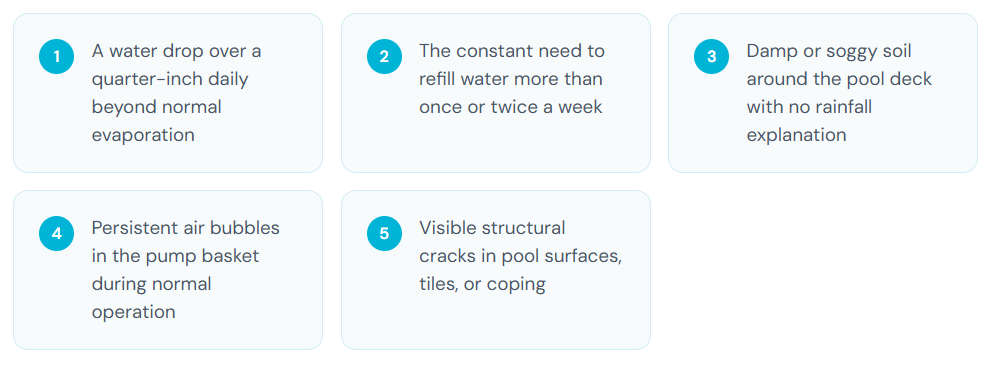
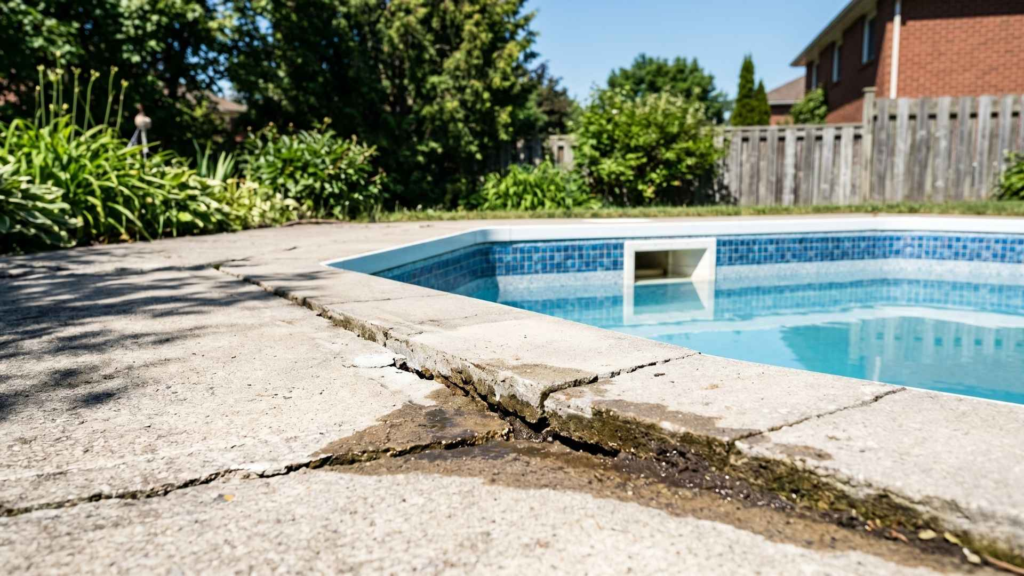
Finding a pool leak begins with inspecting your concrete deck, vinyl liner, and filtration equipment. Recognizing swimming pool leak signs protects your landscaping from erosion. Below are the five indicators every Ottawa pool owner should watch for.
💡 Tip
If you have an automatic fill valve, it can mask a leak by topping up the pool before you notice the drop. Turn off the auto-fill for 24 hours and watch the water level manually before drawing conclusions.
⚠ Watch Out
Increased chemical consumption is a silent sign of a leak. If you are going through chlorine, pH adjusters, or algaecides faster than usual without heavy pool use, water is likely escaping and diluting your chemical balance faster than normal.
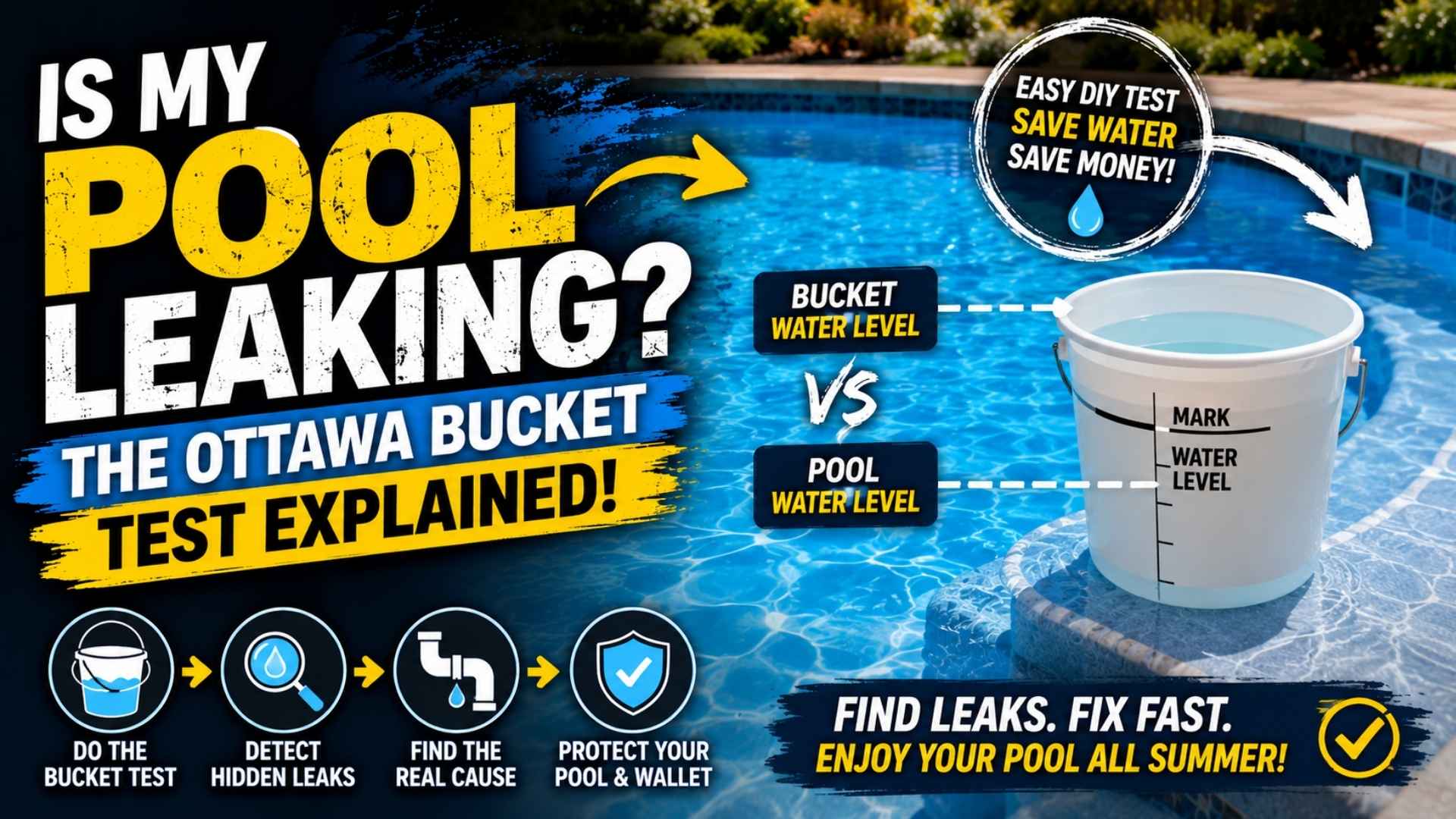
DIY Bucket Test for Pool Leaks
Testing Evaporation vs Actual Water Loss
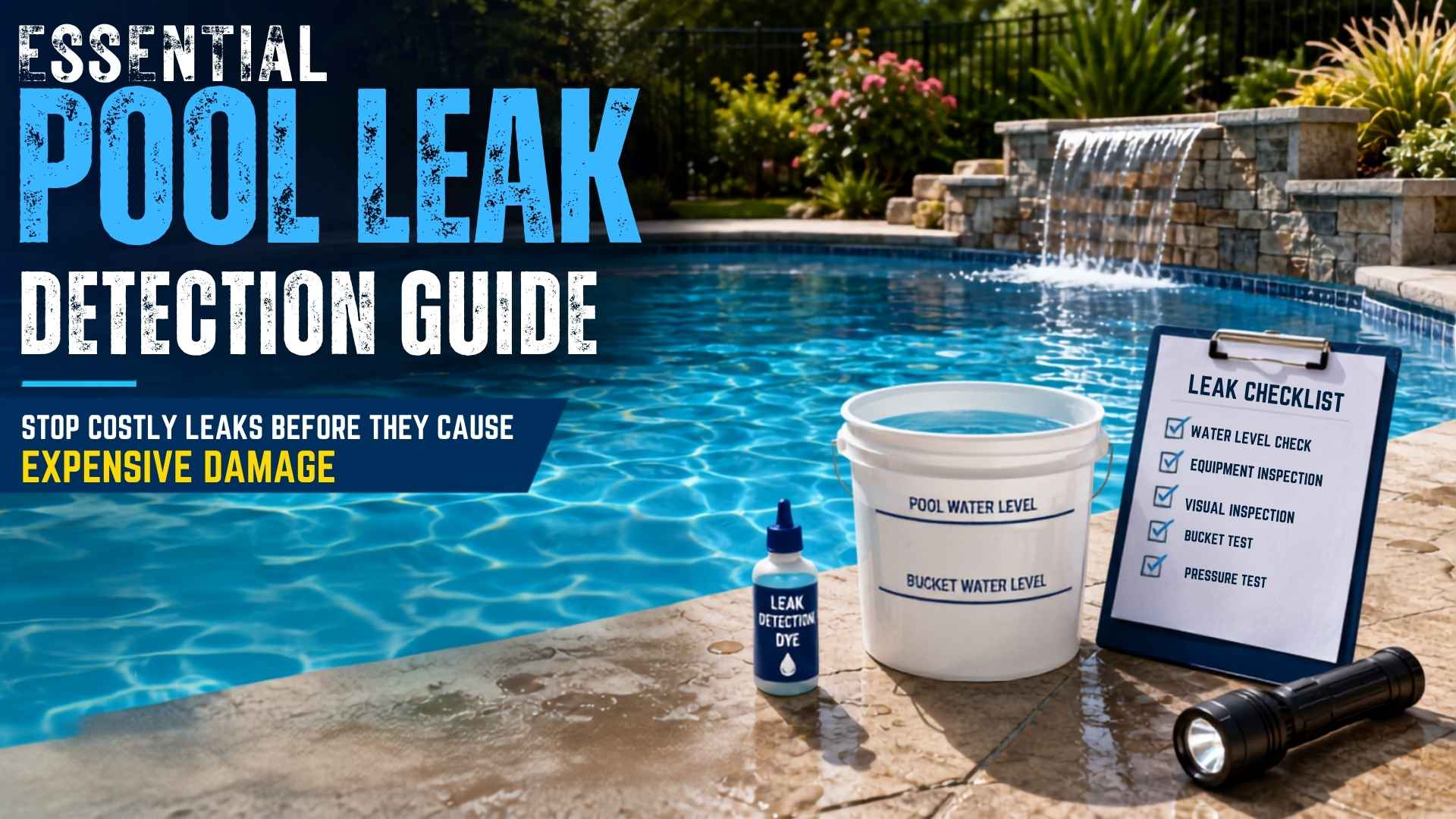
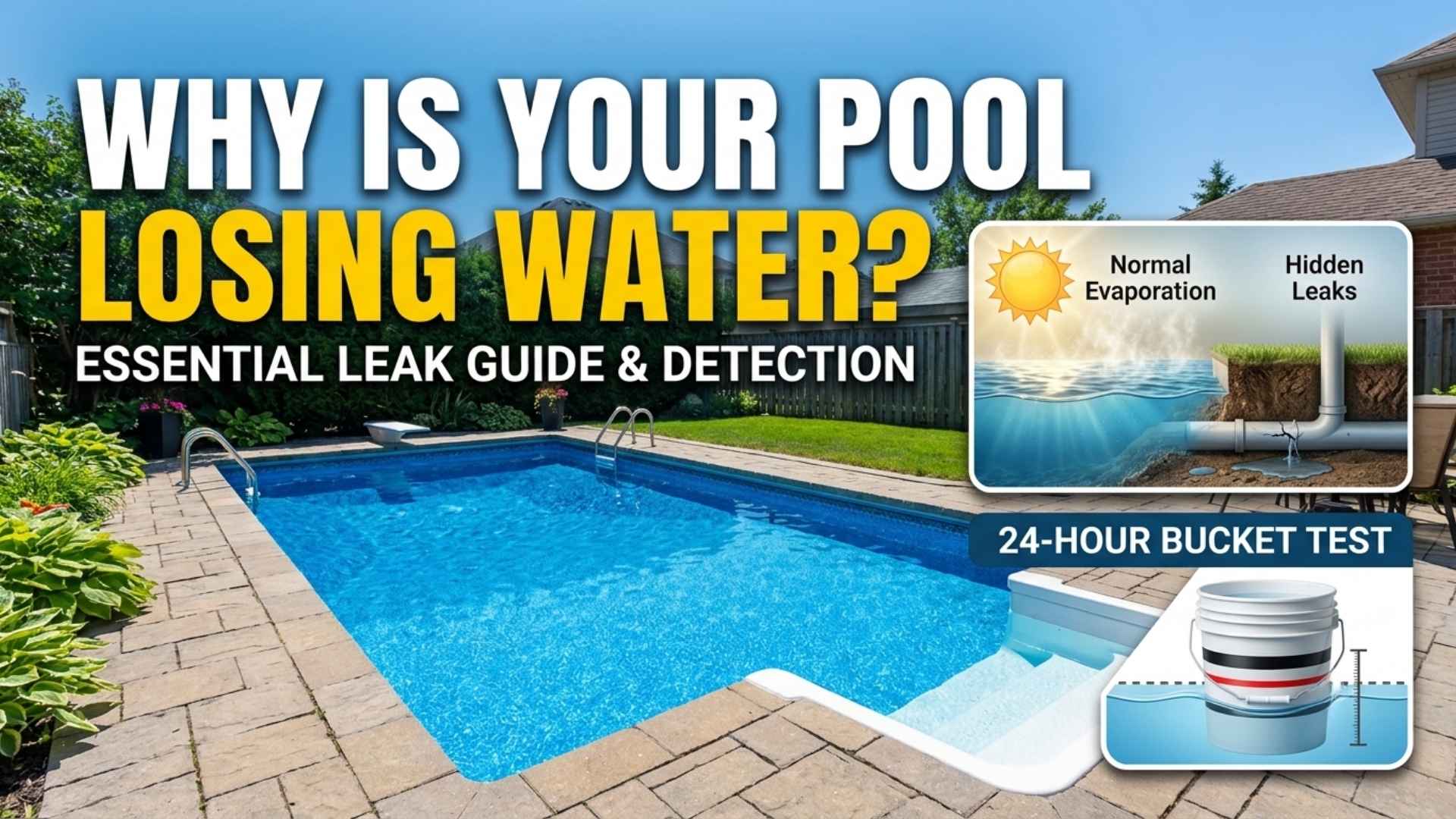
- Fill a 5-gallon bucket with pool water to about 5 to 7 inches from the top.
- Place the bucket on the first or second pool step so it sits partially submerged at the same temperature as the pool water.
- Mark the water level inside the bucket with a marker or piece of tape. Also mark the pool water level on the outside of the bucket or on the pool wall.
- Wait exactly 24 hours. Do not use the pool, run the pump, or refill during this period.
- Compare the two marks. If the pool water dropped significantly more than the bucket water, you have a leak. If both dropped by the same amount, what you are seeing is normal evaporation.
💡 Tip: Repeat for pump-on vs pump-off
Run the test twice. First with the pump running for 24 hours, then with the pump off for 24 hours. If the pool loses more water when the pump is on, the leak is likely in the plumbing, fittings, or filter equipment. If it loses more when the pump is off, the shell or liner is the more likely culprit.
Underground Pool Leak Detection Methods
Finding Hidden Plumbing Line Issues
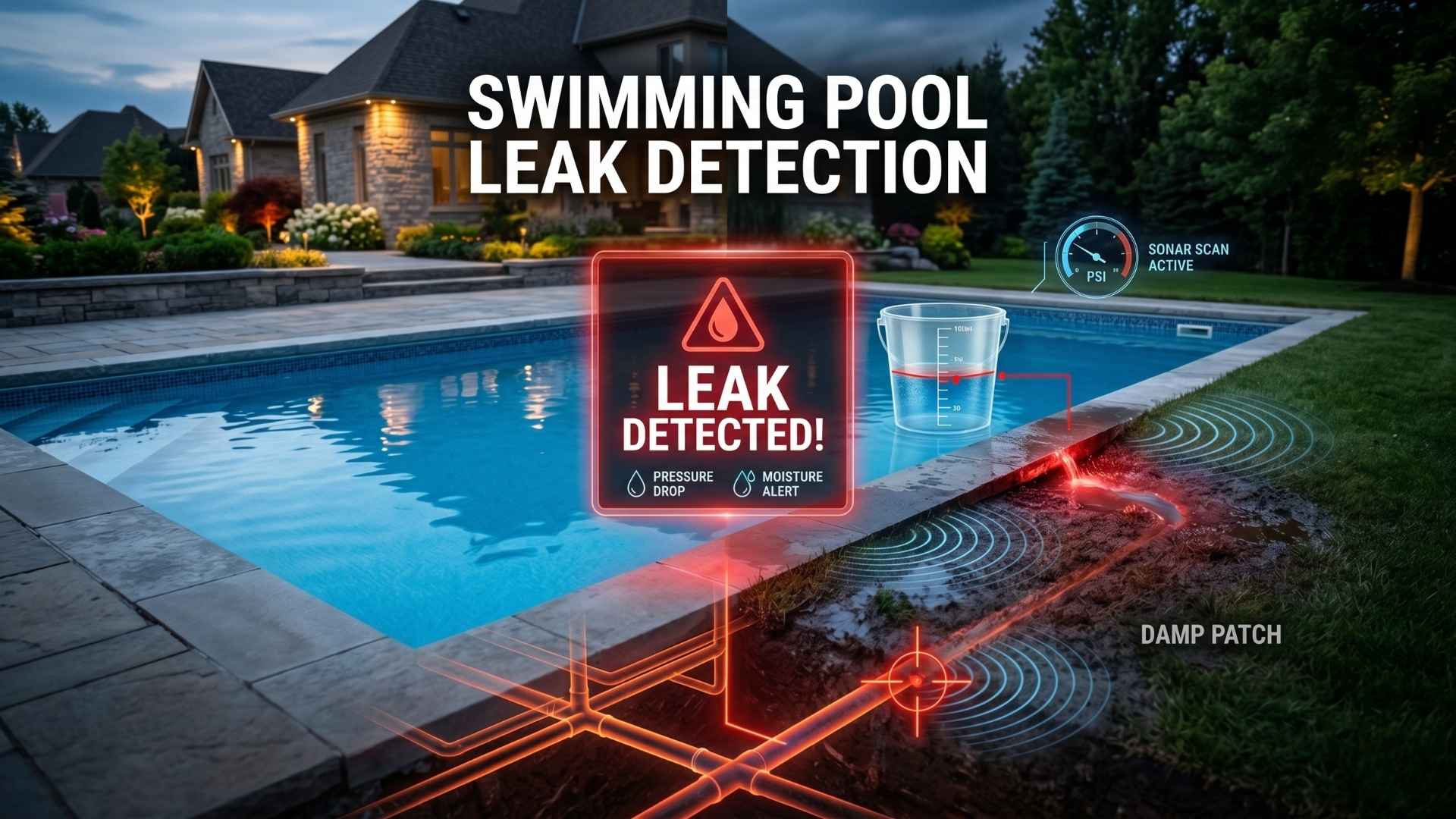
For hidden plumbing, underground pool leak detection requires pressure testing and sonar equipment. Underground leaks occur in suction or return lines. Signs include water pooling in your yard, shifting soil, or pump pressure drops. Knowing how to detect a pool leak in your main drain or return lines requires specialized tools that inspect systems without digging.
⚠ Do not ignore these red flags
If you notice sections of your lawn that are noticeably greener, lusher, or soggy compared to surrounding areas, this is a strong indicator of an underground pool pipe leak. The escaping water is essentially irrigating your yard from below. Left untreated, this will erode the soil supporting your pool structure.
Common Causes of Pool Leaks
Structural and Mechanical Failures
Identifying the common causes of pool leaks is a crucial step to detect a pool leak before it degrades the soil under your foundation. The table below outlines the most frequent culprits and their typical severity:
| Leak Type | Common Signs | Severity | Repair Cost Impact |
| Liner Tears | Water behind liner, visible wrinkles | Low to Medium | Low if patched early |
| Skimmer Crack | Water level stops at skimmer bottom | Medium | Moderate repair cost |
| Light Conduit Leak | Water drops below light fixture, wet deck | Medium | Moderate to High |
| Plumbing Crack | Rapid water loss when pump is running | High | High due to excavation |
💡 Skimmer tip
One of the simplest checks you can do is mark the water level at the skimmer with a pencil and leave the pump off overnight. If the water level stops dropping precisely at the bottom of the skimmer opening, the skimmer throat or its gasket is the almost certain source. This is a $20 to $80 fix compared to thousands for a plumbing job.
Ottawa Pool Leak Challenges
Freeze-Thaw Cycles and Ground Shifting
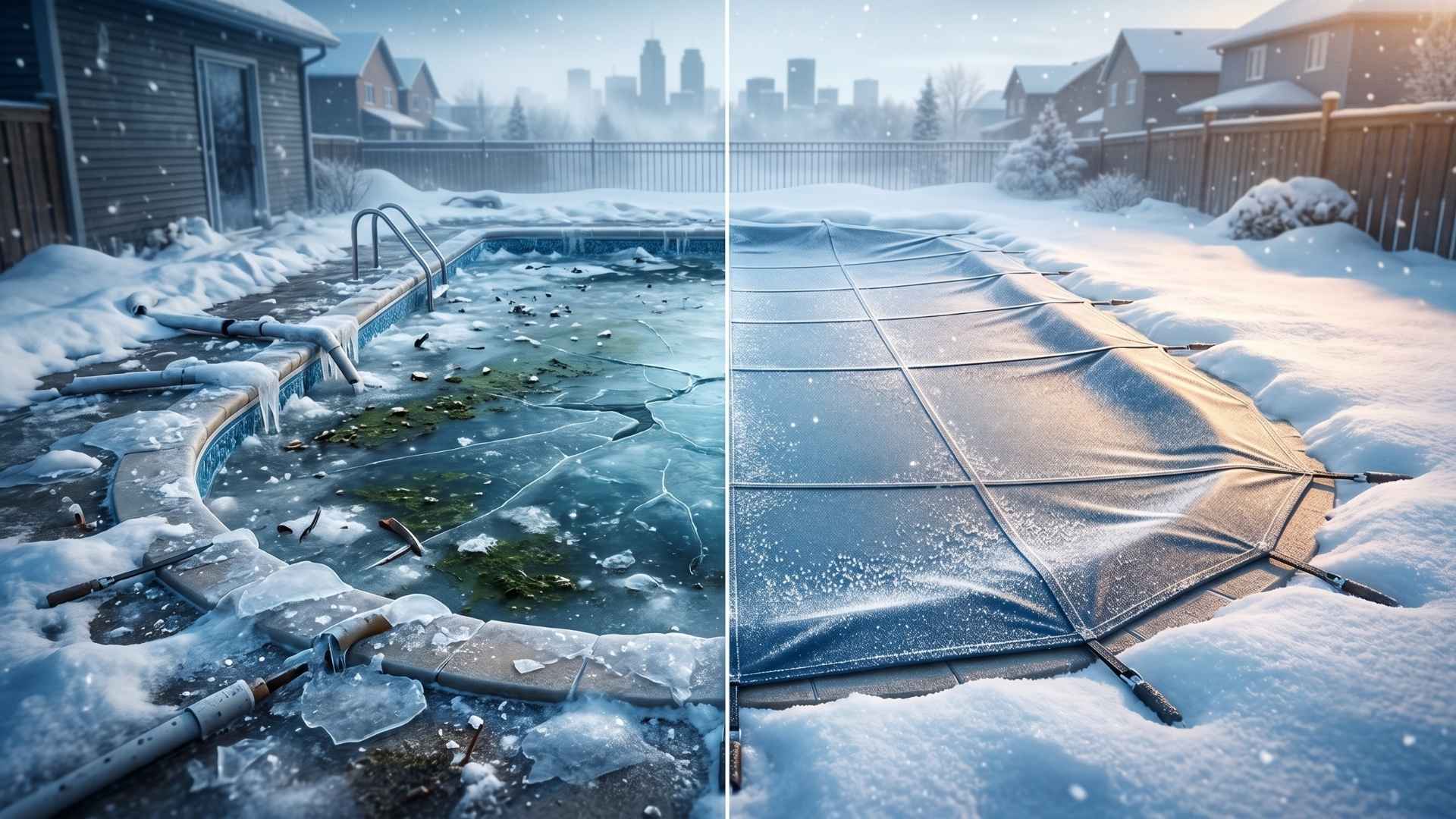
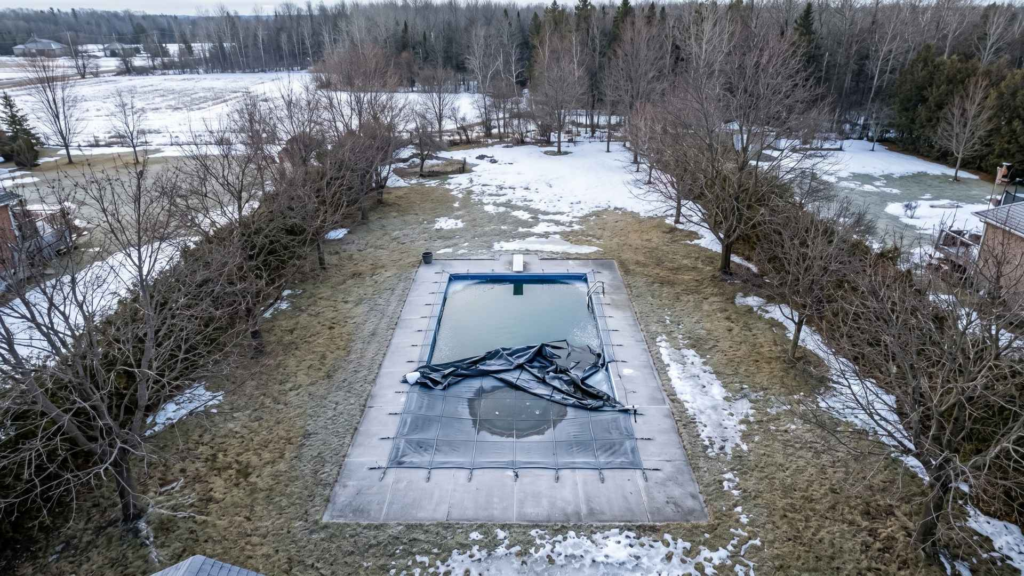
Ottawa’s climate plays a major role in pool structural health. The harsh winters and seasonal freeze-thaw cycles cause the ground to shift, placing stress on underground PVC pipes, skimmers, and concrete pool walls. Ice expansion during winter can crack underground plumbing lines if they were not blown out correctly at closing. These factors make regular inspections and early detection vital to prevent permanent damage.
⚠ Ottawa-specific reminder
If your pool was not properly winterized, including a full blow-out of the return and suction lines, ice forming inside those pipes during a Ottawa winter can split PVC in multiple places. A single hard freeze on water left in a pipe is enough to cause a hairline fracture that will be invisible until the pool opens in spring and you notice your water disappearing.
Pool Repair Before Damage Increases
Why procrastination costs more
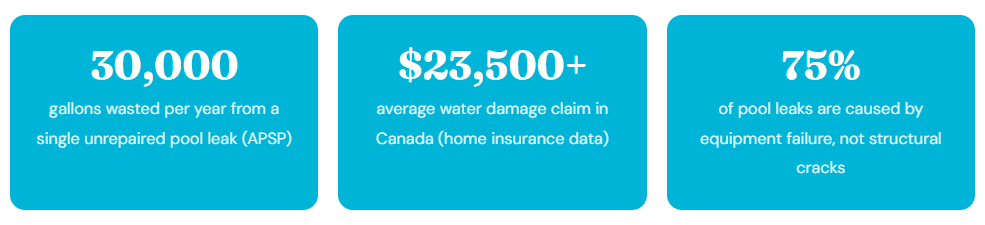
Delaying repairs is a common mistake that leads to escalating costs. According to Canadian home insurance data, water damage claims average over $23,500, illustrating how costly undetected pool water loss problems can become if left unaddressed. Water escaping from a pool washes away supporting soil, causing walls to collapse and decks to sink.
Taking action early ensures you can complete pool leak detection and repair in Ottawa before structural collapse becomes a factor, saving you significant money in the long run.
Professional Leak Detection Services
Advanced Diagnostics and Repairs
If you cannot detect a pool leak using simple DIY tests, it is time to hire experts. Professionals use pressure testing, electronic liner scanners, and underwater microphones to pinpoint the leak. According to water safety guidelines from Public Health Ontario, maintaining structural integrity is essential for safe recreational water use. For professional diagnostics, contact a licensed technician for Pool Leak Detection and Repair in Ottawa to stop the water loss immediately.
💡 What to expect from a professional inspection
A licensed pool leak technician will typically start with a visual inspection, then perform a pressure test on all plumbing lines, followed by a dye test around fittings, lights, and the skimmer. If the leak is in the liner, an electronic scanner is used to identify the exact pinhole location underwater without needing to drain the pool. Most inspections take two to four hours.
Frequently Asked Questions
How do I know if my pool has a leak?
If pool water drops over a quarter-inch daily or wet spots appear, your pool likely leaks.
What is the bucket test for pool leaks?
The bucket test compares water loss in a bucket to the pool, confirming if you have a leak.
Can a pool leak fix itself?
No, pool leaks will not fix themselves. They worsen, leading to costly structural damage.
How much water loss is normal due to evaporation?
Normal evaporation causes one-eighth to one-quarter inch of daily water loss, depending on temperature and wind.
What causes underground pool leaks?
Underground leaks are caused by freeze-thaw cycles, soil shifting, tree roots, or pipe degradation.
When should I call a professional to detect a pool leak?
Call a professional if the bucket test confirms a leak or you suspect an underground plumbing issue.
Final Thoughts on Pool Leak Detection
Staying proactive and learning how to detect a pool leak early ensures your backyard remains a safe, beautiful retreat. Early intervention prevents costly structural damage, reduces water bills, and protects equipment. Use the bucket test regularly, watch for warning signs, and contact professional support to resolve issues before they expand.