You can determine if your swimming pool has a leak by conducting a bucket test to compare water levels inside and outside the container. If the pool water level drops faster than the bucket level, or if you notice unexplained wet spots, a Pool Leaking problem is likely present.
Owning a pool in Eastern Ontario brings months of enjoyment, but maintaining proper water levels is essential. When you notice the water level declining, you might wonder if it is normal summer evaporation or a serious plumbing issue. Distinguishing between standard water loss and an actual leak saves you money on water bills and repairs. This guide explains how to tell if a pool is leaking, helping you identify and solve any Pool Leaking issues before they worsen.
Evaporation vs Water Loss: How to Stop Pool Leaking
Understanding Normal Evaporation vs Pool Leak Indicators
Seasonal Temperature Swings and Weather Effects in Ottawa
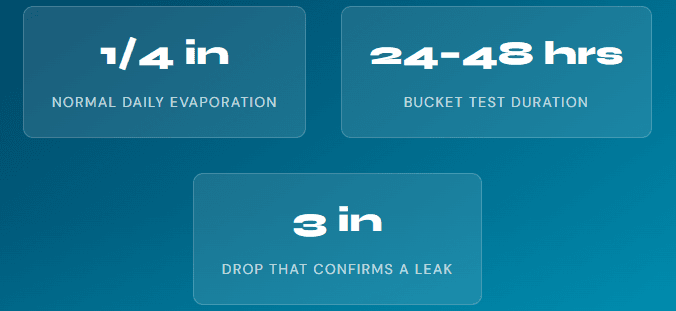
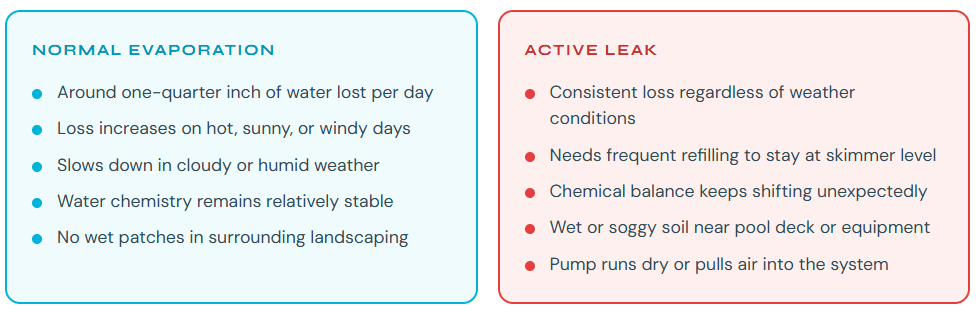
In Ottawa, hot summer days combined with cool nights accelerate natural evaporation, especially when wind speeds are high. A typical swimming pool loses about one-quarter of an inch of water daily due to sunshine and humidity. To understand normal evaporation vs pool leak dynamics, homeowners should monitor weather changes because dry air and strong breezes draw significant moisture. While a minor drop is expected, water dropping rapidly or requiring constant refilling indicates a structural or mechanical issue rather than a natural climate effect.
Persistent swimming pool water loss problems often manifest as more than just a lower waterline. If you constantly add water to maintain skimmer levels, or if your chemical balance fluctuates, your plumbing may be compromised. Standard evaporation occurs uniformly, whereas structural leaks cause continuous water loss regardless of weather. Learning how to tell if a pool is leaking helps prevent ground saturation, which can destabilize pool decks and cause landscaping damage.
💡 Check Your Water Bill First
Before doing any physical inspection, pull up two or three months of water bills. A pool leaking even a quarter inch per day across a large surface area adds up to hundreds of litres per week. An unexplained spike in water consumption is often the first sign homeowners notice that something is wrong, long before the waterline visibly drops.
Step-by-Step Bucket Test for Pool Leaks
DIY Pool Leak Detection Methods: The Bucket Test Explained
How to Set Up and Measure the Bucket Test
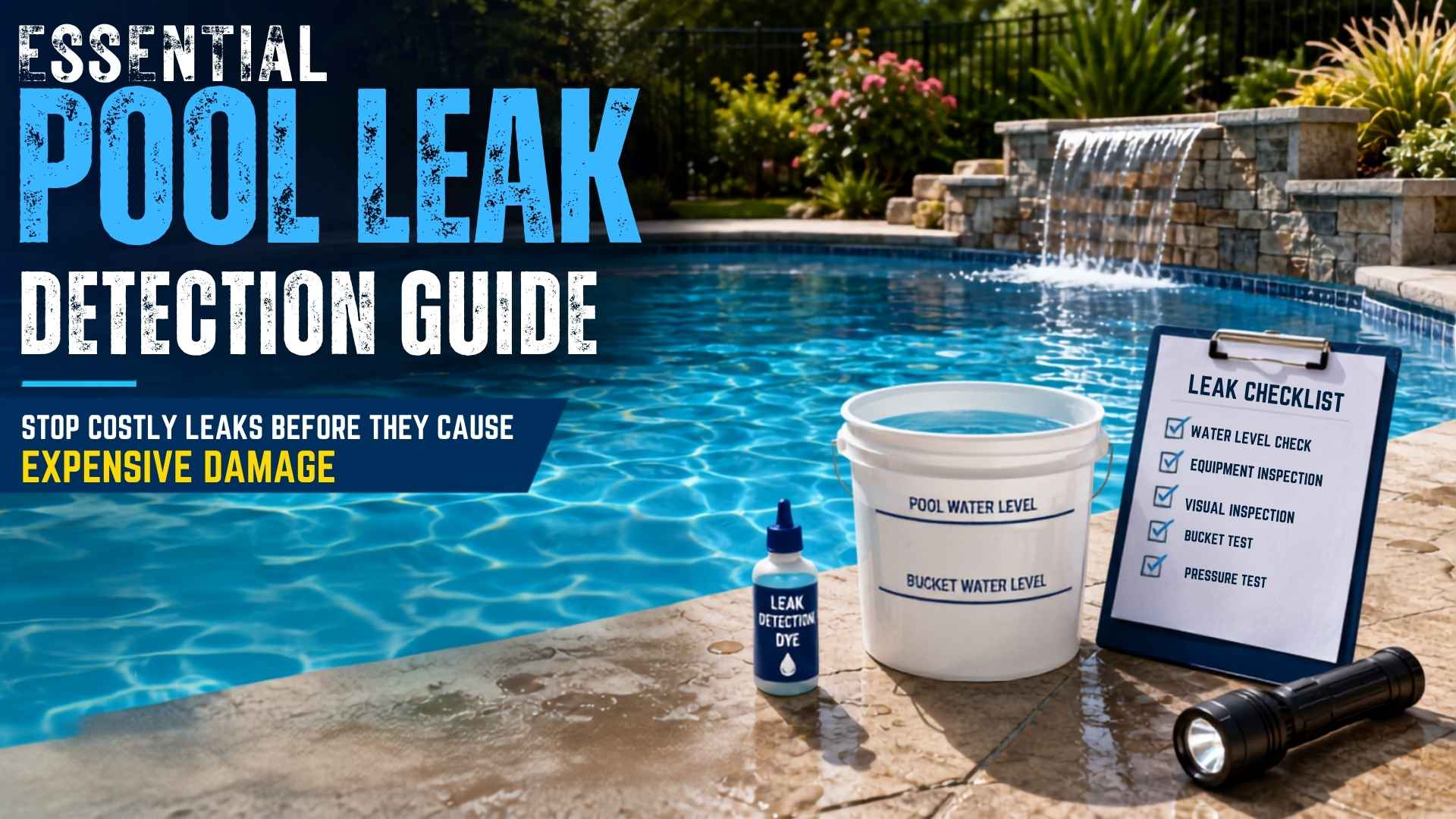
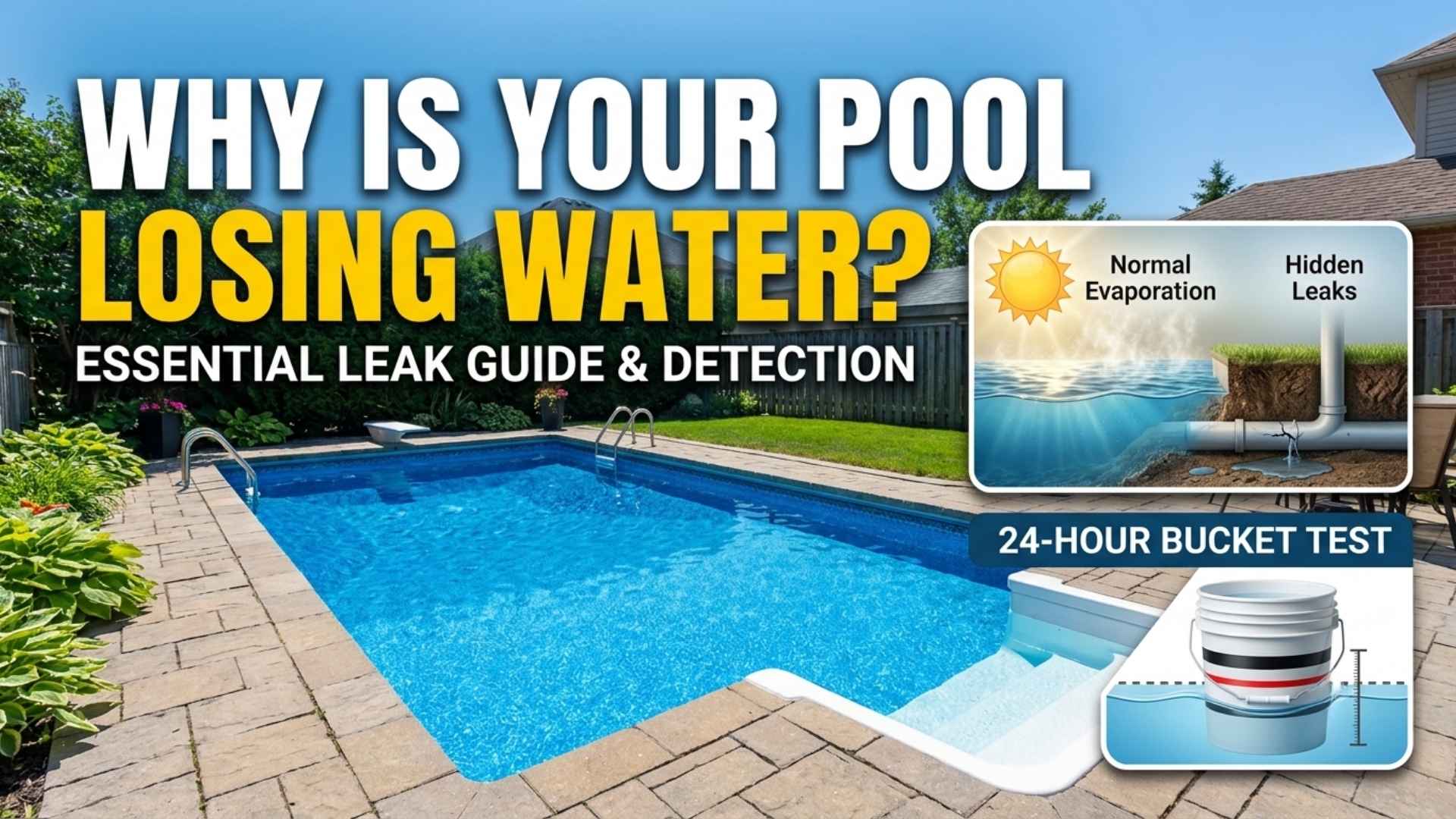
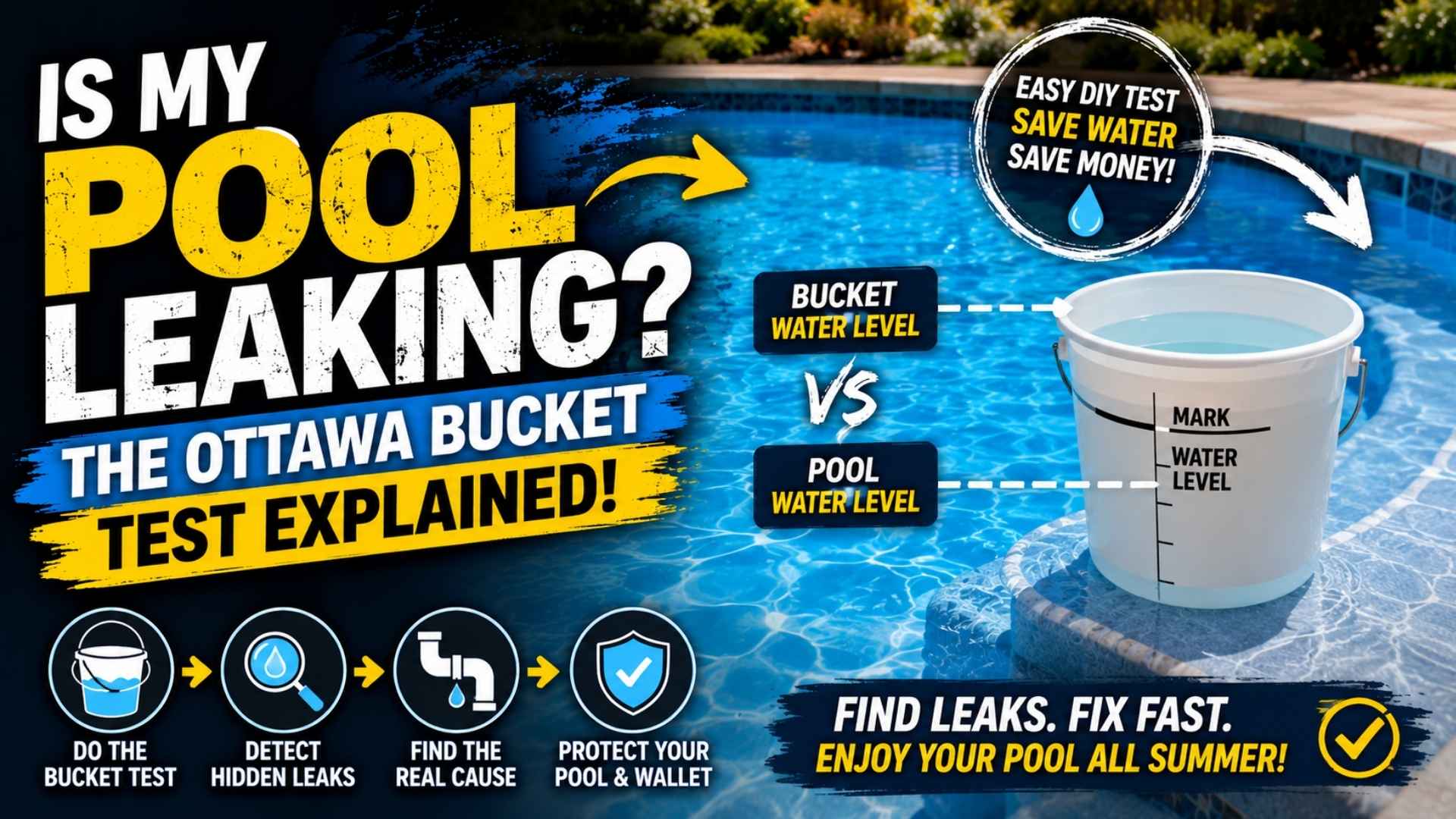
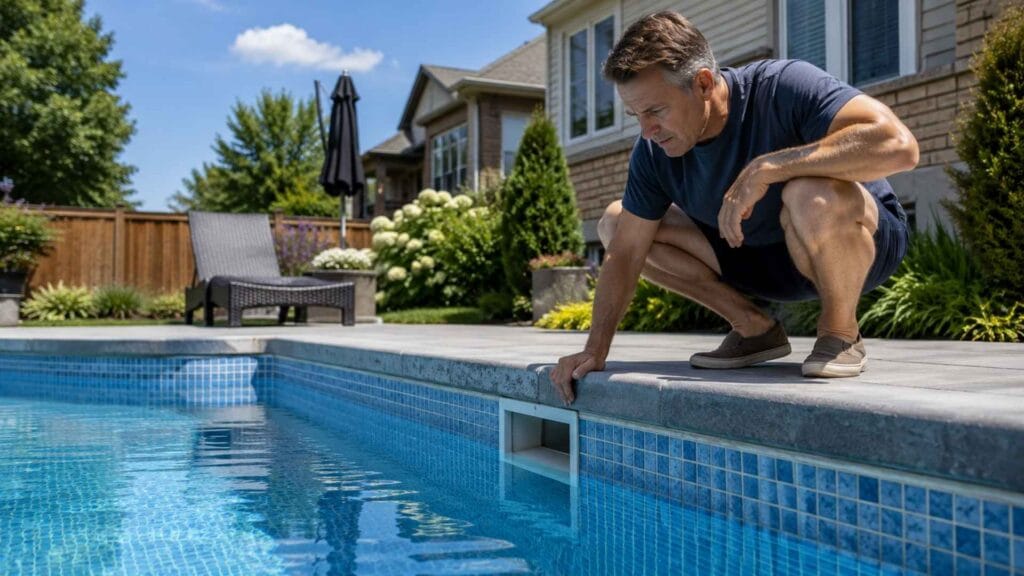
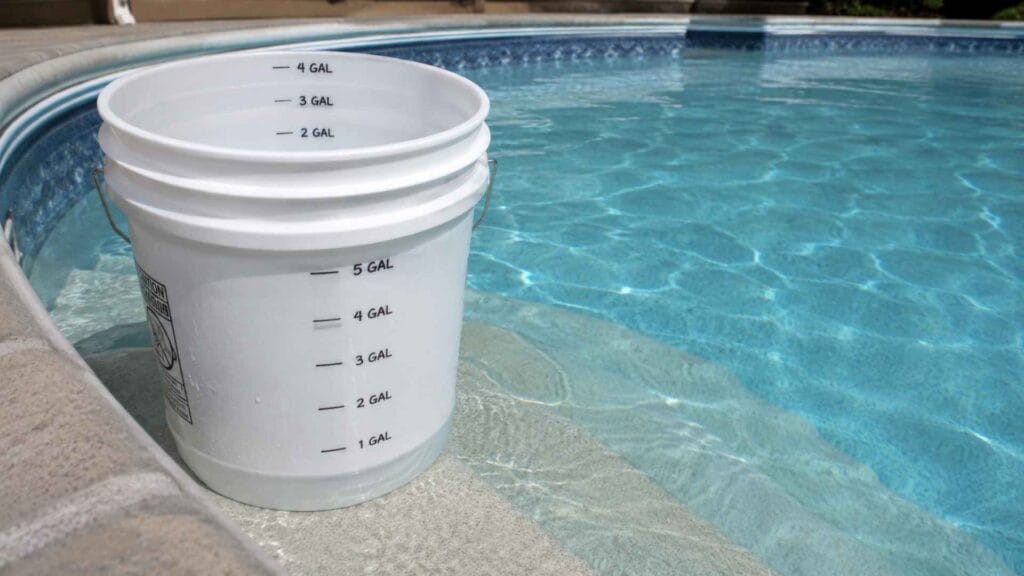
The bucket test for pool leaks is a reliable DIY method that isolates evaporation from structural water loss. To set it up, fill the pool to its normal operating level and turn off the pump to ensure the water is still. Fill a five-gallon plastic bucket with pool water until it matches the pool level, and place the bucket on the top pool step. This ensures the water inside the bucket remains at the same temperature as the pool water, providing an accurate comparison.
Using a waterproof marker, mark the water level on the inside of the bucket and the pool level on the outside. Wait 24 to 48 hours under normal operating conditions, then measure the distance the water has dropped in both spots. If the pool water has dropped significantly more than the water inside the bucket, you have confirmed that a Pool Leaking issue is present. These DIY pool leak detection methods are the best starting point before calling professionals.
💡 Equal Drop: No Leak Detected
If the pool water and bucket water have dropped by roughly the same amount, the loss is normal evaporation. Continue monitoring and repeat the test if water loss seems to increase.
⚠ Pool Dropped More: Leak Confirmed
If the pool waterline has fallen significantly more than the bucket waterline, you have confirmed a leak. The greater the difference, the more water is being lost. Time to investigate the source.
Why Ottawa Pools Lose Water: Regional Challenges
How Freeze-Thaw Cycles Impact Swimming Pool Water Loss Problems
Ottawa’s extreme climate places unique stress on backyard pools, leading to specific swimming pool water loss problems. Severe freeze-thaw cycles during Ontario winters cause ground shifting, which can damage underground PVC lines and crack concrete decks. Reviewing professional closing a pool in Ottawa tips helps minimize this structural strain. Harsh winters also accelerate pool liner wear, causing vinyl to shrink, lose elasticity, and tear, leading to active leaks during the summer.
Common Causes of Pool Leaks and Structural Issues
Mechanical and Structural Failures in Residential Pools
Identifying Liner Tears, Cracked Pipes, and Equipment Leaks
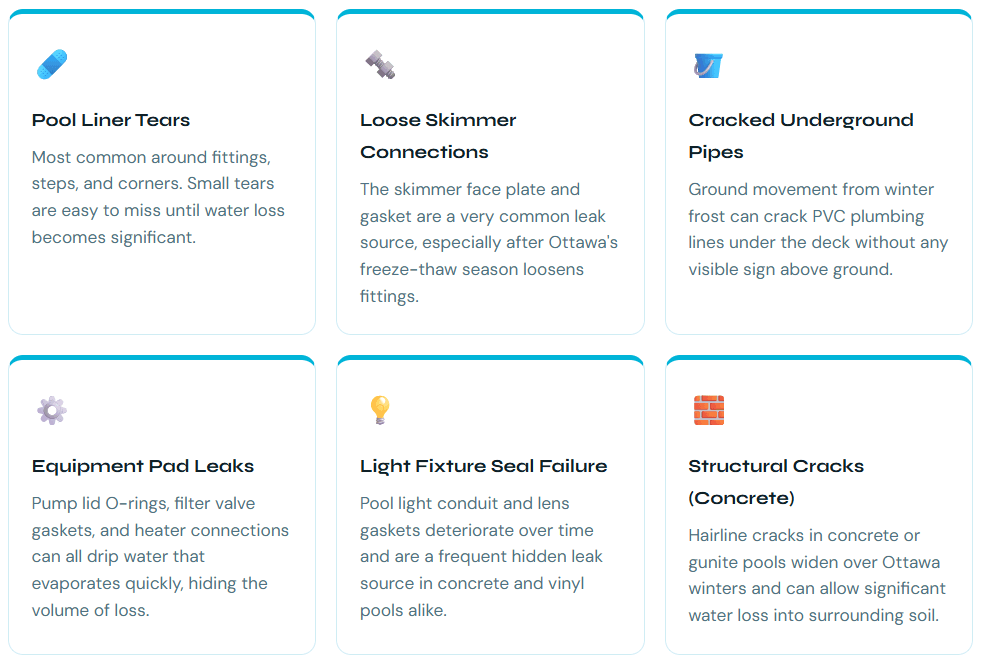
Understanding the common causes of pool leaks is key to narrowing down where your system is losing water. Heavy wear leads to pool liner tears, particularly around fittings, steps, and corners. Cracked plumbing pipes beneath the deck are another source, often caused by ground movement. Additionally, leaking pump or filter equipment, loose skimmer connections, and faulty fittings can cause a silent Pool Leaking issue. In concrete pools, structural cracks are serious concerns that require immediate attention to prevent soil erosion.
Pool Leak Troubleshooting Table
| Symptom | Possible Cause | Recommended Action |
| Rapid water loss | Liner tears or cracked underground pipes | Perform bucket test and inspect liner seams visually |
| Wet soil near pool | Underground plumbing leak or loose skimmer connection | Check equipment pad for drips and inspect landscaping soil |
| Air bubbles in return jets | Suction-side plumbing leak | Check pump lid O-ring and inspect suction lines for cracks |
| Cracked or brittle liner | Winter damage or aging vinyl | Patch small tears immediately or consult a liner replacement expert |
| Water loss only with pump on | Pressure-side plumbing leak | Run bucket test pump-on vs pump-off to confirm, then call a leak specialist |
DIY Checks Before Calling a Professional
Homeowner Inspection Tips for Lines and Equipment
Before scheduling professional services, homeowners can perform basic checks. Inspect visible plumbing at the pump equipment pad for drips, monitor filter pressure, and examine the liner around the skimmer and light fixtures. If you notice structural wear, checking for key pool liner replacement signs is crucial. Look for wet patches of grass near the pool decking, as these point to underground leaks, and use a dye test to confirm your Pool Leaking suspicions.
When to Call a Pool Leak Detection Expert
Advanced Diagnostics and Professional Equipment Services
When basic troubleshooting confirms water loss but the source remains hidden, it is time to call a pool repair expert. Professional leak detection companies use electronic leak detection, pressure testing for underground lines, moisture sensors, and waterproof pool inspection cameras. If you suspect underground lines are compromised, we suggest scheduling professional Ottawa Valley Pool Leak Detection in Ottawa to resolve the issue. Our technicians use advanced dye testing kits and digital equipment to locate the most challenging leaks before they cause major structural damage.
⚠ Do Not Delay Once a Leak Is Confirmed
A confirmed pool leak that goes unaddressed for a full season can saturate the soil underneath and around your pool, destabilising the deck, causing settlement cracks, and in severe cases shifting the pool shell itself. The repair cost for structural foundation damage around a pool is almost always far higher than the cost of fixing the original leak. Once the bucket test shows a positive result, investigate within a week rather than waiting until spring.
Frequently Asked Questions
How can I tell if my pool is leaking?
You can tell if your pool is leaking if the water level drops faster than evaporation rates, if there are wet spots in your yard, or if your water bill rises.
How much water loss is normal in a pool?
Typically, a pool loses about one-quarter of an inch of water daily to evaporation, depending on dry air, high wind, and direct sunlight.
What is the bucket test for pool leaks?
The bucket test is a simple DIY pool leak detection method that compares the water level in a bucket with the pool water level over 24 to 48 hours.
Can pool leaks repair themselves?
No, pool leaks will not repair themselves, and ignoring minor cracks or tears can lead to massive water loss and soil erosion under the pool decking.
Does evaporation cause major water loss?
Evaporation causes consistent, minor water loss, but rapid drops in water levels or constant chemical imbalances suggest an active Pool Leaking problem.
When should I call a leak detection expert?
You should call a professional when the bucket test confirms water loss, when underground plumbing is suspected, or when you cannot locate the leak source.
Final Thoughts on Spotting a Pool Leaking Issue
Catching a Pool Leaking issue early is crucial to avoid costly repairs, soil shifting, and high water bills. Performing the bucket test helps homeowners diagnose water loss and determine when to call a pool repair expert. If you need professional assistance, contact us today to ensure your pool remains safe and ready for summer enjoyment.