Owning a swimming pool in Ottawa means preparing for heavy snowfall, freezing rain, and severe winter weather. Homeowners across Kanata, Nepean, Barrhaven, Orleans, Gloucester, and Manotick rely on pool covers to protect their swimming pools during the off-season. However, heavy snow accumulation raises critical questions about cover strength. Understanding your pool cover snow load limit ensures your pool safety cover remains secure, preventing structural damage to the cover, anchors, and pool deck throughout the winter season.
Is There a Universal Pool Cover Snow Load Limit?
There is no single universal pool cover snow load limit that applies to every swimming pool cover. A cover’s safe weight capacity depends on manufacturer specifications, material construction, reinforced webbing, anchoring systems, pool dimensions, and cover age. Furthermore, snow density varies greatly, meaning wet snow and ice exert far more weight than light, fluffy snow at identical depths.
What Determines a Pool Cover’s Load Capacity?
A safety cover’s ability to support heavy snow accumulation relies on several interconnected structural factors rather than a single weight rating.
Cover Construction and Material Quality
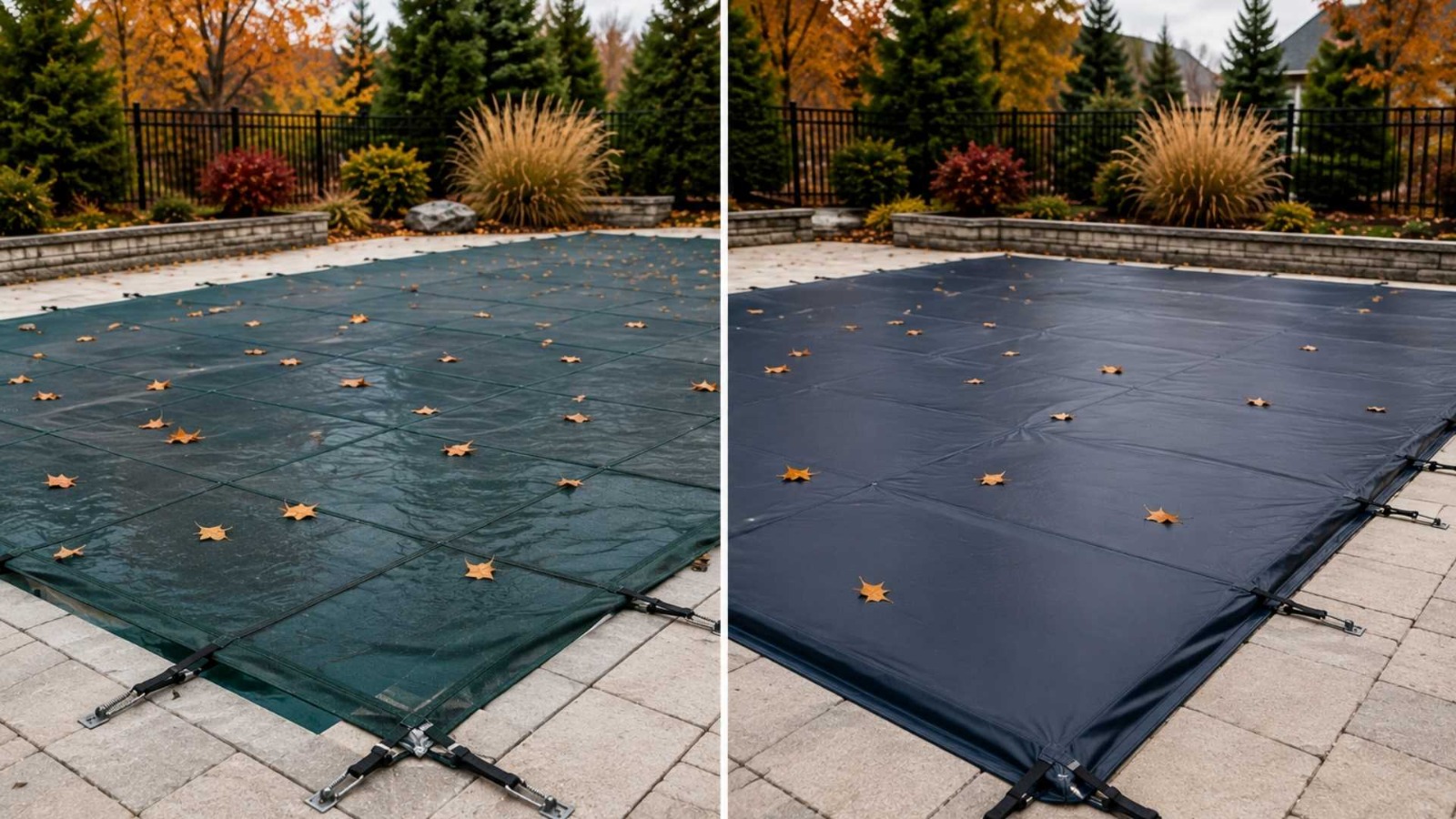
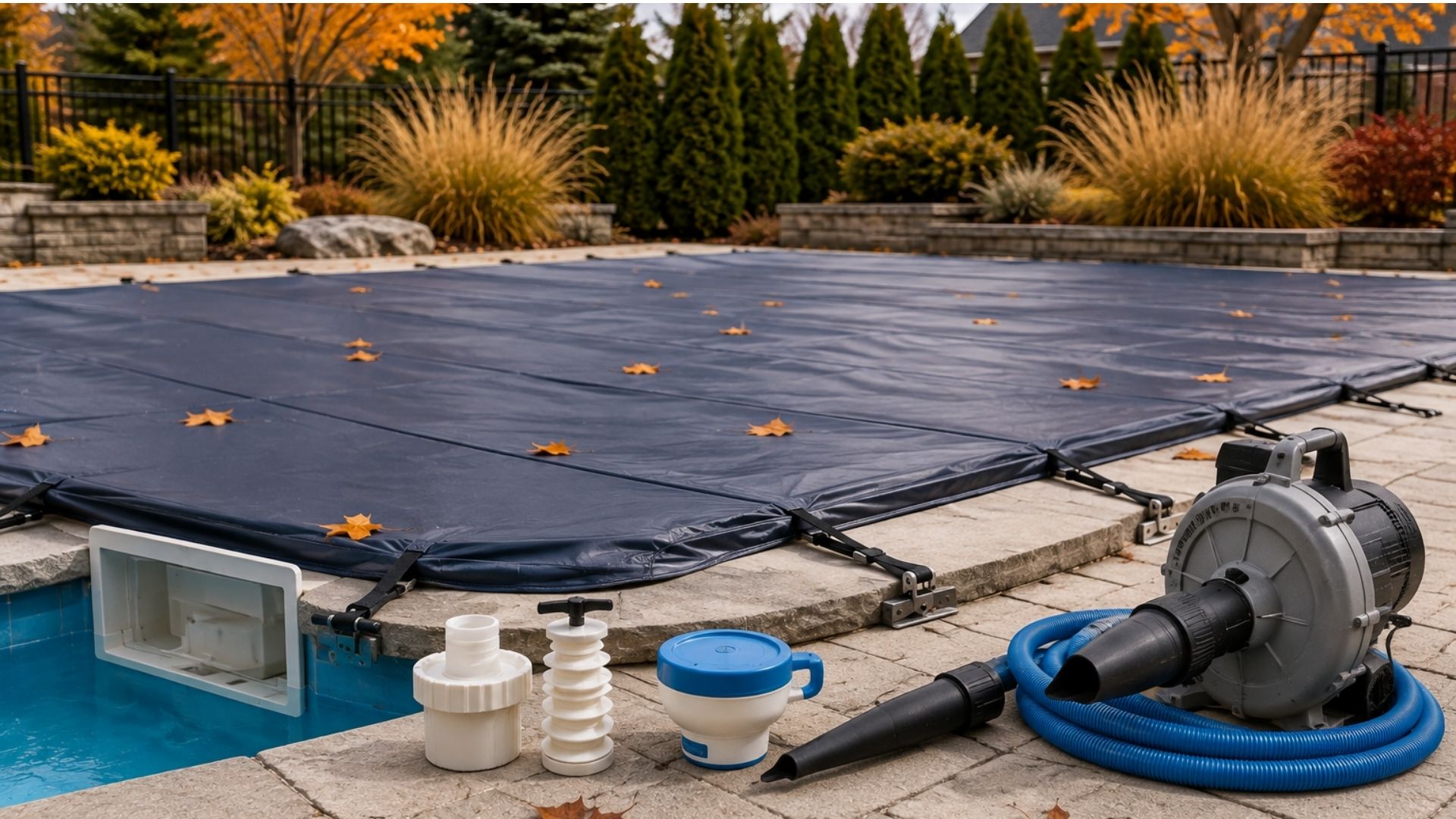
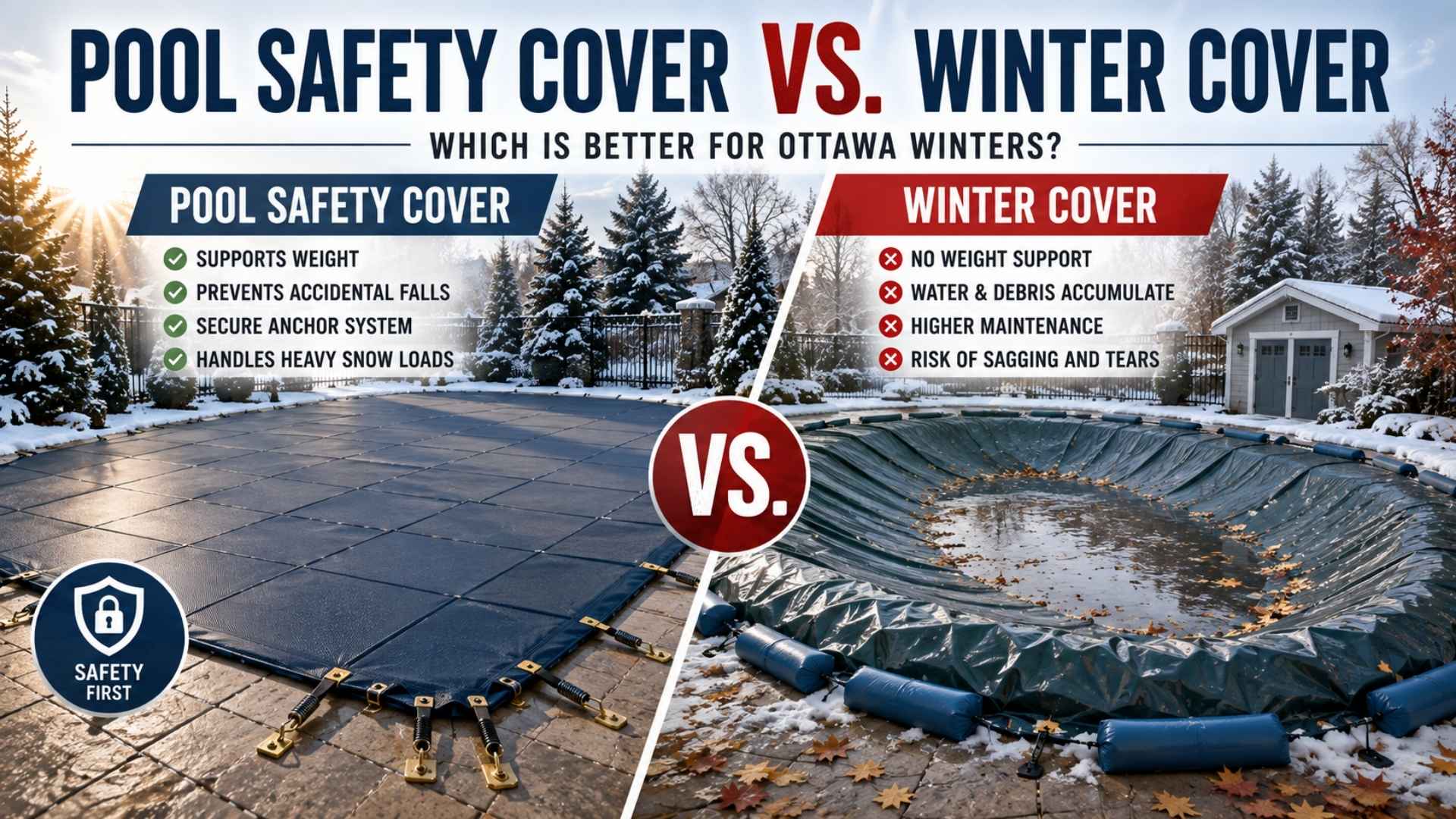
High-quality safety covers feature heavy-duty woven mesh or solid vinyl reinforced with double-stitched webbing. Solid covers block all water and debris but require pump management, while mesh covers allow water to drain into the pool. Reinforced cross-straps transfer heavy weight load evenly across the cover surface to prevent localized tearing.
Anchoring Systems and Installation Precision
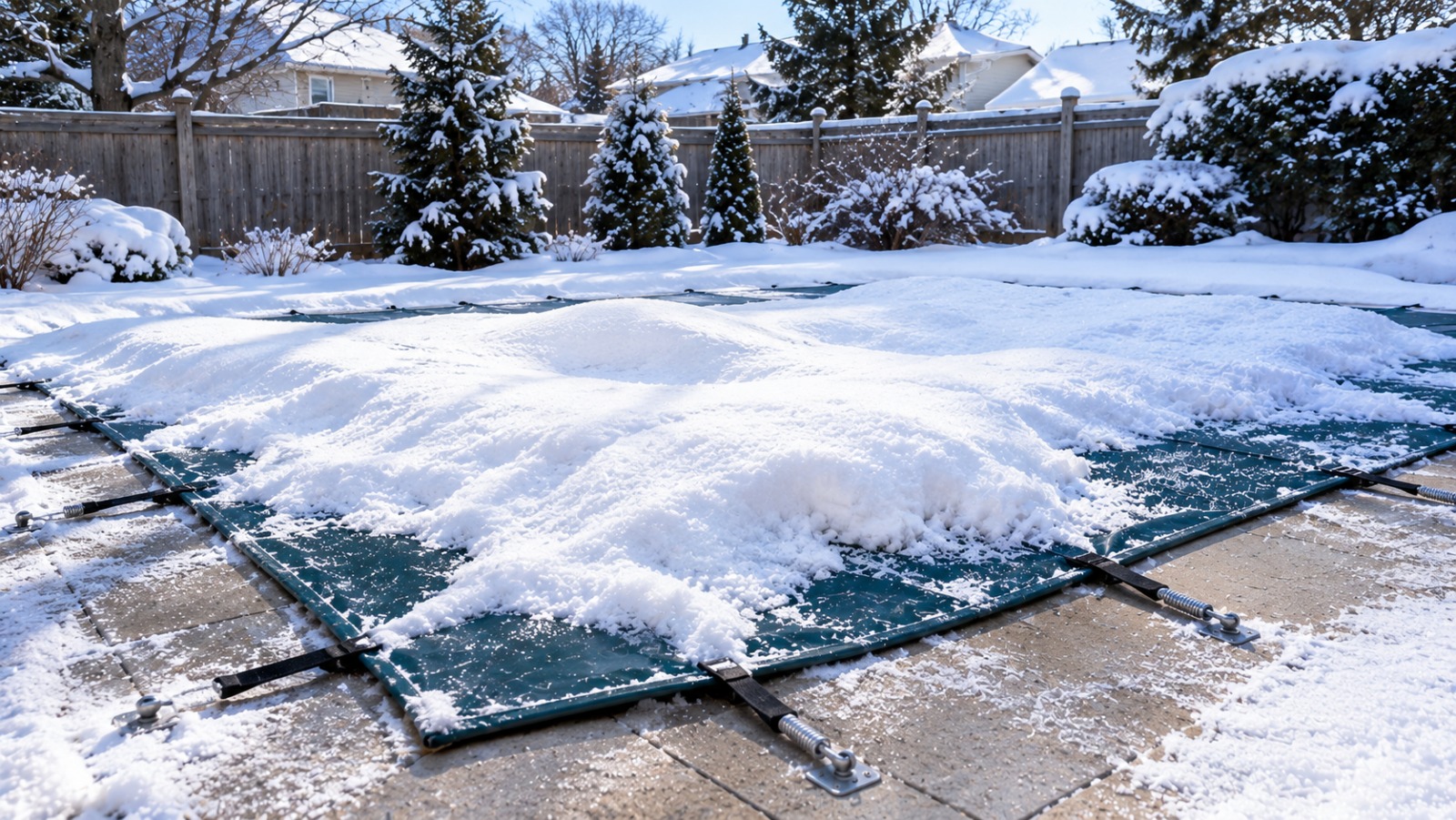
Safety covers depend on heavy-duty brass anchors recessed into concrete decking, connected by high-tension stainless steel springs. Proper strap tensioning ensures the cover supports load weight as engineered. Loose straps or weak deck anchors significantly reduce total load capacity and lead to excessive sagging under snow.
Tip
After installation, take a photo of the springs at rest and measure from the deck to the water surface. Write the number down. Checking against your own baseline after a storm is faster than guessing whether something has changed.
How Much Snow Can a Pool Safety Cover Hold?
Determining how much snow a pool cover can hold requires looking beyond simple snow depth. Light, fresh powder might accumulate several inches without stressing the cover, whereas a thin layer of wet, slushy snow mixed with ice can approach maximum weight thresholds. Homeowners should consult their cover manufacturer documentation or installation manual for specific weight capacity ratings rather than estimating based on snow height alone.
Do the math
One inch of water spread over one square foot weighs about 5.2 lb. A 16 x 32 ft pool has 512 square feet of surface, so one inch of water on it weighs roughly 2,660 lb (512 x 5.2). Typical snow melts down to about one inch of water for every 10 inches of depth, but wet snow holds far more water than that.
Why Wet Snow and Ice Are Heavy on Pool Covers
Snow weight changes dramatically based on moisture content and temperature fluctuations. During Ottawa freeze-thaw cycles, ambient temperatures rise above freezing, causing snow to absorb rain or meltwater before refreezing into dense ice. Water content adds immense mass to accumulated snow. Refrozen ice sheets create concentrated load points that increase tension on springs and deck anchors.
Weight per cubic foot (lb)
Fresh, light snow: 3 to 4
Settled snow: 12 to 19
Wet, slushy snow: 25 to 52
Ice: about 57
Signs of Heavy Snow Stress on Pool Covers
Monitoring your pool cover during major winter storms helps identify structural stress before cover failure occurs.
Visual Indicators of Excessive Weight Load
Observing how the cover reacts to heavy snowfall allows homeowners to spot potential strain early.
Cover Sagging and Strap Tension
Excessive central sagging below the pool water line indicates heavy weight loading. When stainless steel springs are compressed completely flat against deck anchors, the support system has reached maximum operational tension.
Anchor Displacement and Perimeter Stress
Brass anchors pulling upward from concrete decks, cracked deck surrounds, or over-stretched perimeter straps indicate that snow weight is exceeding safe structural tolerances.
How to Safely Manage Snow Accumulation
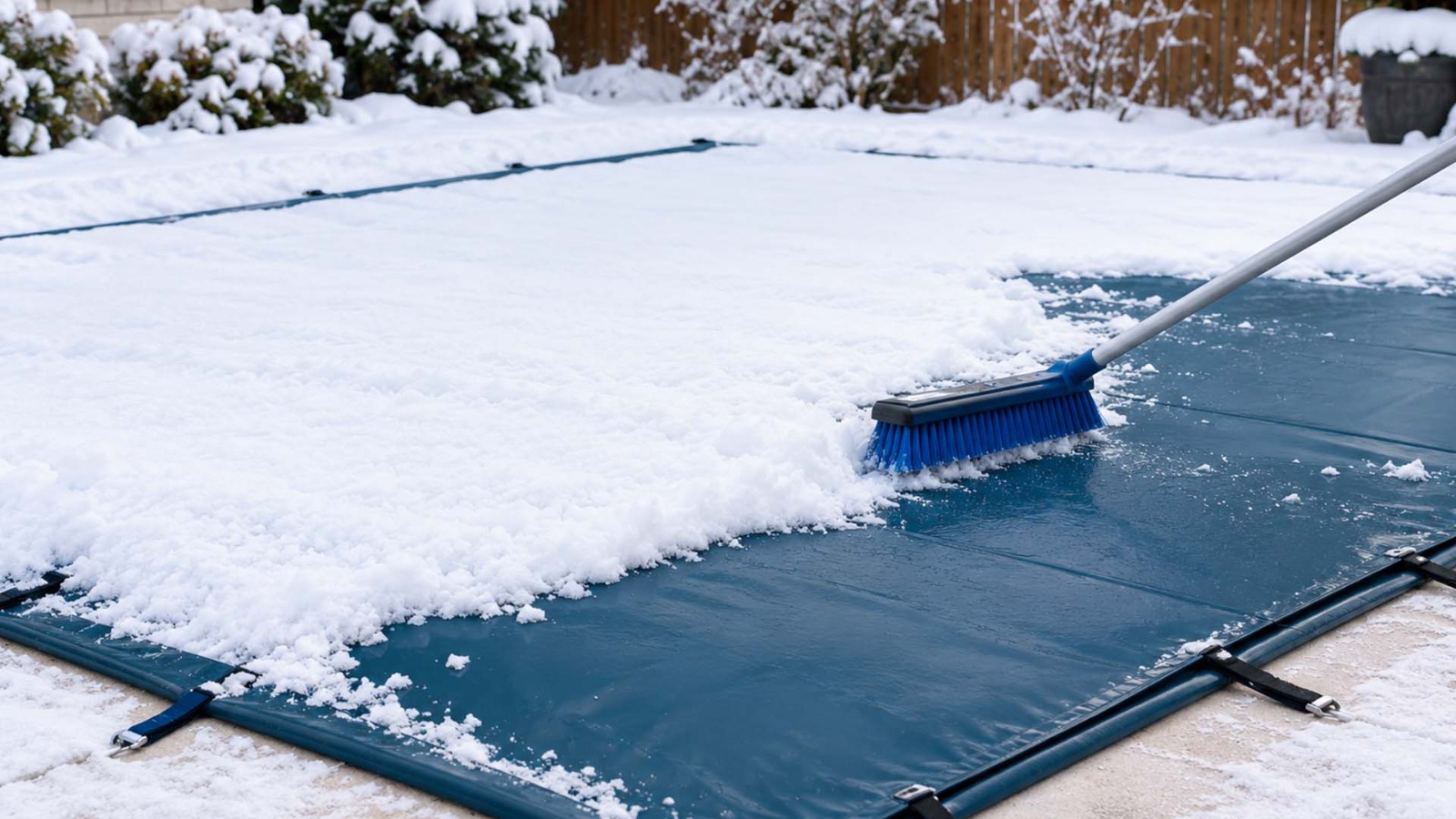
Managing heavy snow on a pool cover requires caution to avoid damaging cover materials or risking personal safety. Never walk onto a snow-covered pool cover, regardless of its rated strength. Avoid using sharp metal shovels, blowers, or abrasive tools that could puncture woven mesh or vinyl. When heavy accumulation threatens cover integrity, consulting experienced Ottawa Valley Winter Pool Services in Ottawa ensures safe, professional winter pool maintenance.
How Ottawa Winters Impact Pool Covers
Ottawa’s winter climate presents rigorous conditions for outdoor structures. High seasonal snowfall combined with frequent freeze-thaw shifts creates variable snow loading on backyard pools. Understanding how winter pool covers protect pools helps Ottawa pool owners select covers engineered to withstand severe regional weather patterns.
175 cm
average yearly snowfall in Ottawa, over about 52 snowy days
3 to 4
days a year with 10 cm or more of new snow
1 in 10
years sees a 25 cm or larger single-day blizzard
Based on Environment Canada 1981 to 2010 climate normals for Ottawa.
Preventing Pool Cover Damage During Winter
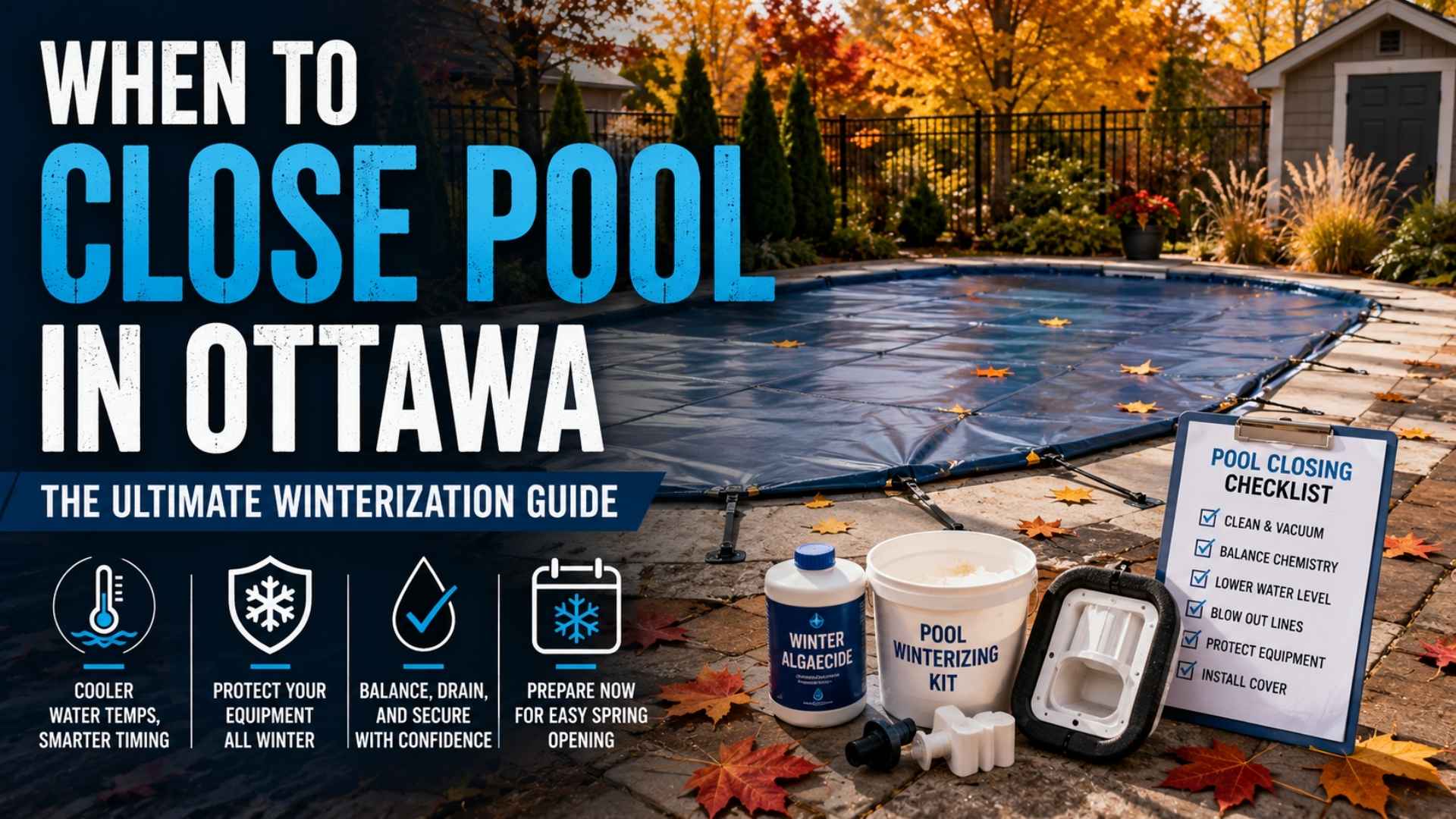
Preventing winter cover damage begins with proper pool closing. Maintaining the correct pool water level is essential because water beneath the cover acts as a supportive cushion that prevents excessive sagging. Inspecting springs, tightening loose straps, and arranging certified pool winterization Ottawa services before freezing temperatures arrive guarantees your cover is prepared for heavy winter loading.
Mesh vs Solid Safety Cover Weight Management
Mesh and solid covers handle winter precipitation differently. Mesh covers allow snowmelt to drain into the pool, preventing standing water weight buildup on top. Solid covers trap water, requiring cover pumps to remove liquid mass before it freezes into heavy ice sheets. Reviewing mesh vs solid pool cover differences helps homeowners choose the best cover style for their winter maintenance preferences.
Snow Weight Impact Comparison on Safety Covers
| Snow Condition | Weight Characteristics | Impact on Safety Cover |
| Light Dry Snow | Low density, high air content | Low weight stress for moderate accumulation depths |
| Compacted Snow | Medium density, settled layers | Moderate weight load requiring regular monitoring |
| Wet Slushy Snow | High moisture content, dense mass | Heavy load that increases spring tension quickly |
| Ice Sheet Buildup | Frozen solid, concentrated weight | Severe mechanical load requiring careful management |
Frequently Asked Questions About Pool Cover Snow Load Limits
How much snow can a pool safety cover hold safely?
Safe load capacity depends on the manufacturer rating, cover material, and installation. Snow weight varies by moisture, so check manufacturer specs rather than relying on snow depth.
Does wet snow weigh more than dry snow on a pool cover?
Yes, wet snow contains high water content, making it significantly heavier than fluffy dry snow at equal depths.
Can you walk on a pool safety cover to remove heavy snow?
No, homeowners should never walk on a winter pool cover. Walking on snow-covered pools poses safety risks and can damage the cover material or anchoring system.
What is the pool cover snow load limit for mesh covers?
Mesh cover load limits vary by brand and model. Mesh allows meltwater to drain into the pool, which helps manage standing water weight compared to solid covers.
Conclusion: Protecting Your Pool Safety Cover This Winter
Every swimming pool cover has operational limits influenced by material engineering, anchoring systems, and snow density. Ottawa freeze-thaw weather makes monitoring wet snow and ice accumulation vital for off-season pool care. By maintaining proper water levels, inspecting hardware, and investing in high-quality Pool Safety Covers in Ottawa, homeowners can protect their swimming pool investment throughout the coldest months of the year.