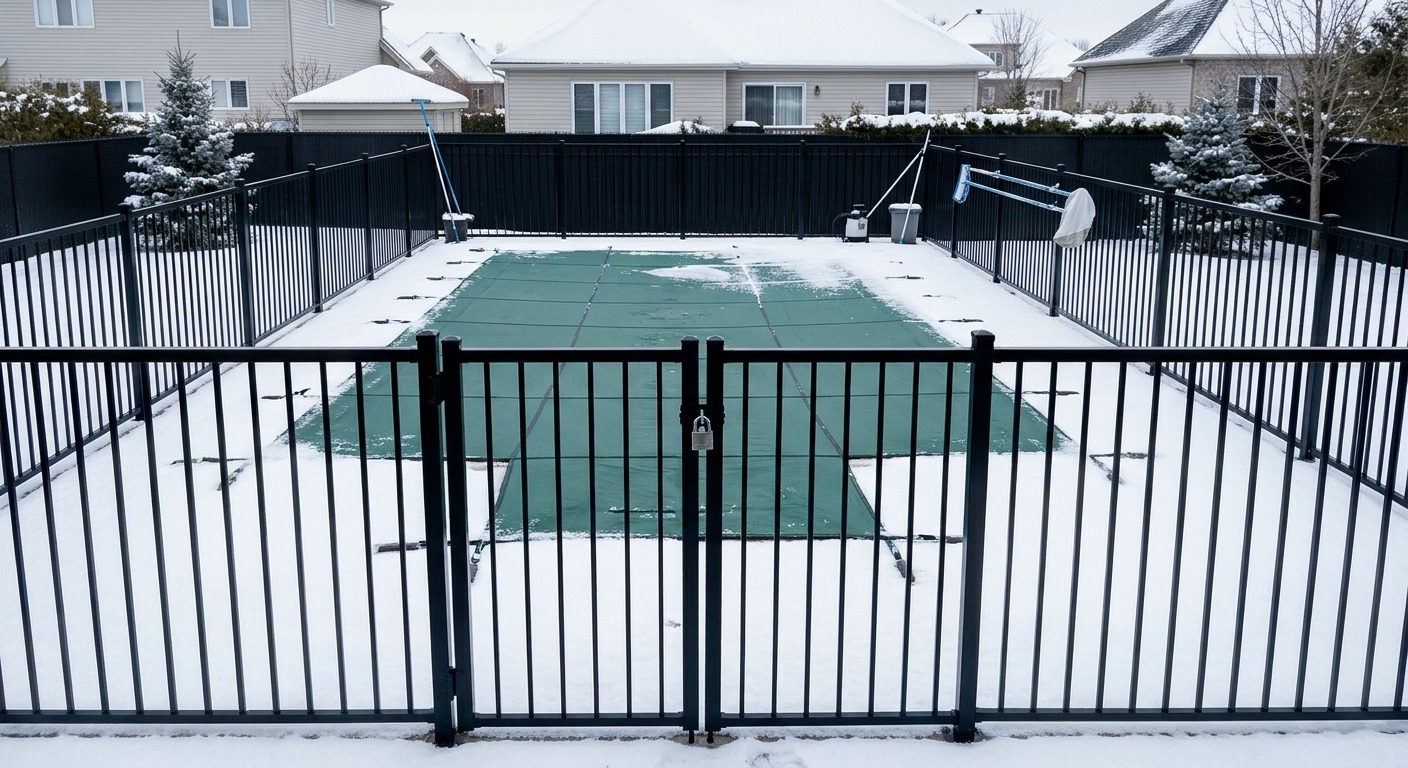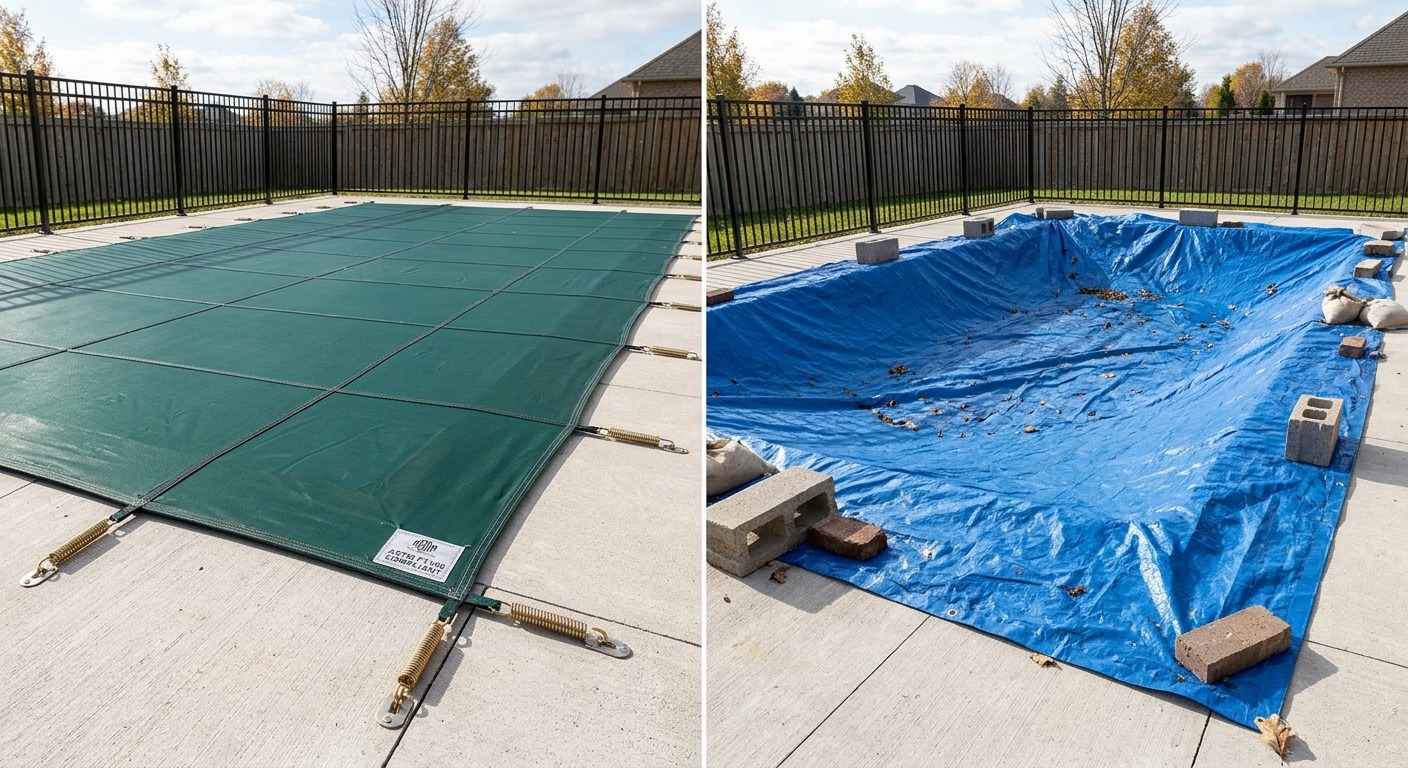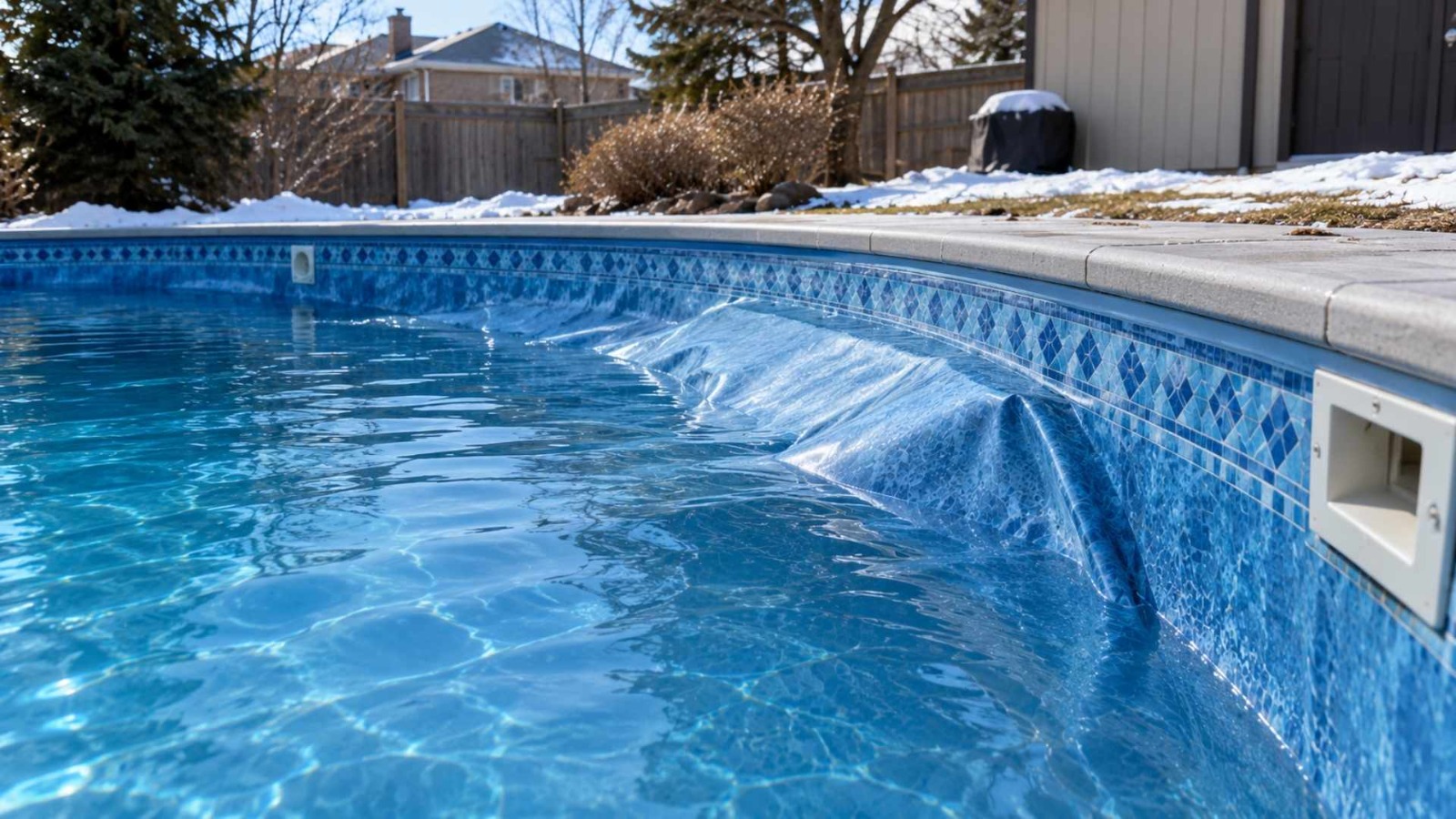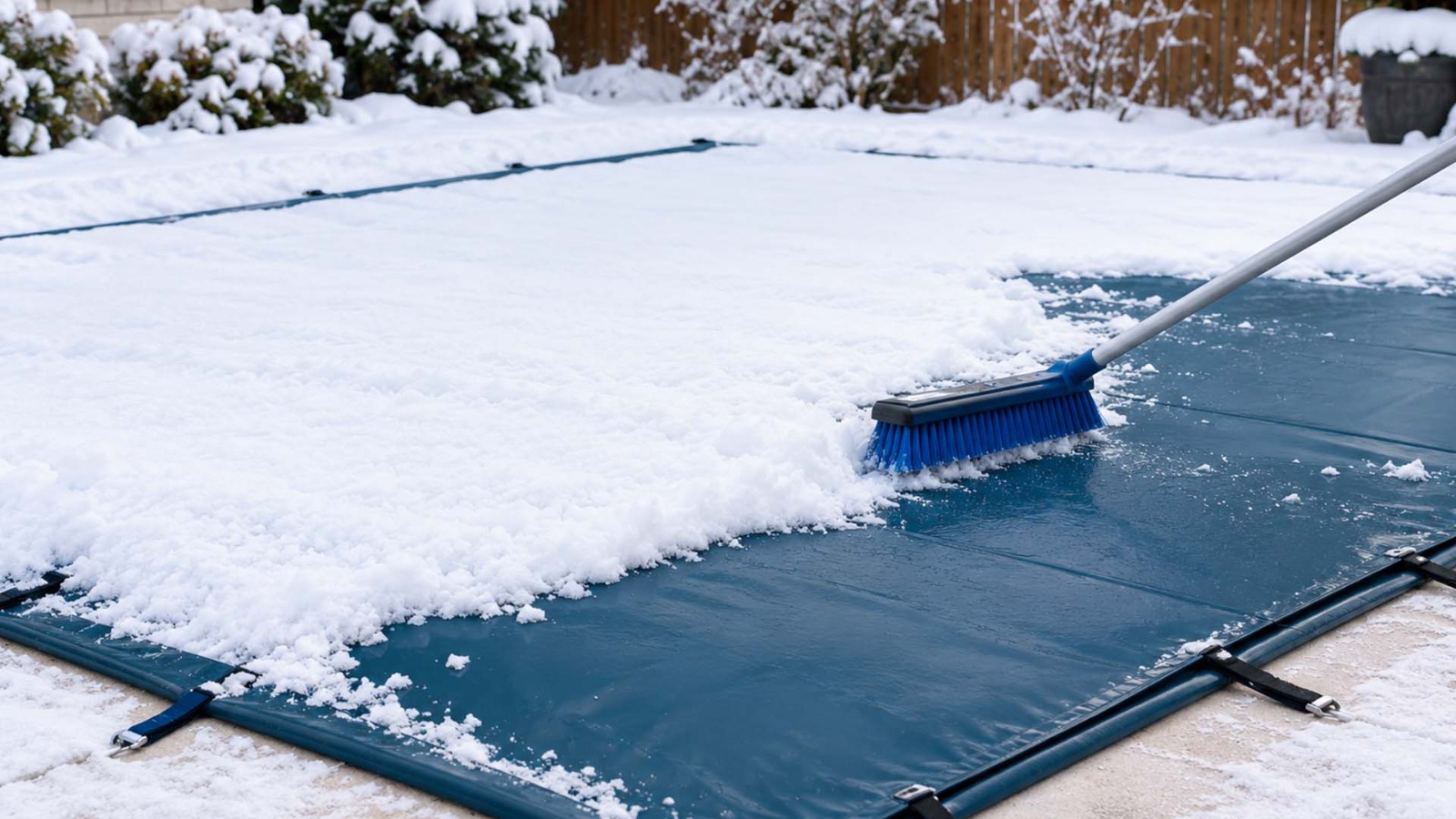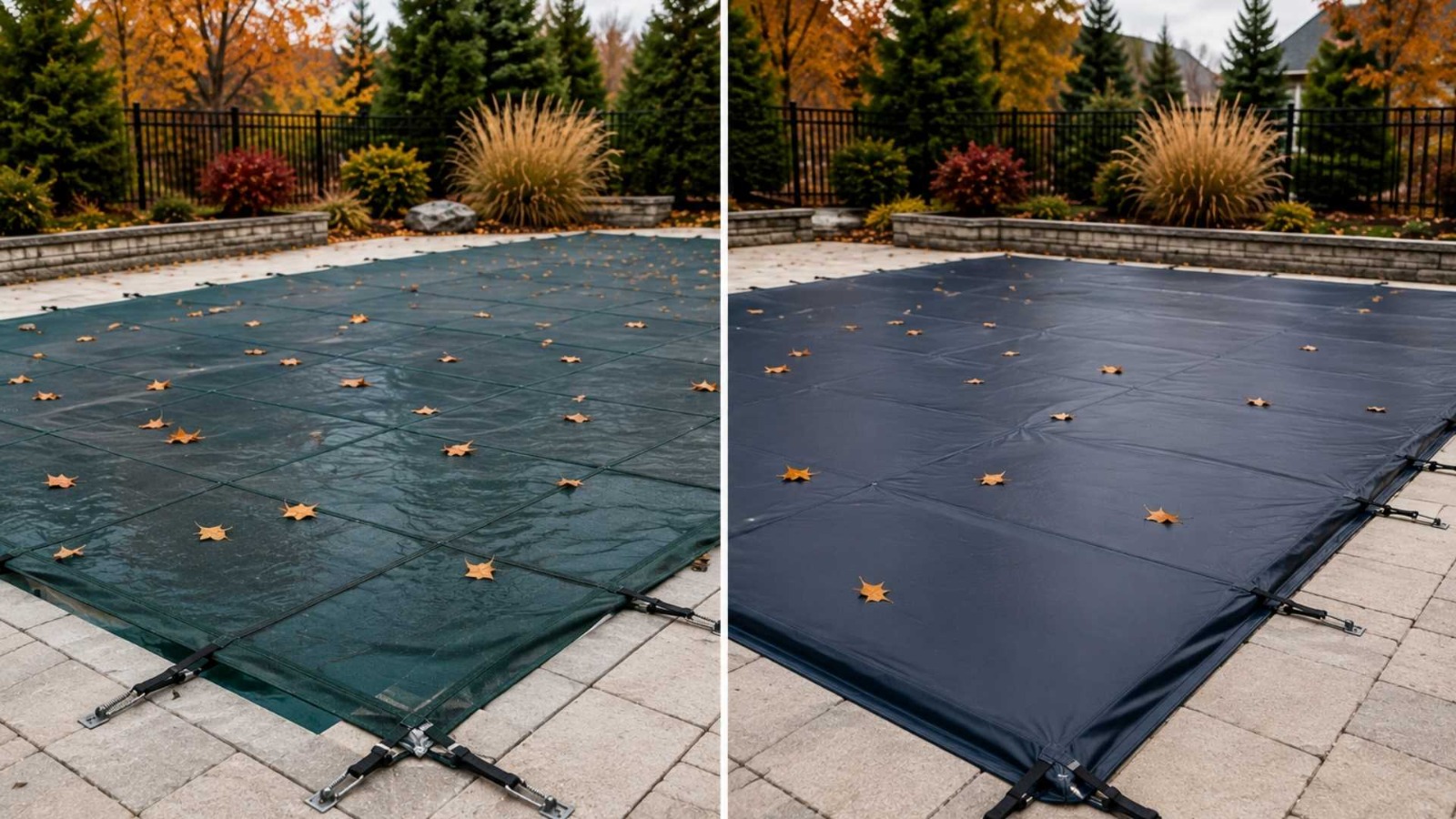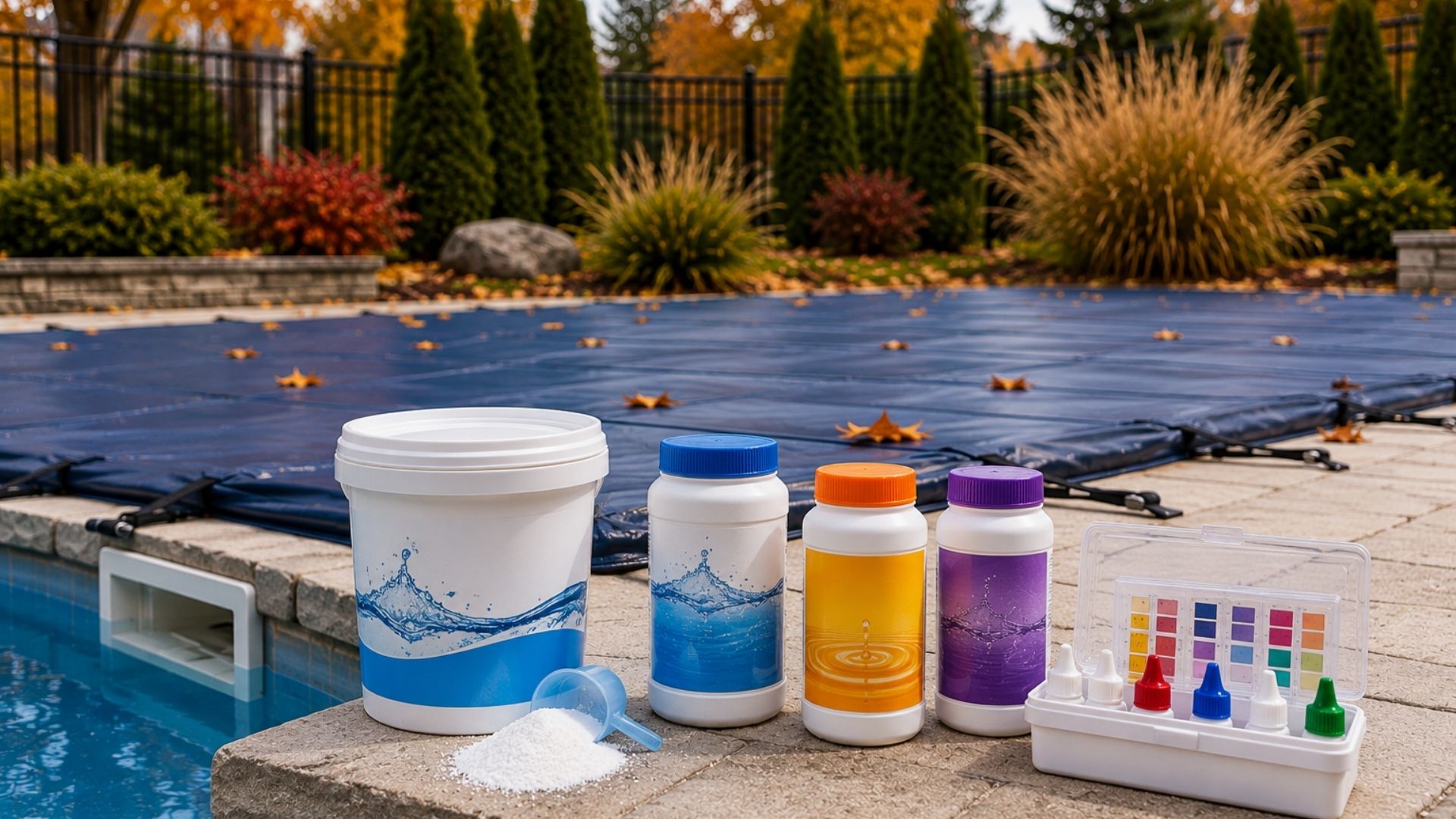
Many pool owners in Ottawa, Kanata, Nepean, Barrhaven, and Orléans assume that once the cover is on and the pump is off, their pool water simply stays put until spring. This is a reasonable assumption, but it is not entirely accurate. Winter pool water chemistry can shift during the off-season due to chemical reactions, temperature changes, organic contamination, and the water’s starting balance. Understanding what affects pool chemistry during winter helps homeowners close their pools more effectively and avoid costly corrections in spring.
Does Pool Chemistry Change in Winter?
Pool water chemistry can change during winter even when the pool is covered and circulation equipment is shut down. Temperature changes, sanitizer consumption, organic debris, and the water’s starting balance can all affect pH and other parameters over the off-season. Properly balancing water before closing helps reduce problems, but winterization does not make pool chemistry completely static.
Why Does Pool pH Change in Winter?
pH is not a fixed number. It responds to chemical interactions within the water throughout the year. Even in a closed pool, carbon dioxide exchange, temperature fluctuations, and residual chemical activity can cause pH to drift. The direction and degree of change depends on the pool’s starting chemistry, sanitizer type, cover seal, and environmental exposure. A pool closed with poorly balanced alkalinity is more susceptible to pH instability throughout the winter months.
The Role of Total Alkalinity in pH Stability
Total alkalinity acts as a chemical buffer that resists rapid pH swings. When alkalinity is correctly balanced before closing, the water is better able to maintain stable pH conditions throughout the off-season. Low alkalinity makes pH vulnerable to sudden shifts, while high alkalinity can make pH difficult to correct when the pool reopens. Getting winter pool water balance right starts with checking alkalinity alongside pH before the cover goes on.
Tip
Adjust in this order: total alkalinity first, then pH, then calcium hardness. Changing alkalinity moves pH, so fixing it first saves you from adjusting pH twice.
What Happens to Chlorine During Winter?
Chlorine is added before closing to sanitize the water and inhibit microbial activity during the off-season. However, chlorine levels during winter do not remain constant indefinitely. Organic material entering the pool through an imperfect cover, residual algae spores, and ongoing chemical reactions all consume sanitizer over time. Cold temperatures slow many biological processes, but they do not stop them entirely. Homeowners should not assume chlorine lasts unchanged for the entire winter without any consideration of starting levels, cover quality, and pool conditions.
Can Algae Grow in a Closed Ottawa Pool?
Low temperatures reduce biological activity significantly, but algae prevention during winter is still relevant. Algae spores can survive in pool water and remain dormant throughout winter, waiting for warmer conditions to develop. If sanitizer is depleted before spring and nutrients remain in the water from organic debris, algae can establish early in the season before the pool is reopened. Choosing the right pool chemicals for winter and ensuring the pool is thoroughly cleaned before closing reduces this risk.
Winter Pool Chemistry Factors at a Glance
| Chemistry Factor | Why It Matters Before Closing | Possible Winter Concern |
| pH | Helps establish balanced water | May drift depending on conditions |
| Total alkalinity | Buffers pH changes | Can affect pH stability |
| Sanitizer | Helps control microorganisms | Can be consumed over time |
| Organic debris | Adds chemical demand | Can encourage water-quality problems |
| Calcium hardness | Helps manage water balance | Can contribute to scaling or corrosion |
| Algae control | Helps manage algae risk | Poor balance can contribute to spring algae |
Why Winter Chemistry Starts Before Closing the Pool
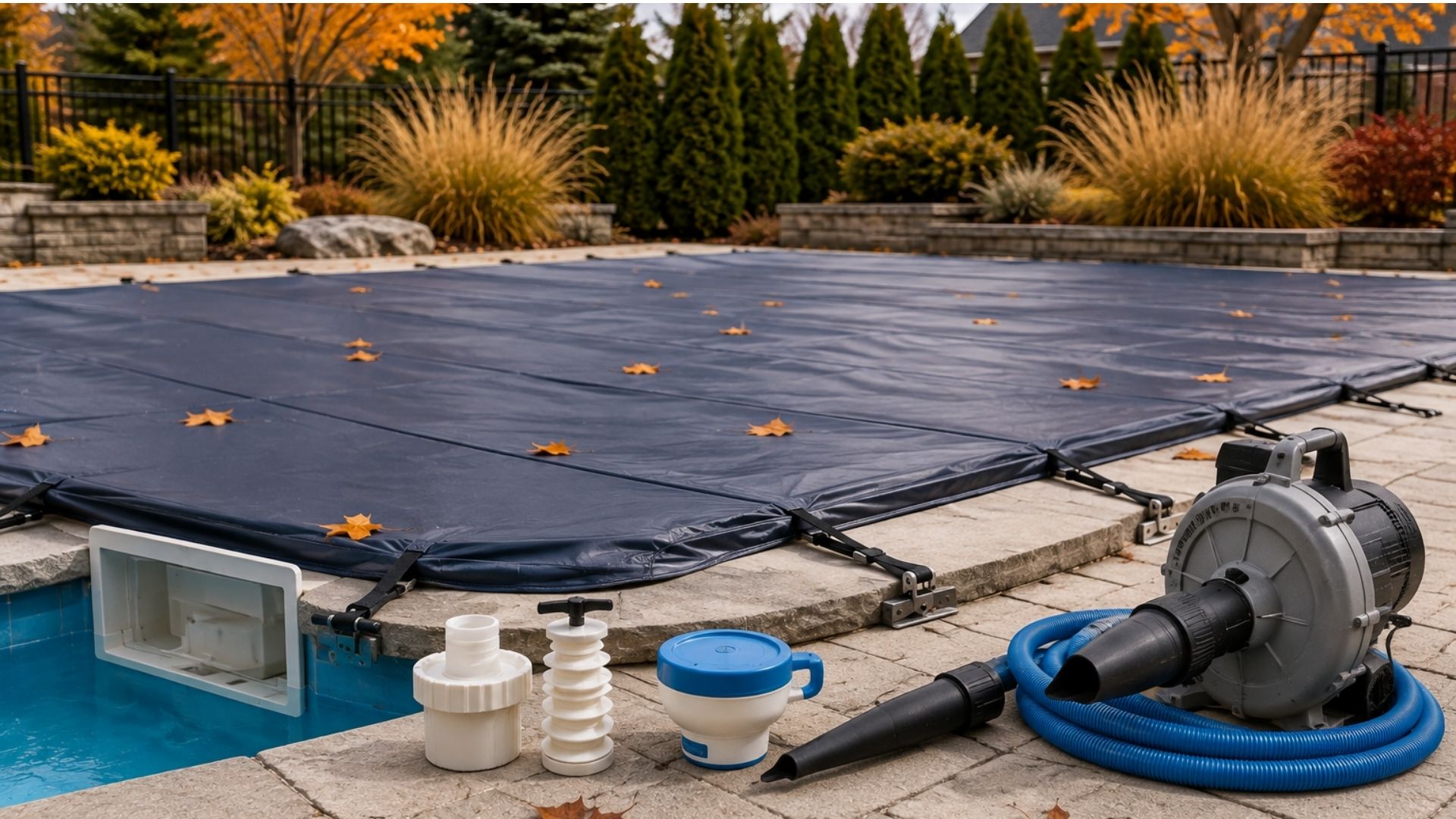
The most important pool water chemistry work happens before the cover goes on. A properly prepared pool has balanced pH, adjusted total alkalinity, correct sanitizer levels, and clean water free of debris and visible algae. Applying pool closing chemicals according to product label directions, cleaning the basin thoroughly, and protecting plumbing lines before closing gives the water the best possible starting point for the months ahead. Reviewing the recommended pool closing chemicals helps homeowners understand what each product does and why application order matters.
What Happens If Winter Pool Chemistry Is Poorly Balanced?
Starting the winter with imbalanced water can make spring reopening significantly more difficult. Potential consequences of poor winter chemistry include cloudy water, algae growth, surface staining, scaling on pool walls and fittings, and greater chemical correction requirements when the pool is reopened. The severity depends on the chemistry, pool surface type, equipment, and how long the imbalance persists. It does not automatically mean structural damage, but it does mean more effort and cost when the swimming season begins.
When to Hire Professional Pool Closing Services
Some pool owners manage their own chemical closing. Others prefer to leave it to an experienced technician, particularly when dealing with saltwater systems, automated sanitation equipment, or pools that have had recurring chemistry problems. Professional pool closing services in Ottawa include water chemistry assessment, chemical treatment, equipment shutdown, plumbing preparation, and cover installation, ensuring every step is completed correctly before winter conditions arrive.
How Proper Winterization Protects Pool Chemistry
Chemical balance and physical winterization work together. Balancing water chemistry without completing the physical winterization steps leaves plumbing, equipment, and the pool structure vulnerable to cold weather damage. Likewise, winterizing plumbing and equipment without addressing water chemistry can result in a pool that reopens with significant water-quality problems. Certified pool winterization services in Ottawa cover both aspects, protecting the pool structure and setting the water up for a cleaner spring opening.
Frequently Asked Questions About Winter Pool Chemistry
Why does pool pH change in winter?
Chemical reactions, carbon dioxide exchange, temperature fluctuations, and the water’s starting balance can all cause pH to drift in a closed pool. Total alkalinity plays a key role in how stable pH remains throughout the off-season.
Should I test my pool water before closing it?
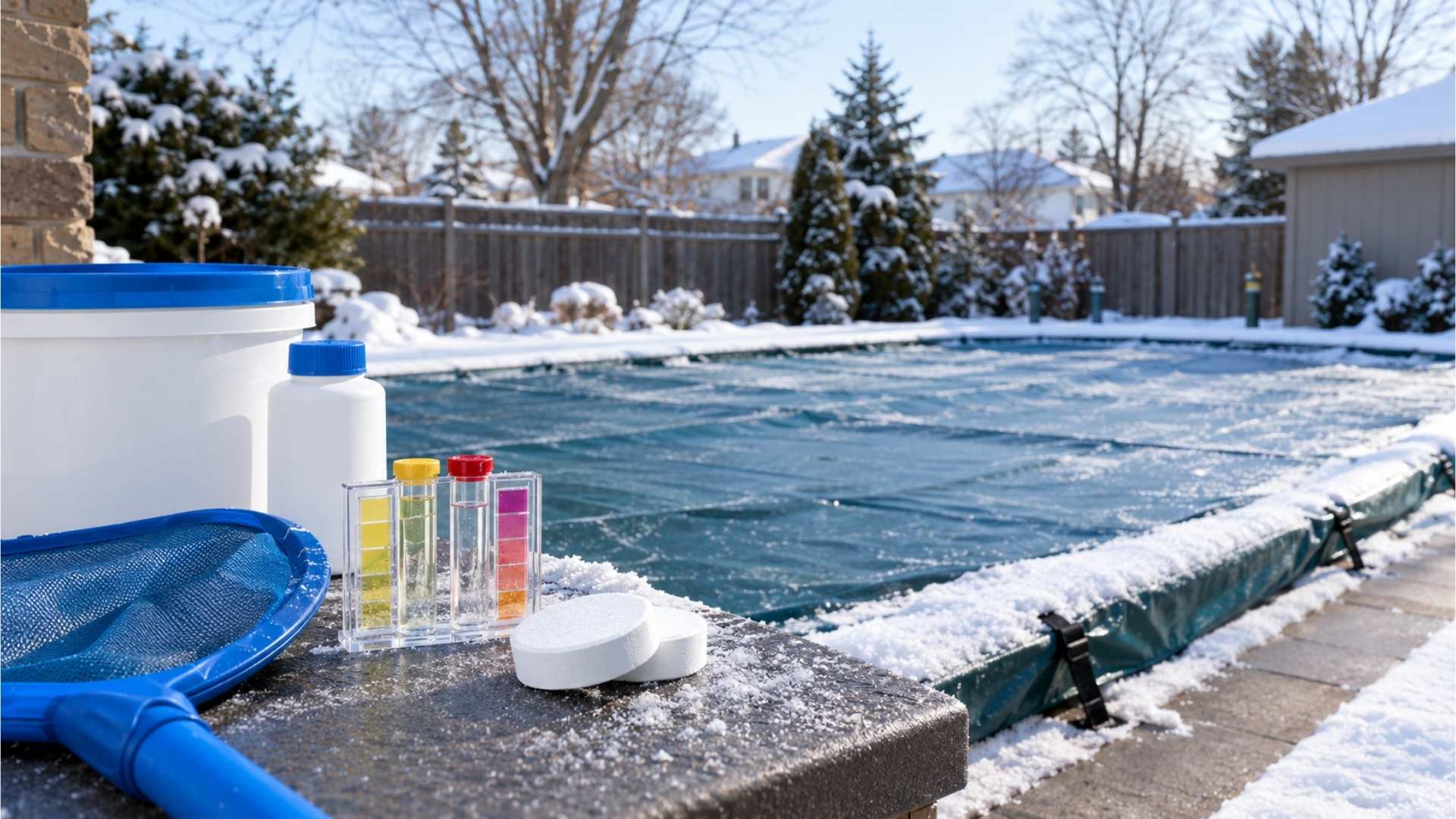
Yes. Testing pH, total alkalinity, sanitizer level, and calcium hardness before closing allows you to correct any imbalances before the cover goes on, giving the water a stable starting point for winter.
Does chlorine keep working in cold water?
Cold temperatures slow chemical and biological processes, but chlorine is still consumed over time by organic material and residual reactions. Starting winter with adequate sanitizer levels helps maintain water quality through the off-season.
How do I prevent algae in a closed pool?
Clean the pool thoroughly, balance water chemistry, apply appropriate closing chemicals according to label directions, and ensure the cover is properly secured to limit debris and sunlight exposure.
Conclusion: Winter Pool Chemistry Requires Preparation, Not Just a Cover
A closed pool is not a frozen-in-time pool. Winter pool water chemistry can shift due to temperature, organic contamination, sanitizer consumption, and the condition of the water when the season ends. Balancing pH, total alkalinity, and sanitizer before closing helps establish a better starting point, but it does not eliminate the need for proper spring testing before swimming begins. Treating chemical preparation and physical winterization as equally important parts of the closing process gives Ottawa pool owners the best chance of a smooth and cost-effective spring reopening.