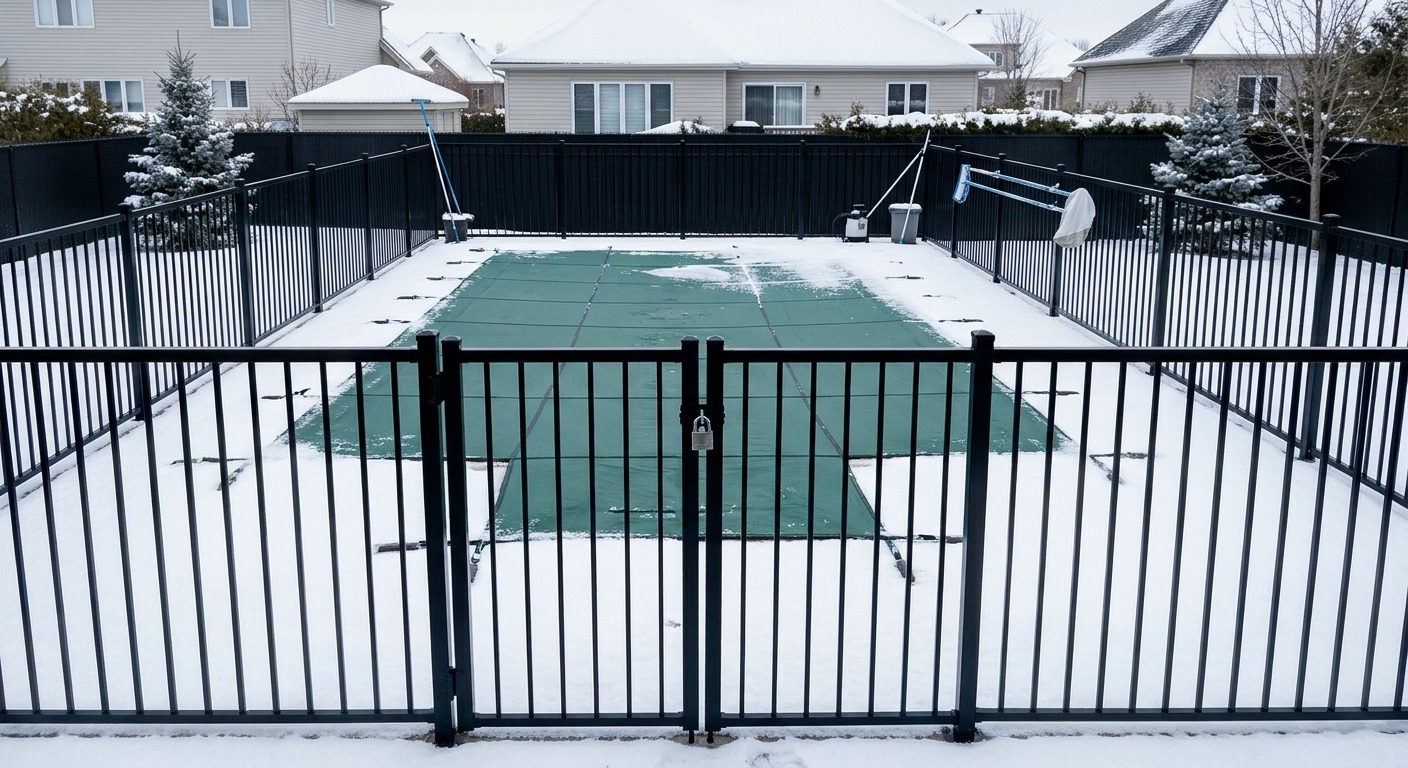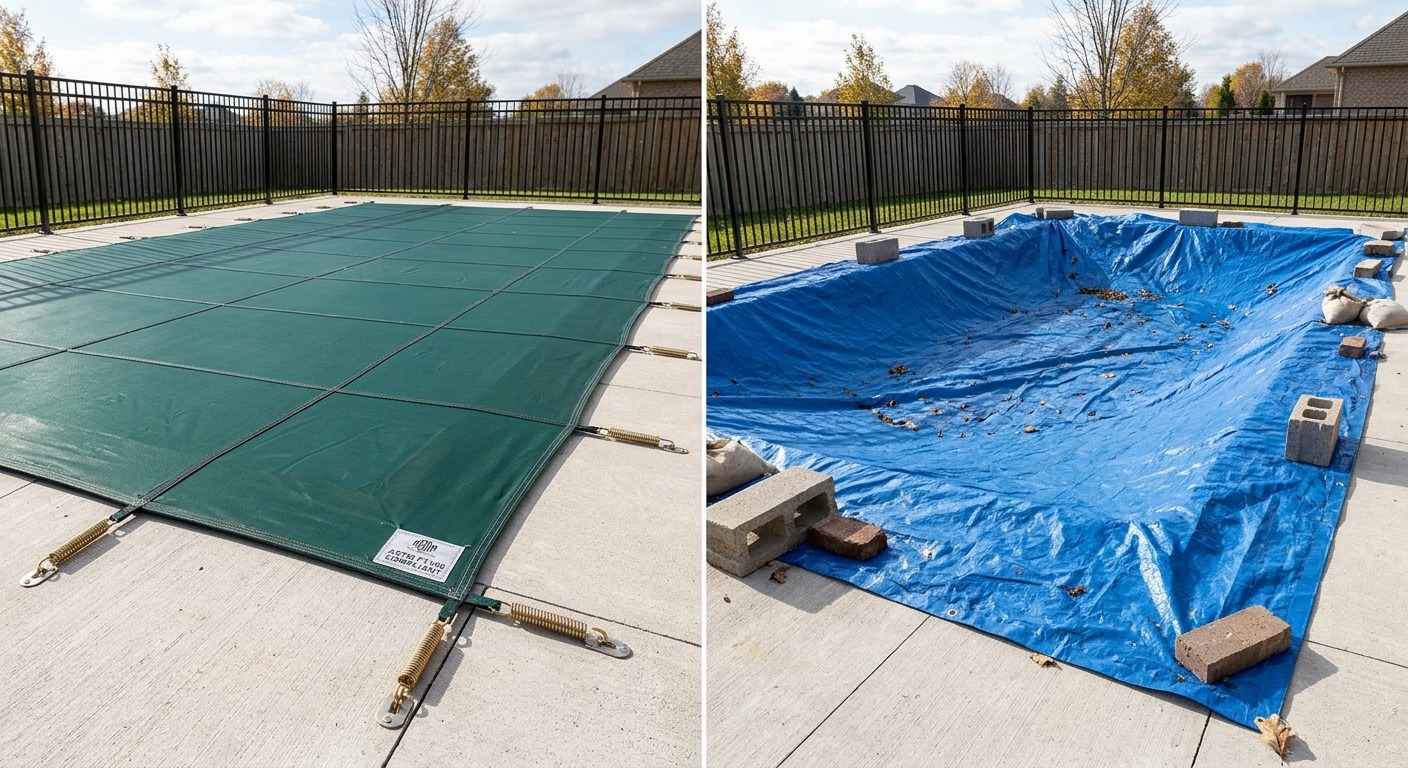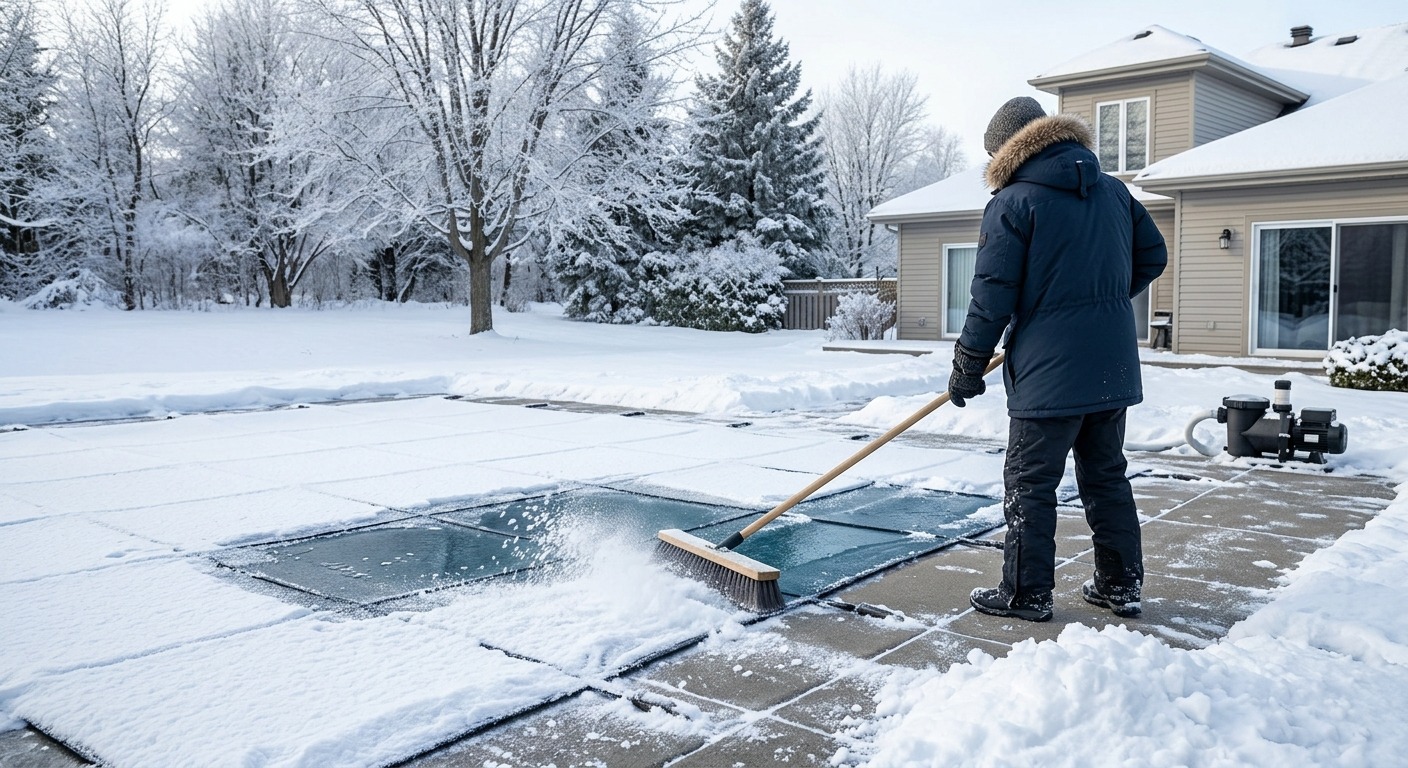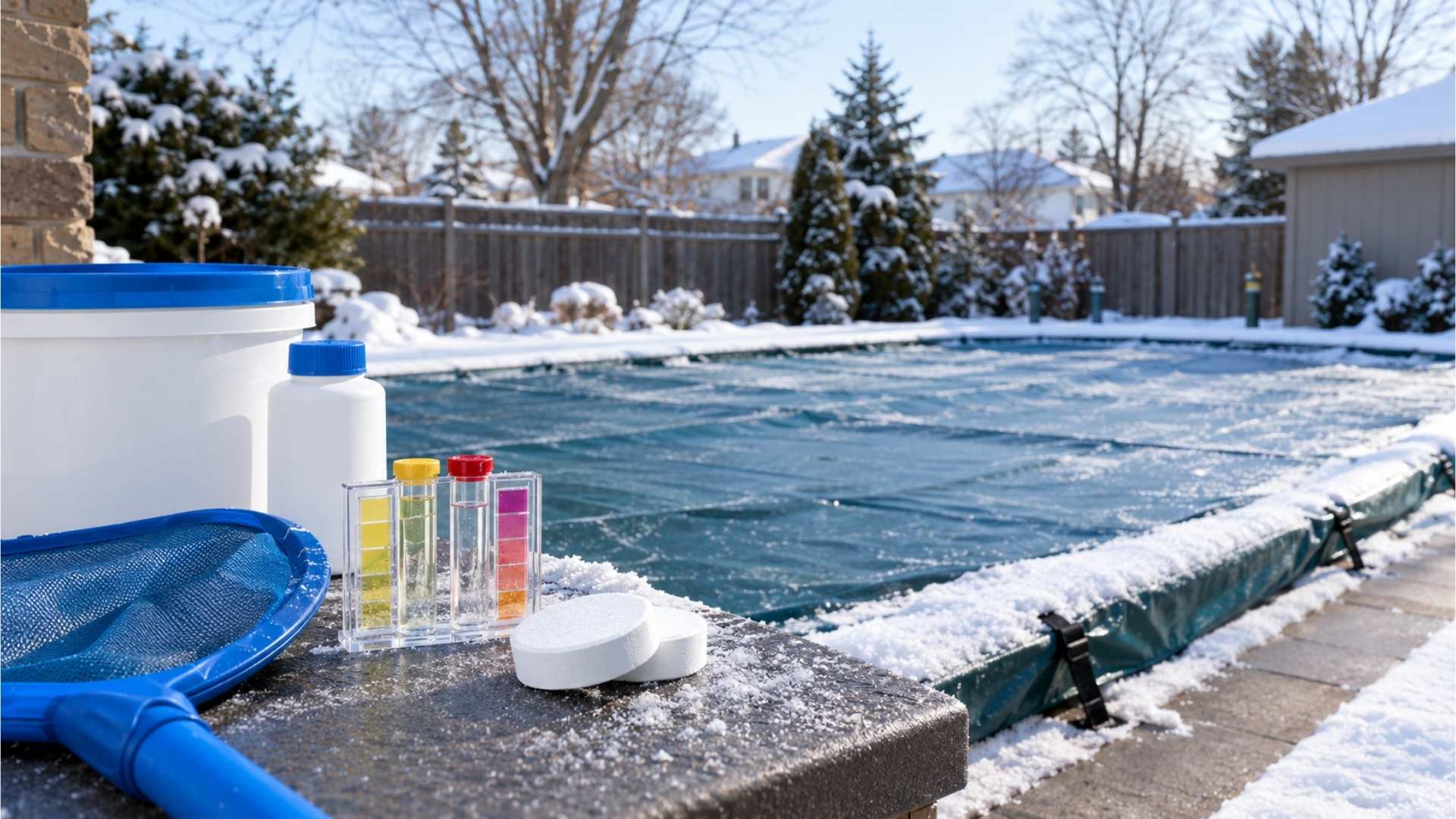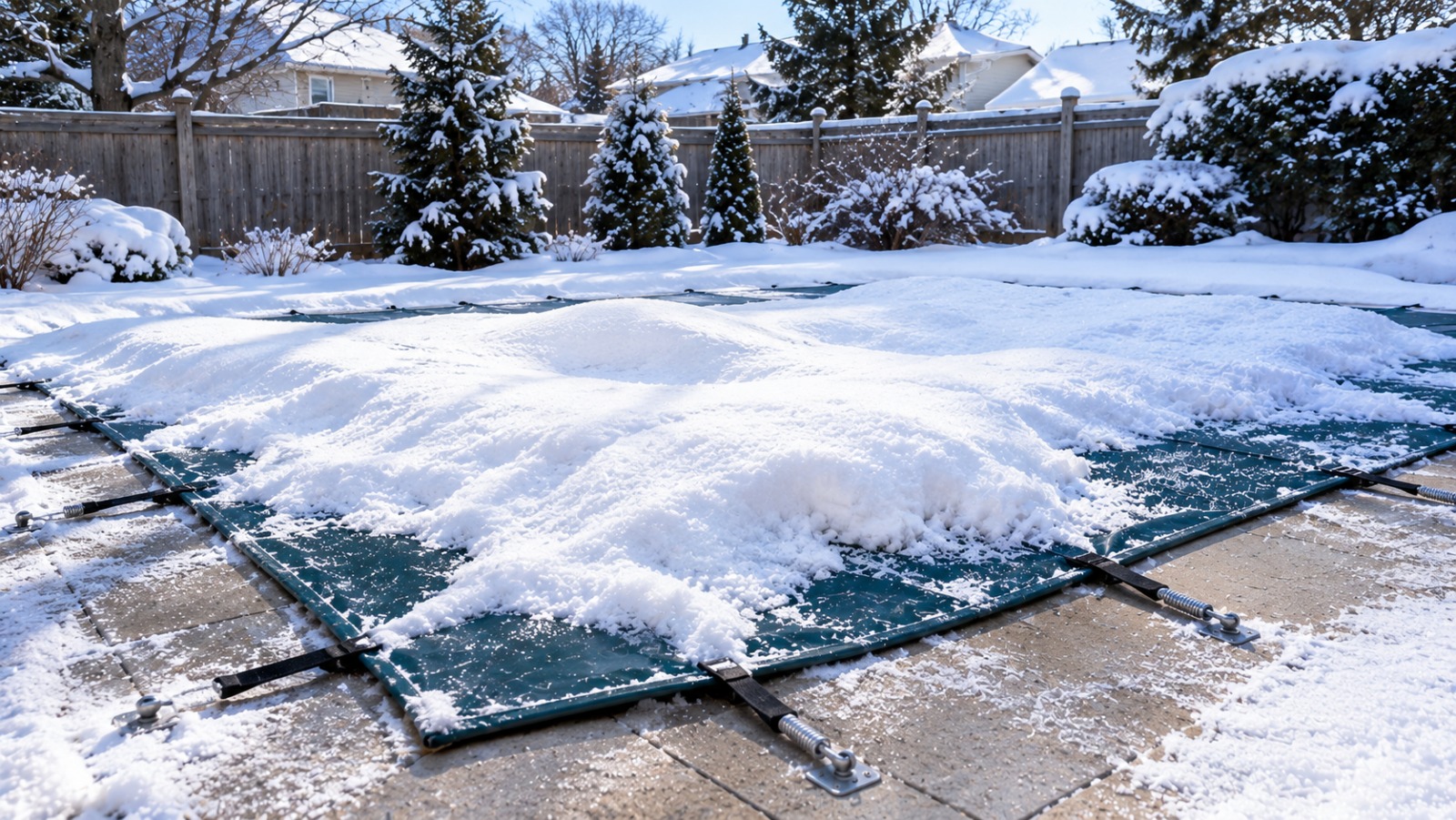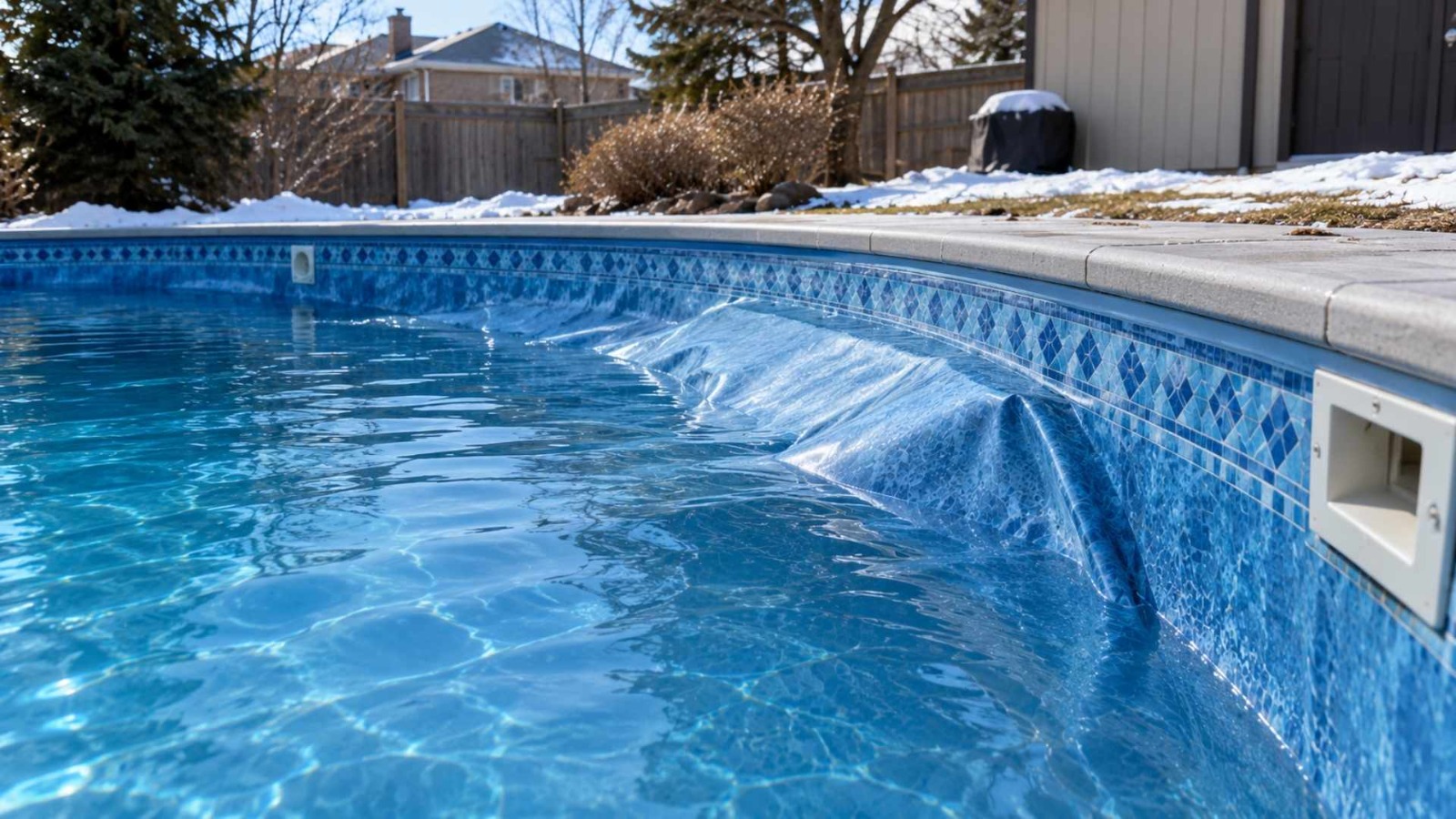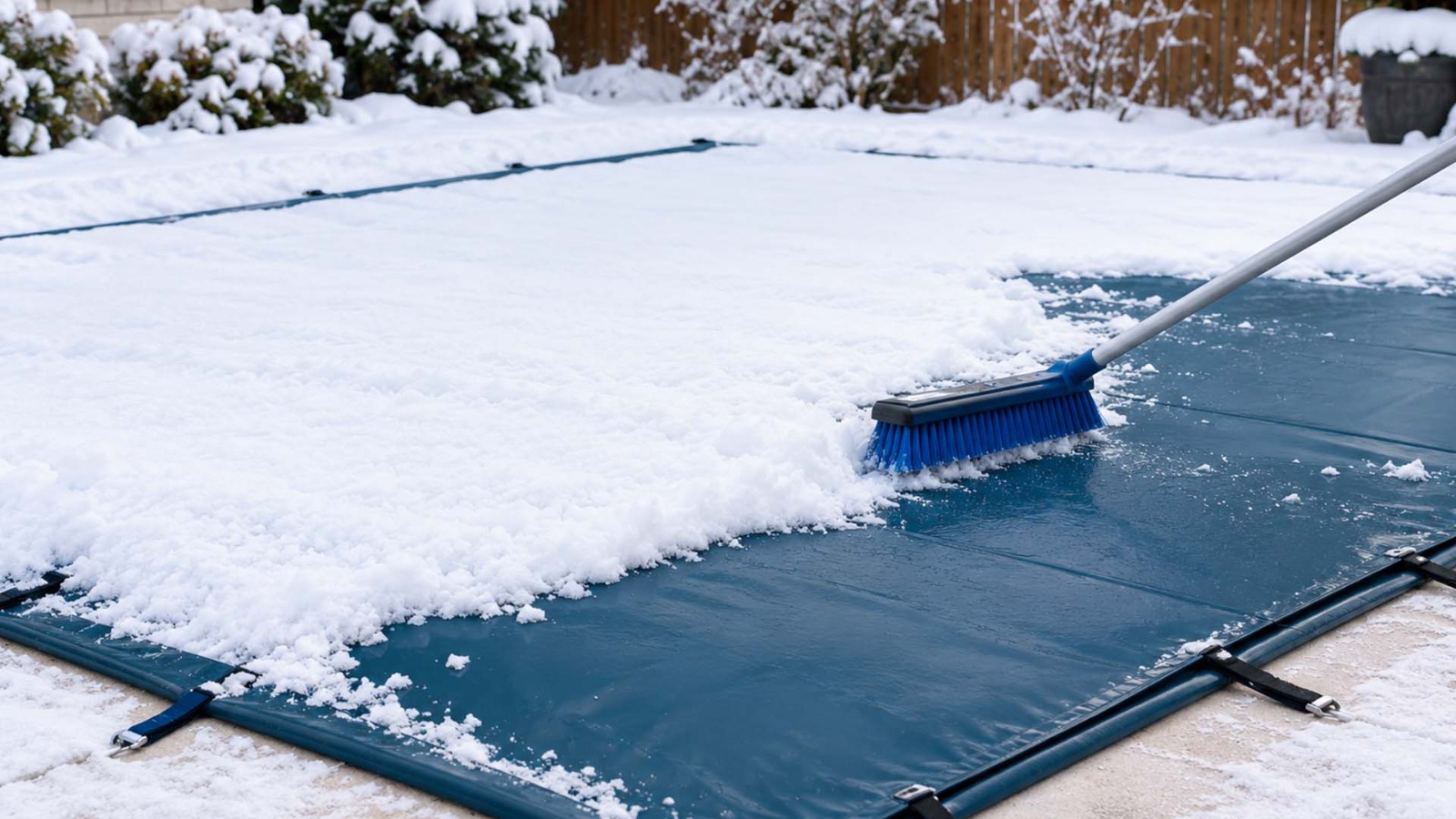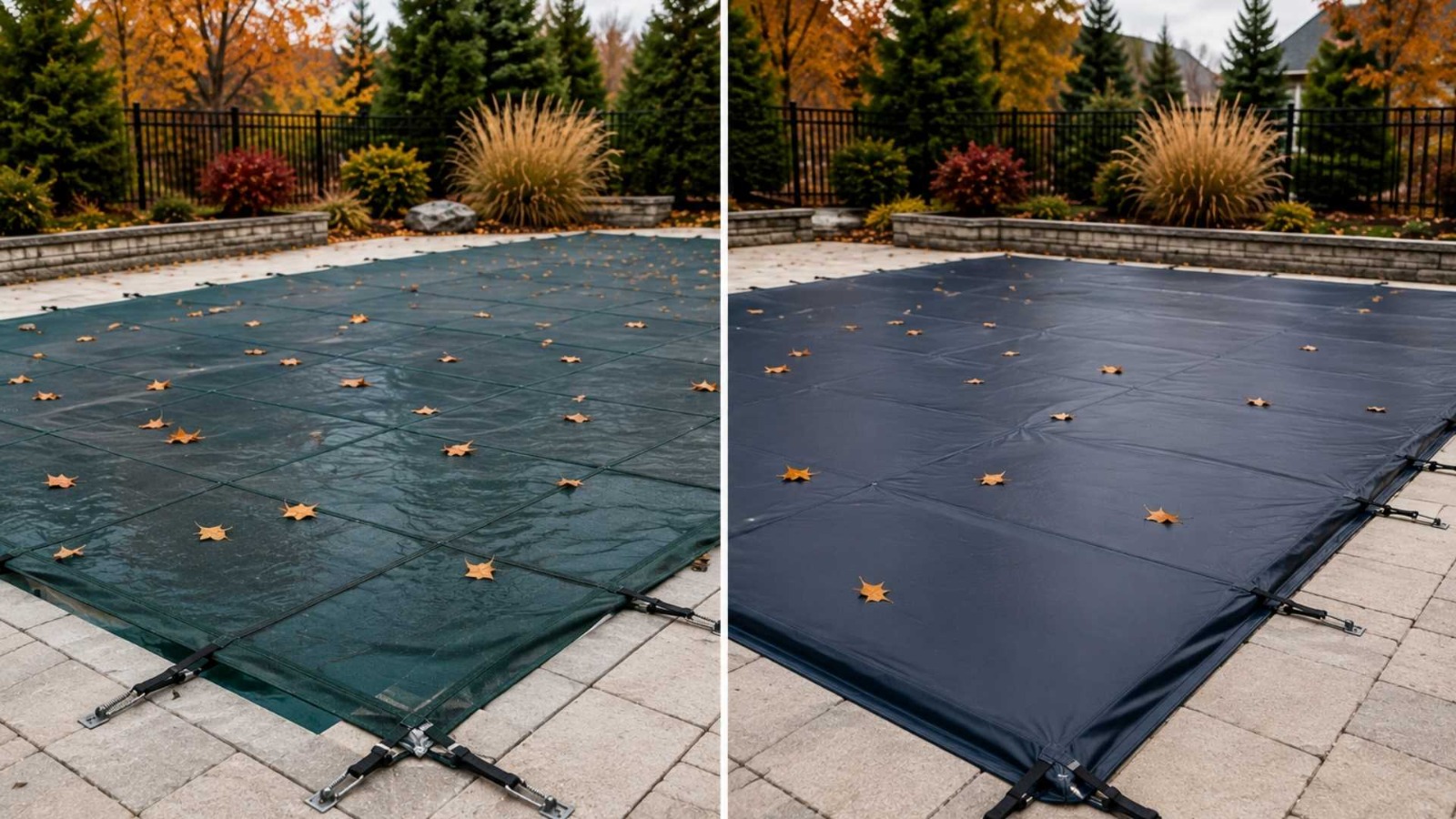
Water expands when it freezes. If water is left inside a pool pump housing, pipes, or fittings when Ottawa temperatures drop below freezing, that expansion can crack components that show no visible damage until spring arrives and the system is powered up. Proper winterization pool pump protection is one of the most practical steps a pool owner can take to avoid costly repairs before the next swimming season begins.
Why Pool Pumps Fail After Winter
Pool pump problems discovered in spring often trace back to incomplete winterization rather than a sudden mechanical failure. Understanding the most common causes helps homeowners recognise what their system needs before cold weather sets in.
Freeze Damage Inside the Pump Housing
When water remains inside the pump volute or housing through a freeze event, the expanding ice can crack the housing, damage internal seals, or break the connections between the pump and plumbing. These cracks may be hairline and invisible until the system is refilled and pressurised in spring, at which point leaks appear.
Damaged Pipes, Fittings, and Filter Components
The pump itself is not the only vulnerable component. Pipes, filter tanks, heater heat exchangers, chlorinator housings, and valves can all sustain freeze damage if water is not properly cleared from the system. A pool cover does nothing to protect plumbing or equipment below or around the pool deck.
Skipped Steps and Rushed Closings
Pump failures in spring often follow rushed autumn closings where one or more steps were skipped. Forgotten drain plugs left in the pump, incomplete plumbing blowouts, or a heat exchanger that was not fully drained are common sources of spring repair calls across Ottawa, Kanata, Nepean, Barrhaven, and Orleans.
Pool Pump Winterization Steps
The correct procedure for protecting a pool pump during winter depends on the specific pump model, the pool setup, and how the system is configured. Always follow the pump manufacturer’s instructions rather than a generic procedure. The following steps outline the general approach where applicable.
Step One: Shut Down Safely and Disconnect Power
Before doing anything else, switch off the pump at the breaker and confirm power is isolated. Never work on a pump or plumbing while the system is energised.
Step Two: Drain the Pump Housing
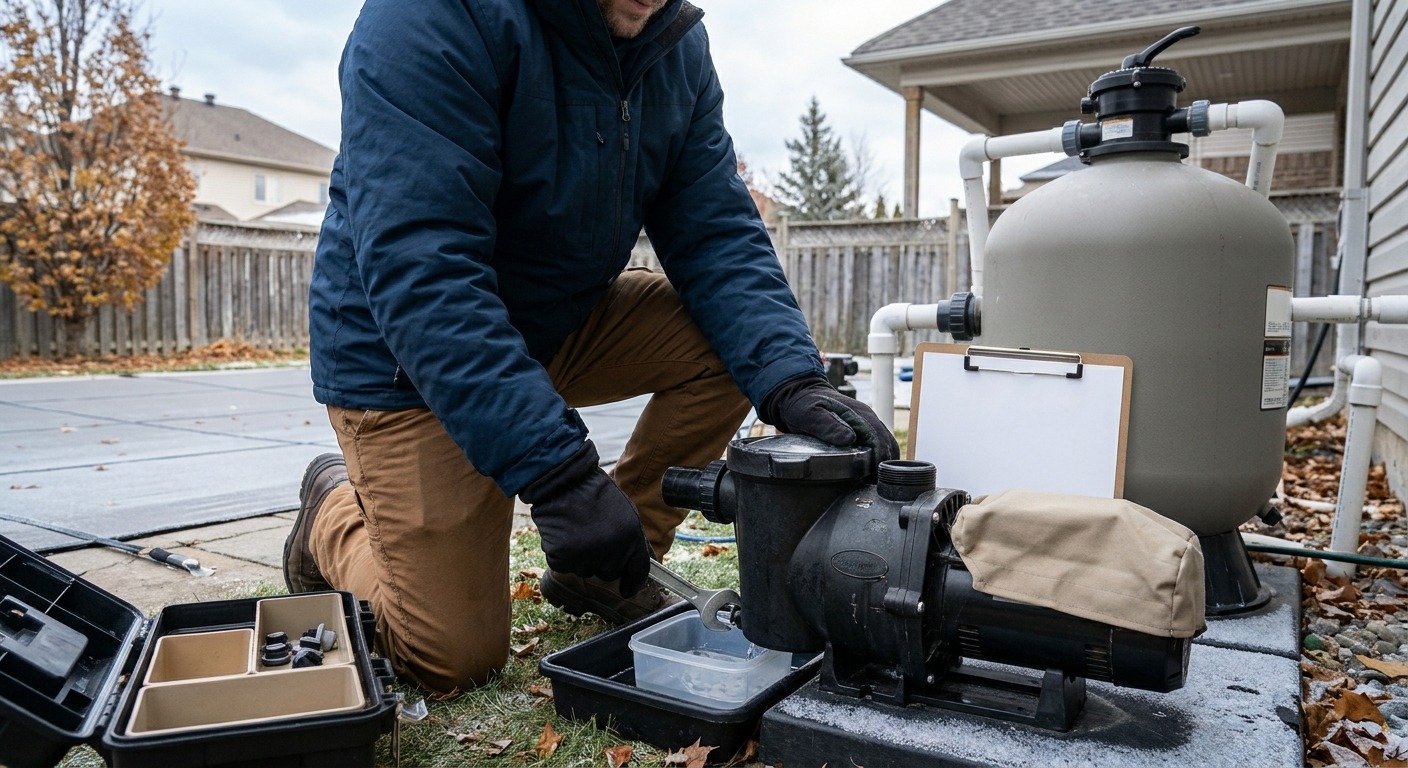
Locate and remove the pump’s drain plug or plugs according to the manufacturer’s instructions. Allow all water to drain completely from the pump pot and housing. Store drain plugs somewhere they will not be lost over winter, such as inside the pump basket itself once it is dry.
Step Three: Clear Water From Connected Equipment
Blow out plumbing lines, drain the filter tank, and clear water from heaters, chlorinators, and other inline equipment according to each component’s manual. Water left in a filter or heater can cause as much damage as water left in the pump. Reviewing the current winterize pool guide for Ottawa conditions provides additional context on what a full system closure involves.
Step Four: Protect the Motor From Moisture
Keep the motor dry but allow air circulation to prevent trapped condensation. Do not wrap the motor in plastic sheeting unless the manufacturer explicitly recommends doing so. Some systems use a breathable cover or are left partially sheltered by the equipment pad structure.
Preventing Pool Pump Freeze Damage During Ottawa Winters
Ottawa’s winters involve sustained periods well below freezing, with freeze-thaw cycles in autumn and spring that can be as damaging as deep-winter temperatures. Built-in freeze protection or automated circulation modes may help in specific operating conditions, but they are not a reliable substitute for proper seasonal closure when the pool is being winterised. Power outages, equipment faults, or incorrect settings can all interrupt automated freeze protection without warning.
If antifreeze is being considered for any part of the system, only a product specifically approved for that equipment type should be used. Follow the pump manufacturer’s instructions or seek guidance from a qualified pool professional. Automotive antifreeze is not appropriate for pool plumbing.
Warning
Automotive antifreeze is toxic to people and pets. Never pour it into pool plumbing,
and keep any antifreeze product stored where children and animals cannot reach it.
Arranging professional pool winterization in Ottawa before the first hard frost ensures the pump, plumbing, and ancillary equipment are prepared correctly for the season ahead.
Spring Pool Pump Startup Checklist
Before restarting a winterised pump, inspect the system carefully. Running a damaged pump can compound existing problems and cause additional failures.
| Check | What to Look For |
| Pump housing | Cracks, fractures, or visible water staining |
| Drain plugs | Restored to correct operating position |
| Plumbing connections | Loose fittings, missing o-rings, or cracked pipes |
| Filter and heater | Drain points closed, no visible damage |
| Valves | Returned to correct operating configuration |
| Motor | Dry, no corrosion, no unusual sounds on startup |
| Prime | Pump primed correctly, flow established before running |
Do not run the pump dry. If the pump fails to prime, loses flow, makes unusual grinding or humming sounds, or leaks after startup, switch the system off and investigate before running it again.
When to Call a Pool Pump Professional
Some spring pump problems require professional attention. Persistent leaks from the housing or plumbing, a pump that will not prime despite correct setup, unusual motor noises, reduced circulation, visible housing cracks, or any suspected electrical damage are all reasons to stop and seek a qualified assessment.
Identifying the problem before the swimming season is underway gives homeowners more time to arrange repairs without disrupting pool use. Contacting a technician experienced in pool pump repair in Ottawa ensures the correct diagnosis and repair approach for the specific pump model and installation.
Frequently Asked Questions
Can freezing temperatures break a pool pump?
Yes, water that remains inside a pump housing or plumbing when temperatures drop below freezing can expand and crack the housing, seals, or connected pipes. Damage may not be visible until the system is refilled and pressurised in spring.
Does a pool cover protect the pump in winter?
No. A pool cover protects the water surface. It provides no protection to the pump, filter, heater, or plumbing. Equipment must be winterised separately according to each manufacturer’s instructions.
Do I need to remove my pool pump for winter?
This depends on the pump model, installation, and manufacturer’s guidance. Some pumps are designed to be drained in place while others require additional steps. Follow the specific product manual rather than a general recommendation.
What are signs of a freeze-damaged pool pump?
Visible cracks in the housing, water staining around seams, failure to prime, leaks at connections, unusual noise on startup, or poor circulation can all indicate freeze-related damage. Have the system inspected before the swim season begins.
Conclusion: Protect Your Pump Before Winter Arrives
A pool pump that develops freeze damage over winter may not show signs of trouble until it is switched on in spring. By then, the swim season is approaching and the repair window is short. Addressing pool pump winter maintenance before freezing temperatures arrive in Ottawa reduces the risk of cracked housings, damaged fittings, and costly spring repairs. If winterization feels beyond your setup or comfort level, professional support is available to prepare your system correctly for the months ahead.