Preparing a swimming pool for an Ontario winter requires systematic care to protect circulation equipment, structural surfaces, and underground plumbing. Following a comprehensive winterize pool guide helps Ottawa homeowners prevent costly frost damage, preserve water clarity, and avoid emergency spring repairs. As cold autumn temperatures arrive across Kanata, Nepean, and Orléans, preparing a pool for winter ensures your backyard investment survives harsh Canadian freeze-thaw cycles intact.
How Do You Winterize a Pool in Ottawa?
To winterize a pool in Ottawa properly, homeowners must clean the basin, balance water chemistry, lower water levels when appropriate, drain mechanical equipment, clear plumbing lines using commercial blowers, install skimmer freeze protection, and tightly fasten a heavy-duty winter cover. Following these essential pool winterization steps prevents expanding subterranean ice from bursting underground PVC lines and cracking pump housings.
Why You Need to Winterize Your Pool Before an Ottawa Winter
Protecting Plumbing and Preventing Freeze Damage
Ottawa winter temperatures routinely drop well below freezing for extended periods. Water expands by roughly nine percent when it freezes into solid ice. Trapped moisture inside un-winterized PVC pipes, pump strainer pots, or gas heat exchangers exerts catastrophic expansion pressure. Understanding how to close a swimming pool for winter is crucial for preventing freeze damage across Barrhaven and Stittsville.
Timing Your Ottawa Winter Pool Maintenance
Successful winterization depends heavily on seasonal timing. Closing too early while ambient water remains warm encourages stubborn green algae growth underneath pool covers. Conversely, waiting too long exposes return lines to unexpected October frosts. Reviewing expert advice on when to close a pool in Ottawa helps homeowners schedule effective Ottawa winter pool maintenance before freezing overnight cold snaps arrive.
Pro tip
Clip an ordinary pool thermometer to the skimmer basket starting in early September. Once the reading holds below 15°C for a few days in a row, you’re in the general window pool professionals use for closing, without inviting a late algae bloom.
Step-by-Step Winterize Pool Guide for Homeowners
Step 1 & 2 (Water Balancing and Basin Cleaning)
Removing Organic Debris Thoroughly
Leaves and organic sediment left at the bottom of the pool rapidly consume chlorine sanitizer and cause stubborn surface staining. Vacuuming the floor, scrubbing tile lines, and clearing skimmer baskets form essential steps for winterizing a pool cleanly.
Adding Winter Pool Chemicals
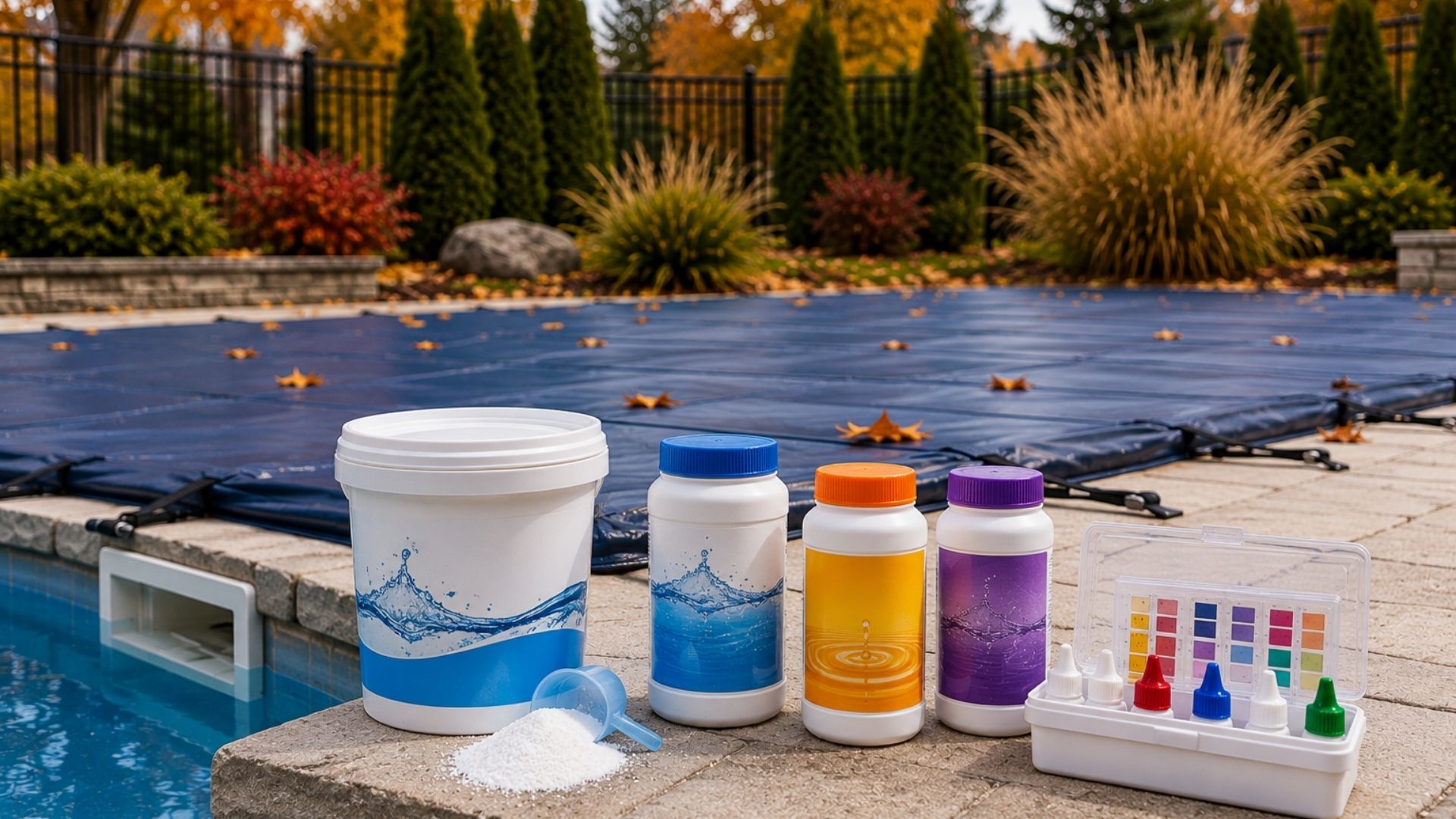
Check pH (7.2 to 7.6) and total alkalinity (80 to 120 ppm) before adding concentrated winter shock and non-copper algaecide. Balanced winter pool chemicals prevent mineral scaling and inhibit algae growth throughout the six-month off-season.
Step 3 & 4 (Equipment Draining and Line Blowout)
Draining Pool Equipment for Winter
Performing proper pool pump winterization involves pulling drain plugs from pump housing pots, sand filter tanks, gas heaters, and chlorinators. Draining pool equipment for winter prevents trapped water from cracking expensive cast iron or composite plastic components.
Adding Winter Pool Chemicals
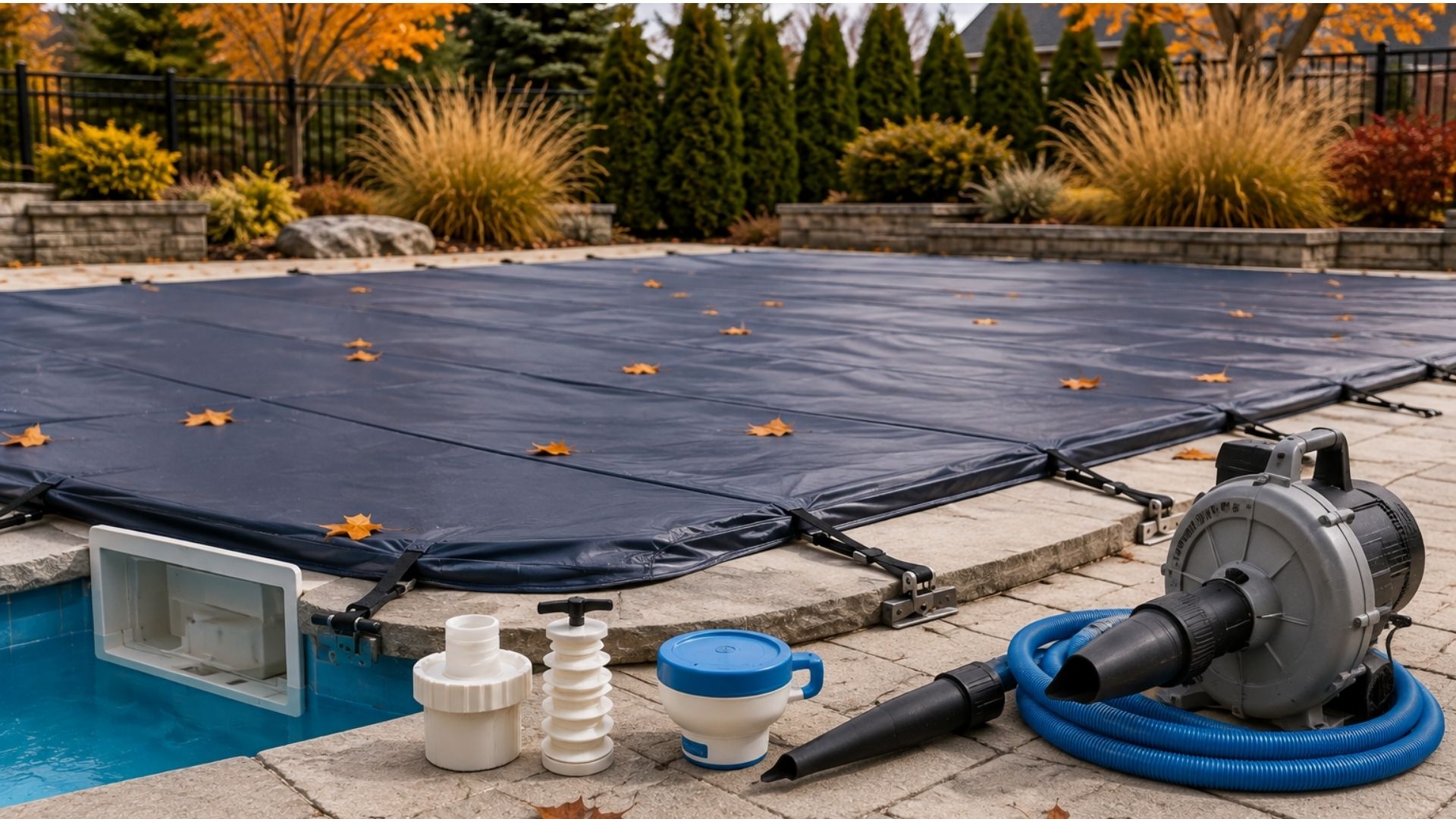
Protecting pool pipes from freezing requires blowing out pool lines with high-volume air blowers to push water out of return jets and main drains. Once lines are clear, watertight expansion plugs are installed, and non-toxic pool antifreeze is added to suction lines.
⚠ Watch out
An incomplete line blowout is one of the most common reasons for a cracked pump housing or a burst underground line by spring. If the blower only runs for a minute or two per line, water is very likely still sitting in a low point somewhere in the run.
Step 5 & 6 (Water Level, Skimmers, and Cover Installation)
Lowering Pool Water Level and Skimmer Protection
Lowering pool water level 4 to 6 inches below skimmer throats stops water from re-entering return pipes. Inserting Gizzmo expansion tubes provides critical skimmer protection by absorbing ice pressure inside plastic skimmer wells.
Installing a Winter Pool Cover
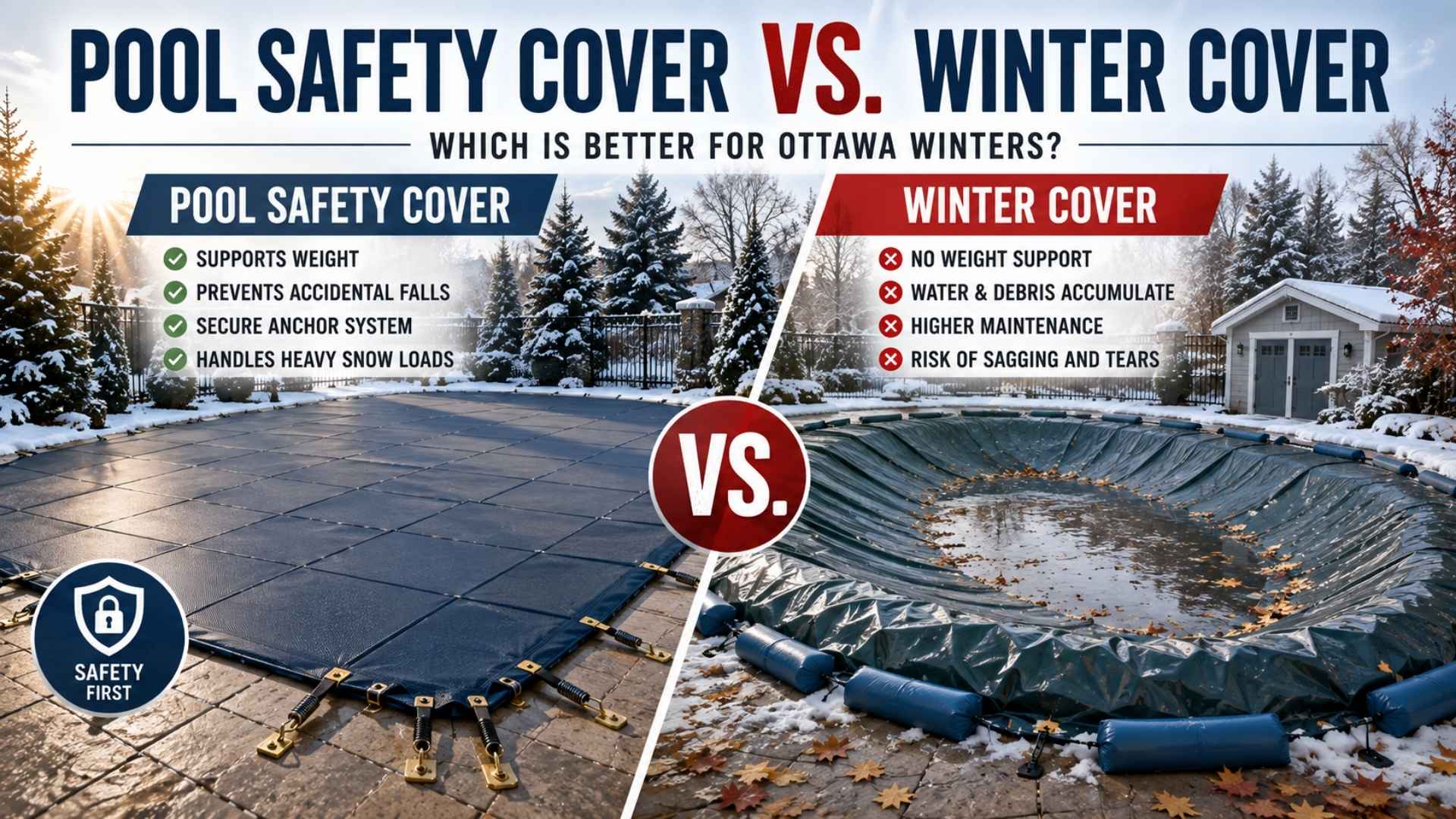
Installing a winter pool cover shields water from falling debris, autumn leaves, and UV rays. Learning how winter pool covers protect pools ensures your cover choice withstands heavy snow accumulation throughout Ottawa winters.
Quick Pool Winterization Checklist
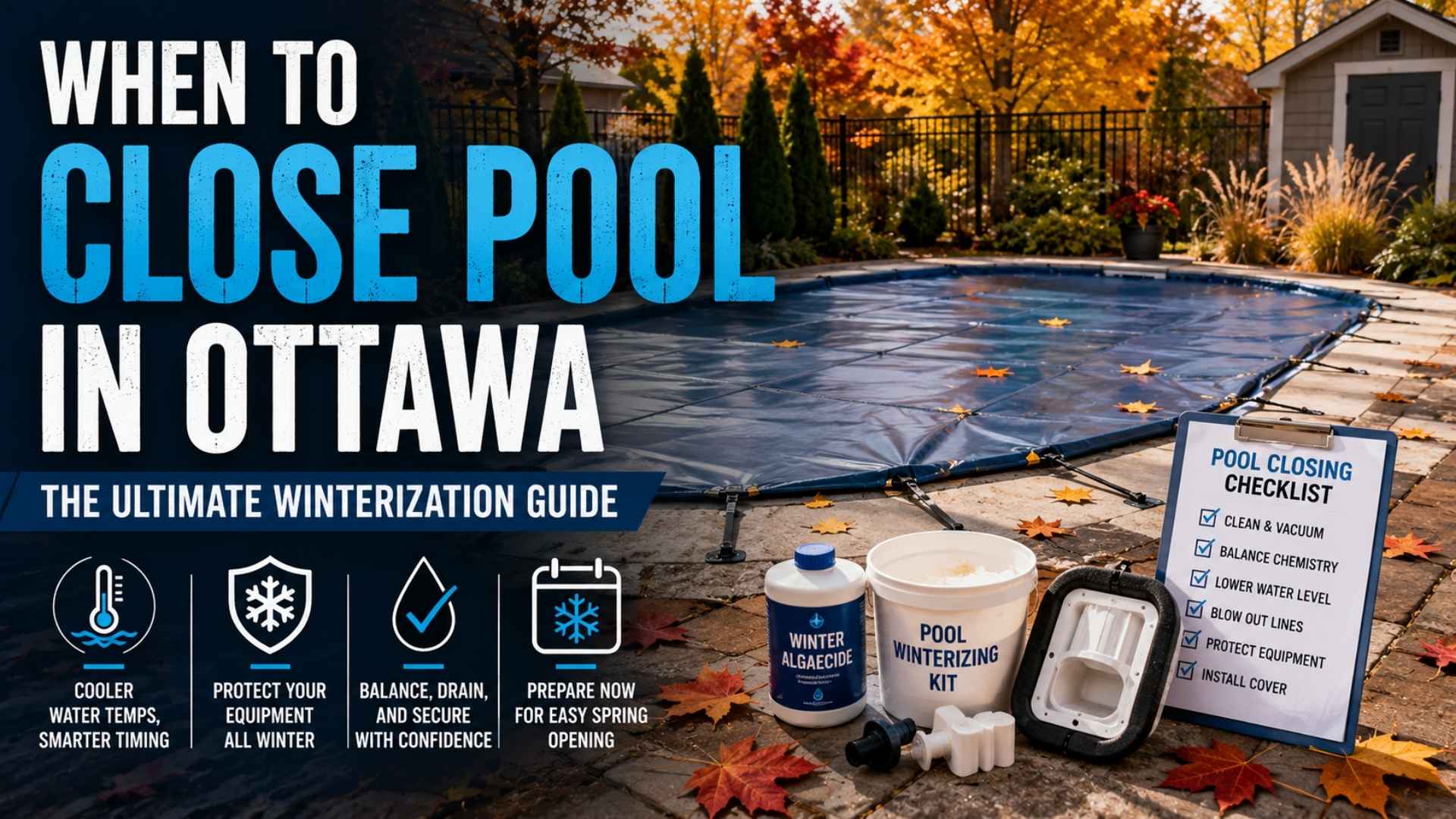
Homeowners can use this concise pool winterization checklist to verify every crucial task before winter arrives:
- Clean pool walls and vacuum sediment.
- Test pH and alkalinity levels.
- Add winter sanitizer and algaecide.
- Drain pump, filter, and heater plugs.
- Blow out subterranean lines and plug returns.
- Install skimmer Gizzmos.
- Lower water level below skimmers.
- Secure heavy-duty winter cover.
DIY vs Professional Pool Winterization
Homeowners deciding between DIY winterization and professional service must evaluate plumbing complexity and equipment warranty requirements.
| Winterization feature | DIY pool closing | Professional pool winterization |
| Line blowout reliability | High risk of residual water trapped | High-volume commercial blower blowout guaranteed |
| Chemical dosing | Manual testing and estimation | Certified chemical kit precision application |
| Equipment draining | Risk of missed drain plugs | Complete pump, filter, and heater drain verification |
| Pipe freeze risk | Elevated risk of cracked pipes | Backed by professional service protection |
Homeowners seeking complete peace of mind and line protection frequently hire a professional pool closing service Ottawa team like Ottawa Valley Pool Closing Services in Ottawa to perform blowouts, chemical dosing, and cover installation.
Frequently Asked Questions About Pool Winterization
Why should Ottawa homeowners follow a winterized pool guide?
Following a structured guide ensures subterranean pipes, mechanical pumps, and pool basins are protected against catastrophic Canadian freeze damage.
How do you properly winterize a pool in Ottawa properly?
Proper winterization involves balancing chemicals, draining pumps, blowing out suction lines, inserting skimmer Gizzmos, and securing a heavy-duty cover.
Do I need to blow out pool lines before winter?
Yes, blowing out pool lines removes standing water from subterranean PVC pipes, preventing underground line bursts during sub-zero freeze cycles.
Final Thoughts on Ottawa Pool Winterization
Following a reliable winterize pool guide protects your backyard investment from harsh Ottawa winter conditions. Taking time to balance water chemistry, drain equipment, blow out lines, and secure a durable cover ensures your pool remains structurally sound. Proper winter preparation guarantees a stress-free, clean pool reopening when warm spring weather returns.